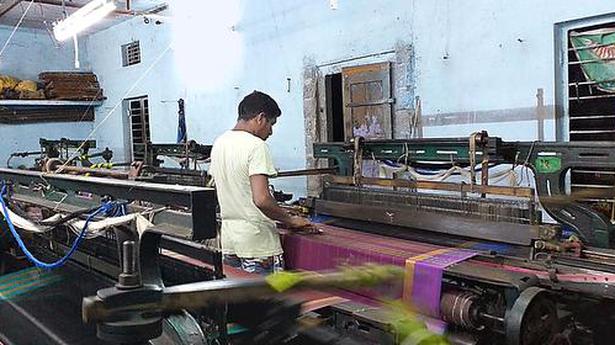
ReshaMandi launches easy credit services for textile entrepreneurs
The Hindu
“Access to credit is one of the biggest challenges faced by micro, small and medium enterprises in the country”
ReshaMandi, a farm-to-fashion natural fibre digital ecosystem, launched a new venture ReshaMudra, personalised credit solutions for the textiles industry.
ReshaMudra would offer business partners across the ecosystem access to working capital solutions as well as long-term loans to help them grow their businesses during challenging times. All of these offerings would be subject to regulatory approvals from respective authorities, said the company in a statement.
Access to credit was one of the biggest challenges faced by micro, small and medium enterprises in the country in general and only 20% of their credit needs were met by the formal financing sector and 40% by the informal sector, said the company.
ReshaMandi Founder and CEO, Mayank Tiwari said, “India’s textile sector is on course to becoming a $190 billion powerhouse by 2025-26. But lack of access to credit could stifle that potential as nearly 80% of the country’s MSMEs today is faced with this challenge.”
ReshaMudra’s aim was to bridge this need gap, enabling MSMEs to expand their operations and thereby boost revenues, margins and profits, he added
According to Kshitij Kuthiala, AVP, ReshaMudra, inputs purchase costs account for some 75% of the total cost incurred by the textile industry and therefore working capital support was crucial.
We aim to provide financing solutions that are less dependent on a wide range of documents and bring more awareness around the efficient use of credit to increase their annual turnovers,’‘ Mr. Kuthiala said.


Adani Group plans a ₹1.5 lakh crore investment in Kutch, focusing on renewable energy, ports, and logistics over five years.

Mukesh Ambani announces ₹7 lakh crore investment in Gujarat, emphasizing clean energy, AI, and support for Olympic ambitions.

India mandates selfies and 'penny drop' for crypto KYC, discouraging ICOs and ensuring strict anti-money laundering measures.

Mukesh Ambani announces ₹7 lakh crore investment in Gujarat, emphasizing clean energy, AI, and support for Olympic ambitions.

The All India Cashew Association calls for urgent action against illegal cashew imports threatening India's domestic processing industry.

Moody’s upgrades Shriram Finance’s outlook to positive, citing strategic benefits from MUFG Bank's upcoming investment and improved financial stability.

India's rice exports soar to near record levels in 2025, driven by lifted curbs and increased global demand.

Dr. Reddy's responds to U.S. FDA queries regarding its Hyderabad biologics facility following a recent inspection.

Techno Paints plans a ₹500 crore IPO in FY27, featuring Sachin Tendulkar as brand ambassador to boost growth.

India's shift from Russian oil imports will have limited fiscal impact due to low global prices and reduced discounts.

The latest Household Consumption Expenditure Survey (HCES) by MoS&PI reveals a transformative shift in India’s economic landscape. For the first time in over a decade, granular data on Monthly Per Capita Expenditure (MPCE) highlights a significant decline in the proportional share of food spending—a classic validation of Engel’s Law as real incomes rise. Between 1999 and 2024, both rural and urban consumption pivoted away from staple-heavy diets toward protein-rich foods, health, education, and conveyance. As Indian households move beyond subsistence, these shifting Indian household spending patterns offer vital insights for social sector policy, poverty estimation, and the lived realities of an expanding middle-income population.

Investors shifted to Gold ETFs in December 2025, with record inflows amid macro uncertainty and declining equity returns.

Aurobindo Pharma's subsidiary receives Health Canada NOC for Dyrupeg, confirming its pegylated filgrastim biosimilar's safety and efficacy.