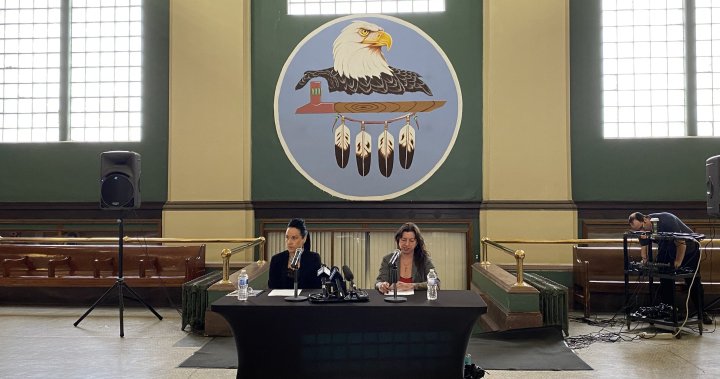
‘Representation is critical,’ experts say in bid for more Indigenous teachers
Global News
"If our stories and our representatives from our community aren't being seen in (educational) spaces, then children aren't going to think (teaching) is something that they can do,"
The Winnipeg Indigenous Executive Circle (WIEC) says, according to 2021-2022 data, Winnipeg schools need almost 1,500 more Indigenous teachers to keep up with the 19.1 per cent of Indigenous students.
These numbers come from WIEC’s third annual State of Equity in Education Report, which adds that out of 54 school board trustees, only eight self-identify as Indigenous. However, Heather McCormick, chair of education and training with WIEC said this is an uptick from two in 2020.
She says these gaps must be filled.
“Representation is critical for Indigenous youth or people of colour. If our stories and our representatives from our community aren’t being seen in (educational) spaces, then children aren’t going to think (teaching) is something that they can do,” she said.
A factor contributing to the shortage of Indigenous educators is that there aren’t many in the first place, she said. “University of Manitoba and University of Winnipeg graduate about 35 Indigenous teachers a year,” she said. “We’re still far behind the non-Indigenous community as far as achievement in graduation rates at university.”
To help, incentivizing education programs for Indigenous students with a living allowance and paid-for tuition could be a strategy, McCormick said.
“One of our conversations that we’re having with our stakeholders is to provide funding for the students so that they don’t have to worry about living allowance or paying their rent or food security. They can focus directly on their education and our organization can help with the wraparound services,” she said.
While it wouldn’t provide an immediate solution, she said it’s certainly a step.


Auditor General Karen Hogan says there are critical weaknesses in the integrity controls for the International Student Program.

Return trips by Canadian residents from the U.S. fell 22 per cent in January compared with a year earlier, according to the latest data.

Three byelections are being held on April 13 and the results could have an impact on both the makeup of Parliament and how long it lasts.

Ontario's provincial members of parliament are heading back to Queen's Park Monday, as the legislature sits for the first time since December.

Members of Parliament are back in the House of Commons today, where the government is expected to face tough questions about new auditor general reports and the war in Iran.

Two Air Canada pilots are dead after their flight originating from Montreal collided with a fire truck at New York’s LaGuardia Airport Sunday night.

With more rain in the forecast, crews continue to deal with a mudslide earlier this week that covered a road in Coquitlam in debris, posing risk to Metro Vancouver's water supply.

A former BC Ferries CEO says the Queen of the North sinking remains ‘disturbing’ 20 years later. The ferry struck an island in Wright Sound on March 22, 2006. Two people died.

The 2026 Kraft Hockeyville top two contestants have been named. The winner receives $250,000 for ice rink upgrades, and the runner-up will receive a prize worth about $100,000.

The Office of the Parliamentary Budget Officer scrutinizes federal spending decisions and helps to cost out campaign proposals during elections.

Man’s best friend is proving to be a true lifeline. All across Saskatchewan, service dogs are providing essential, life-changing support every day.

Two days after the first day of spring, parts of Atlantic Canada and Quebec will see another blast of winter with Environment Canada forecasting several centimetres of snow.

UNESCO recognized several Maritime historical groups including the executive director of the Black Loyalist Heritage Centre for their work on the Black Loyalist archive.