Reporter’s Notebook: The Olympics’ long history of getting political
Fox News
The U.S. Olympic trials over the past few weeks were a warm-up to see who may stand atop the podium for America. And, the trials doubled as a dress rehearsal for possible protests by American athletes at the Games.
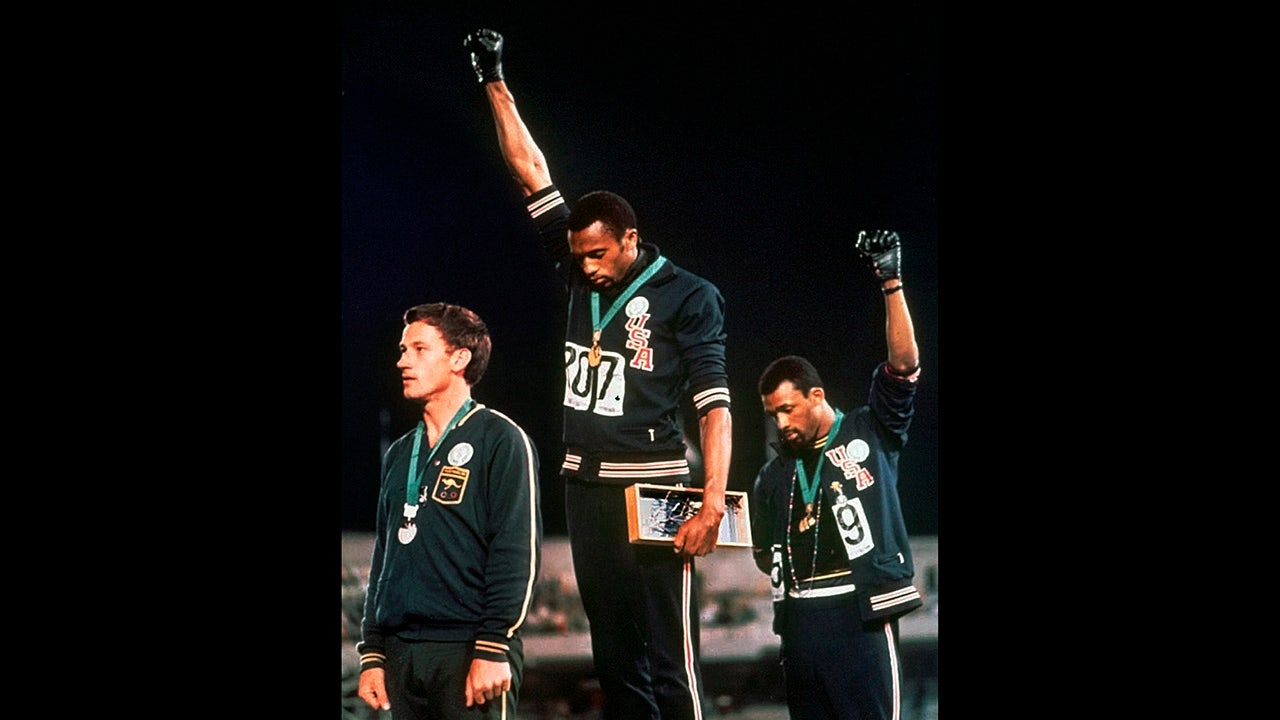
The lawmakers say it’s "unacceptable for athletes to use the Olympic Games as a pulpit to attack our country and spread divisive, anti-American political ideologies."Rosendale says it’s about following the rules. He notes that Rule 50 of the International Olympic Committee’s Charter bars "political, religious or racial propaganda" at Olympic venues."It doesn’t matter whether you’re running. Whether you’re bicycling. Whether you’re running a car around the track at NASCAR. There are rules," said Rosendale. "When you decide to commit to participate in those competitions, then you are checking your First Amendment rights to demonstrate at the door."But there are questions as to whether Republicans who wrote to the USOC actually support free speech – or just dislike the message some athletes propound from the podium."Republicans have been making some inroads by claiming that many members of the Democratic party have been working with the media and social media outlets to restrict free speech," said Mark Nagel who teaches the "History of Sport" at the University of South Carolina. "So it’s rather interesting that the Republicans are making an argument that essentially goes against what they’ve been making an argument for."Politics and the Olympics were always intertwined – practically from the beginning.Let’s start with 1906 Summer Olympics in Athens, Greece."There was actually an athlete from Ireland who protested by climbing up and taking down a flag and putting up the Irish flag," said Nagel. This came when there was a major dispute between Great Britain and Ireland over Irish independence.The Summer Olympics overshadowed President Jimmy Carter’s State of the Union address to Congress in the winter of 1980."I have notified the Olympic Committee that with the Soviet invading forces in Afghanistan, neither the American people nor I will support sending an Olympic team to Moscow," said Carter at the time. The Soviet Union then returned the favor, opting out of the Los Angeles Summer Games in 1984.Some Germans viewed the very participation of Jesse Owens at the 1936 Berlin Games as another form of protest.Owens captured four gold medals.But when he returned home, it wasn’t lost on Owens that President Franklin Delano Roosevelt never congratulated him on his performance.One of the best-known Olympic protests came at the 1968 Summer Games in Mexico City. American sprinters Tommie Smith and John Carlos raised their fists at the podium during the national anthem. Smith captured the gold and Carlos the bronze in the 200-meters. Smith later said his gesture was a "human rights" salute, and not a nod to "Black Power," as was characterized at the time."The mood of the country is very similar as 1968. We’re very fragmented," said Nagel. "I think it’s just a natural outcome of what’s been going on politically in the United States, over the last year or so."Former Sen. Ben Nighthorse Campbell, R-Colo., competed for the U.S. in Judo at the 1964 Games – also in Tokyo. Campbell opposes blending protests and sports."I think it’s a really a huge disrespect for your other teammates and for the nation to" demonstrate, said Campbell.Campbell observed that part of the Olympic motto is "higher, faster, stronger." Not about medals for political speech."There’s no place really in there where you’re supposed to display some kind of a political anger or animosity," said Campbell, a member of the Northern Cheyenne tribe. Campbell thinks the International Olympic Committee should strip athletes of their medals if they protest at the Games."I don’t think my anger would have allowed me to talk in friendly terms to them if I saw that actually happen at the Olympic Games," said Campbell.

Secret Service agents detained a driver of a suspicious vehicle located near the White House in Washington, D.C., on Wednesday morning.

Drone attack strikes U.S. Baghdad Diplomatic Support Center as suspected pro-Iranian militias launch six drones at major American facility in Iraq.

After being detained over his political activism, Mahmoud Khalil warns that punishing lawful speech under the guise of immigration enforcement sets a precedent that could erode constitutional protections for everyone.

Jeremy Carl, President Donald Trump's nominee for assistant secretary of state, withdrew his nomination Tuesday after facing bipartisan criticism over past comments.

Trump should ramp up fulfilling campaign promise of largest deportation effort in American history, targeting close to 20 million illegal aliens.

Former Rep. Bob Good slammed President Donald Trump's endorsement track record, declaring in a post on X, "you would literally do better by using Trump’s endorsement to know who NOT to vote for."

Sen. Tom Cotton, R-Ark., charged that the Biden administration drained strategic oil reserves for political gain, leaving national stockpile at 40-year low amid as the Iran war rages.

Trump administration tackles prescription drug costs and vaccine access, but balances public health with personal choice for American families.

Senate Republicans pass Mardi Gras resolutions while the SAVE America Act stalls. We're in the House Freedom Caucus and we want action on voter ID and citizenship verification measures.

Secretary of State Marco Rubio designated Afghanistan as a state sponsor of wrongful detention and demanded the Taliban release Americans in its custody.

ISIS terror plot suspects Emir Balat and Ibrahim Kayumi allegedly bought fireworks fuse before throwing explosive devices at protesters outside Gracie Mansion, facing federal charges.

The complaint sparked fierce backlash from DOJ officials, who argued that the DC Bar has unfairly targeted Trump's allies while overlooking former Democratic administrations.

Speaker Mike Johnson says President Donald Trump will help turn out Republican voters in the November midterm elections.