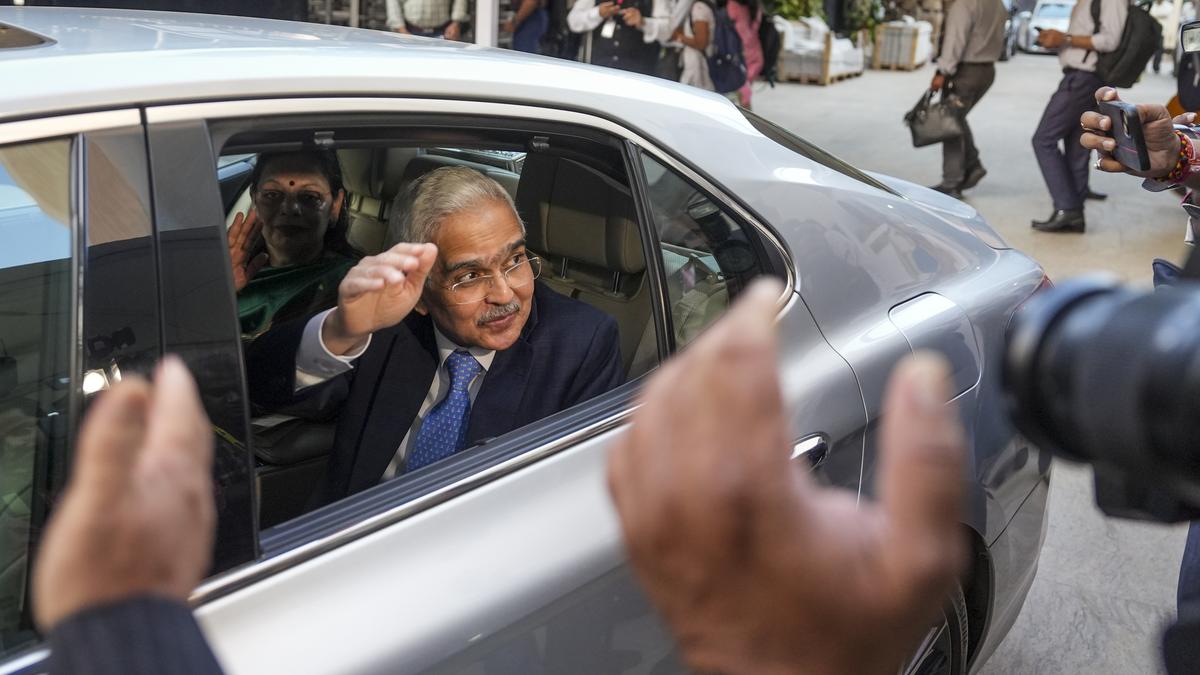
Repo Rate alone doesn’t impact growth: Shaktikanta Das
The Hindu
Governor Shaktikanta Das addresses criticism on RBI's monetary policy, emphasizing growth is influenced by multiple factors, not just interest rates.
Taking on criticism linking the Reserve Bank of India’s ‘tight’ monetary policy leading to a growth ‘sacrifice’ in recent months, Governor Shaktikanta Das, on his last day at the helm of Mint Street, asserted that everybody is entitled to a viewpoint but growth is impacted by a “multiplicity of factors” not just the benchmark interest rate.
“As I look at it, I think growth is impacted by multiplicity of factors, not just one factor of the Repo rate. Growth — high growth or slowing growth — are impacted by multiplicity of factors… and should be not looked at very simplistically,” he noted.
“Our effort has been to make the monetary policy as appropriate as possible, keeping in mind the prevailing conditions and, more importantly, the overall outlook on what lies ahead. Beyond that, the assessment of our policy is for others to make, but I think within the RBI, we are convinced that what we have done was the best option available under these circumstances,” he noted.
Mr. Das’ remarks assume significance after the RBI decided to hold the repo rate unchanged at 6.5% for its 11th straight bi-monthly monetary policy review last Friday, in the backdrop of inflation spiking to a 14-month high of 6.2% in October even as GDP growth fell to a seven quarter low of 5.4% in the July to September 2024 quarter.
Going forward, he identified “restoring the inflation-growth balance” as the most important task for the Reserve Bank of India, and exuded confidence that Team RBI, under the leadership of the new Governor Sanjay Malhotra, will take it forward. This, he said, was important for the wider economy as well.
On the flexible inflation targeting framework as opposed to other alternative approaches to maintaining price stability, the Governor said this approach was mandated by the RBI Act.
“Ultimately, the result [on inflation control] will be an outcome of the supply side measures, the government side measures, as well as the monetary measures taken by the Reserve Bank. So it is a synthesis. Beyond that, the approach will depend on the prevalent situation and the outlook. You cannot really define [it], Mr. Das said in response to a query from The Hindu.


LPG crisis: Alternative solutions are being considered, with ammonia cylinders being increasingly used for industrial applications amid delays in commercial LPG deliveries.

India monitors U.S. military pause on Iran as oil prices dip; External Affairs Minister engages with GCC nations for support.

India monitors U.S.-Iran tensions as Trump pauses attacks, leading to a significant drop in oil prices.

Union Minister Ashwini Vaishnaw launches three initiatives to enhance India's creative economy through AI training, citizen platforms, and advanced tech access.

Two Indian-flagged LPG tankers approach the Strait of Hormuz, navigating safely amidst regional tensions to reach Indian ports.

Gold and silver prices plummet over 7% due to West Asia tensions, inflation fears, and a stronger dollar.

Asian shares fall as rising oil prices and escalating Iran conflict diminish hopes for U.S. interest rate cuts.

Japan's SoftBank Group said Saturday it plans to build a huge new gas-fired power plant in the US state of Ohio

Silver prices plunge 9% to ₹2.06 lakh per kg in futures trade amid weak global cues and rising macroeconomic pressures.

OpenAI plans to nearly double its workforce to 8,000 from 4,500 by the end of 2026, the Financial Times reported on Saturday, citing two people with knowledge

Global equity markets plummet as West Asia tensions rise and oil prices surge, triggering significant investor anxiety.

The rupee hits a record low of 93.94 against the dollar amid foreign fund outflows and a crashing equity market.

The Thane police have arrested two co-founders of cryptocurrency exchange platform CoinDCX in connection with an alleged fraud of Rs 71.6 lakh, officials said