Remote Indigenous communities working with feds on mandatory COVID-19 vaccine exemptions
Global News
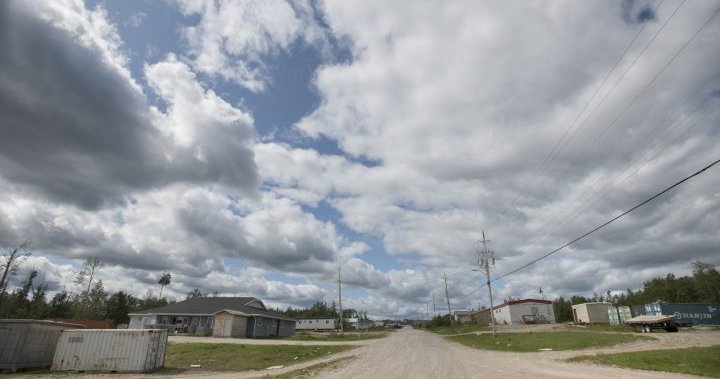
The vast majority of "remote" communities are so isolated the only way in and out is by plane, and essential services like medical visits are not accessible by any other means.
The federal government is working on exemptions to its newly released mandatory vaccine policy for people in remote Indigenous communities, many of which are only accessible by airplane.
The new policy calls for travellers over the age of 12 to provide proof they’ve received two doses of a Health Canada-approved vaccine at least 14 days before boarding a plane or train.
There are 182 communities that have been assessed by Transport Canada or the provinces and territories as “remote.”
The vast majority are so isolated the only way in and out is by plane, and essential services like medical visits are not accessible by any other means of transportation.
People in Neskantaga First Nation — about 450 kilometres north of Thunder Bay, Ont. — can only get in or out of the community by airplane in the summer, and occasionally ice roads in the winter.
“We rely on air service for pretty much everything. It’s just like the highways to us,” said Gary Quisess, a councillor on the First Nation.
People fly in and out of the community for food, medical appointments and even to commute to their jobs, he said, and they have no other options.
The community of 400 people, which has been under a boil-water advisory since 1995, recently lifted travel restrictions and now relies heavily on tests to protect against COVID-19.


U.S. officials said talks in Berlin led to narrowing differences on security guarantees that Kyiv said must be provided, as well as on Moscow’s demand that Ukraine concede land.

Ahmed Al Ahmed jeopardized his life when he tackled one of two alleged shooters to the ground and seized his gun during Sunday’s attack on a Jewish gathering on Bondi Beach.

'They passed directly in our flight path.... They don’t have their transponder turned on. It’s outrageous,' the JetBlue pilot said in a conversation with air traffic control.

At least 11 people were shot and killed on Sunday during a Jewish holiday celebration at Sydney’s Bondi Beach, Australian authorities said, declaring it a terrorist attack.

The victim was walking about 200 metres ahead of a friend near an area known as the '560-meter rocky peak,' when the friend heard a cry for help.

Thomas Plamberger and his girlfriend, Kerstin Gurtner, were attempting to scale Austria's tallest mountain in the middle of winter, despite her inexperience.

The Canadian economy achieved a trade surplus for the first time since the trade war began, as exports rebounded and imports fell in September, according to Statistics Canada.

The development has frustrated deportations of foreign nationals accused of fuelling B.C.'s extortion boom.

The NHL says if the ice rinks for the Milan Cortina Winter Olympics aren't to standards by game time, its players will not be attending the games.

Sixty-seven fertility clinics used the donor's sperm in 14 different countries.

The CBSA was responding to an officer who said the agency abandoned him amid an Indian disinformation campaign.

Trump's interview with Politico focused in part on a new national security strategy that sharply criticizes European allies and warns against NATO expansion.

Zelenskyy continued shoring up European support for Ukraine's position in peace negotiations, meeting with Italian Premier Giorgia Meloni in Rome and Pope Leo outside the city.