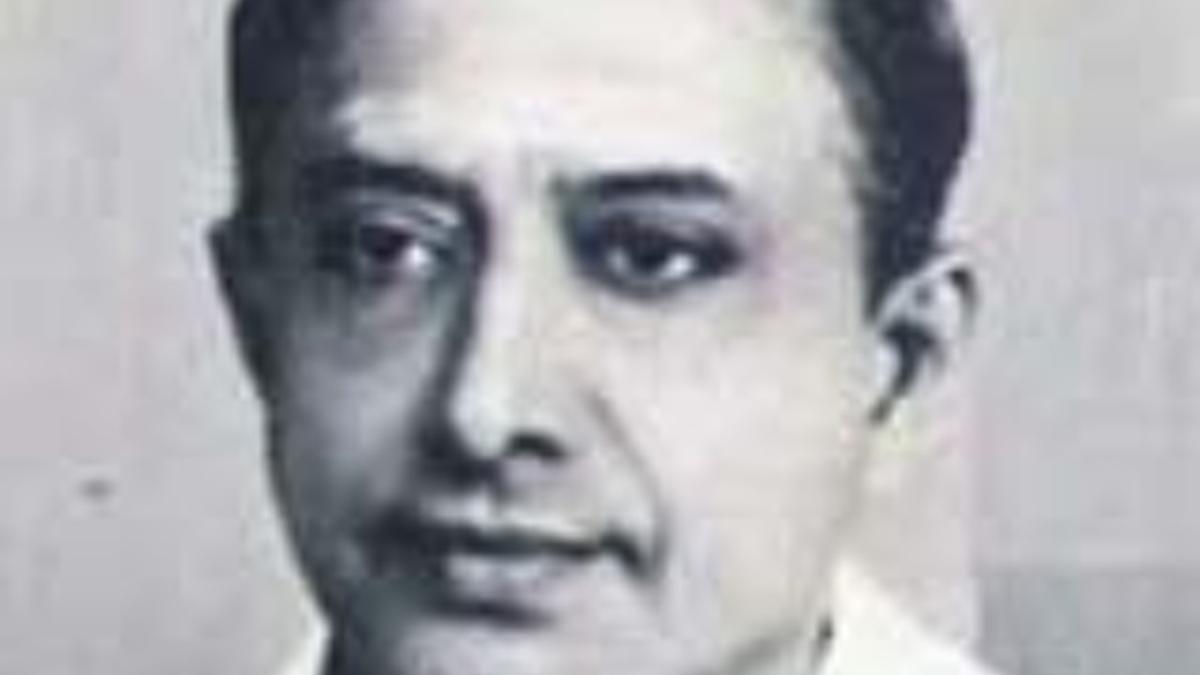
Remembering virtuoso vocalist Tanjore S. Kalyanaraman
The Hindu
Madhuradhwani organised a concert in memory of the Carnatic classical singer, Tanjore S. Kalyanaraman
To connoisseurs of Carnatic music, Tanjore S. Kalyanaraman was many things — a virtuoso vocalist, visionary composer and a bold innovator. SKR, as he is widely known, was an illustrious disciple of the legendary G.N. Balasubramaniam. His most distinctive contribution to the Carnatic canon was the creation of the 36 dwi-madhyama panchama-varja melas — derived by excluding the panchamam and employing both shuddha and prati madhyamas in tandem. He not only ideated these ragas, revolutionary in theory and demanding in practice, but also gave several of them form and soul through his own compositions.
On his 95th birth anniversary, Madhuradhwani paid a homage to SKR with a commemorative event at the Arkay Convention Center. The evening also featured a violin concert by Nagai R. Muralidharan, who was accompanied by Srimushnam V. Raja Rao on the mridangam and K.V. Gopalakrishnan on the kanjira. On the occasion were also present Cleveland Sundaram and Bhushany Kalyanaraman, among other dignitaries.
Born on June 2, 1930, in Thiruvengadu near Mayavaram, kalyanaraman belonged to the lineage of vidwans — Komal Muthu Bhagavathar (great grandfather) and Madhirimangalam Natesa Iyer (grand uncle). While his father N. Srinivasa Iyer initiated him into the art, musicologist Kittamani Iyer played a crucial role in bringing him under the tutelage of GNB, shared Muralidharan, quoting family sources.
Muralidharan recalled his first concert with SKR at George Town, Madras, in 1970. His guru R.S. Gopalakrishnan had requested that his student be permitted to accompany the maestro, alongside himself. That opportunity blossomed into a cherished association. “People often link SKR with vivadhi ragas because he sang them with finesse,” he noted, “but his renditions of mainstream ragas were equally compelling.” He cited SKR’s Thodi as an object lesson in raga development and breath control, evoking the grandeur of T.N. Rajarathnam Pillai’s music, and played recordings of SKR’s Thodi and Arabhi alapanas, which brought those memories alive for the audience.
The list of those who accompanied SKR reads like a roll call of Carnatic royalty — Lalgudi Jayaraman, T.N. Krishnan, M.S. Gopalakrishnan, M. Chandrasekaran, Palghat Mani Iyer, C.S. Murugabhoopathy, Umayalpuram Sivaraman, T.K. Murthy, Palghat Raghu, Karaikudi Mani, Mannargudi Eswaran, Raja Rao, and more — underscoring the esteem in which he was held, added Muralidharan.
Raja Rao fondly recalled SKR’s love for scooters, cars, gadgets, and surround sound set-ups long before they became a commonplace. It was SKR, he reminded, who first perfected and popularised the Tyagaraja kriti ‘Enta muddo’ in Bindumalini. Subbudu once, in his review, likened SKR’s sangatis to a bountiful cascade of parijata flowers tumbling down when the branches of the tree are shaken, Raja Rao said.
Sundaram reflected on his 18-year-long association with SKR, through his sister, who was his student. “SKR faced many challenges in his personal life. His wife, Bhushany, was his pillar of support andinstrumental in his several accomplishments. He was incredibly hard-working. It was a frequent occurrence that he would take up a single raga and kriti and practise for four hours, mostly in the company of MSG and Karaikudi Mani. He was neversatisfied with himself and always looked for improvement. Never one to complain, he once lamented — words that not only saddened but left a lasting impression on me: “uzhaikka kathundane thavira naan pizhaikka kathukkala“ (I learnt to work hard, but not how to make a living).


Horses shone at Auroville's 2026 event, showcasing equestrian talent through dressage, derby, and show jumping competitions.

Telangana Governor Shiv Pratap Shukla attends Bihar Foundation Day celebrations in Hyderabad, honoring Bihar's historical and cultural contributions.

Samsung workers protest for the reinstatement of 27 suspended employees, citing unfulfilled promises from the Labour Minister.

The Vice-Chancellor of Rajiv Gandhi University of Health Sciences (RGUHS) B. C. Bhagavan said on Sunday that the university will soon open a research centre on Yoga and Naturopathy on 60-acre land in Bengaluru.

UT Matters: Construction of Uppar drain road overbridge in Puducherry to be completed in four months, amid traffic regulations.

Union Minister Dharmendra Pradhan highlights Bharat Innovates' aim to elevate Indian deep-tech startups to the global stage.

In an exclusive interview, DMK MLA Ezhilan discusses Tamil Nadu's 2026 elections, party structure, and local governance challenges.

Minister Satish Jarkiholi asserts confidence in retaining Davangere and Bagalkot seats in upcoming bypolls amid addressing internal discontent.

Sunil Ambekar of RSS emphasizes national unity, defending road prayer restrictions and promoting awareness of shared ancestry in India.

Opposition MPs and activists voice strong concerns against proposed amendments to the Transgender Persons Act at a Delhi hearing.

Four Assam police commandos injured in an extremist attack during a gunfight in Tinsukia district, officials report.

Campaigning intensifies in Ernakulam district as candidates engage voters ahead of the crucial Assembly polls.

Lord Rama rides Hanumantha Vahanam on sixth day of Brahmotsavams in Tirupati