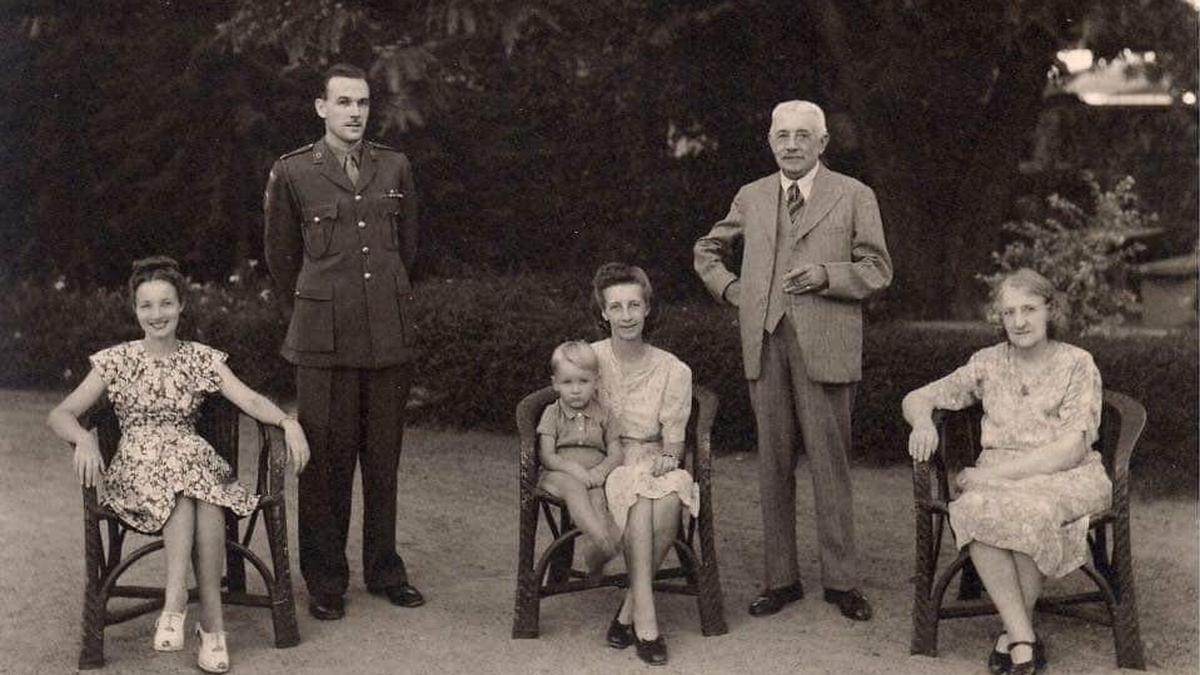
Remembering Gustav Krumbiegel’s legacy of Lalbagh
The Hindu
The ongoing flower show at Lalbagh is a chance to look back at its history and how it came to be the city’s landmark
Come August and the city gears up for one of its most colourful events — the Lalbagh flower show. A biannual event that attracts thousands of visitors, the flower show is not only a feast for the eyes but a treat for the senses. Bengaluru will witness the 216th edition of the show from August 8 to 19, and the theme is an ode to Dr BR Ambedkar, father of the Indian Constitution.
An invaluable asset to the city, the Lalbagh Botanical Gardens is arguably Bengaluru’s best lung space and goes back 200-odd years. With beautiful landscapes, flowers blooming all year around and thoughtfully planted trees, the gardens of Lalbagh have been meticulously planned to say the least. Credit goes to German horticulturalist and town planner, Gustav Hermann Krumbiegel, whose efforts gave Bengaluru its original moniker of the Garden City of India.
Having arrived in India at the age of 26, Krumbiegel, who was born in 1865, was the brain behind several gardens in India including countless tea gardens, coffee estates and gardens in educational institutions, hospitals, guest houses and military and railway offices.
“My great grandfather arrived in India at the request of Sayajirao Gaekwad III who was the Maharaja of Baroda,” says Alyia Krumbiegel, great granddaughter of Gustav Krumbiegel, who is currently visiting Bengaluru. “He designed his way from North India to South India and was the architect of the Kamatibaug in present-day Vadodara as well as the estates of Ooty and several other palace gardens.”
Sayajirao Gaekwad III met Krumbiegel on a visit to the Kew Gardens in the United Kingdom. Krumbiegel was in charge of the Kew Gardens then and impressed with his skills, the Maharaja invited him to India. “My great-grandmother joined him a year later and they were married in Bombay on the very day she landed. His children were all born in India,” adds the 63-year-old.
Krumbiegel’s work was soon noticed by Krishnaraja Wadiyar IV of Mysore who was a close associate of Sayajirao Gaekwad III. Wadiyar invited Krumbiegel to Mysore where he was appointed Superintendent of the Government Gardens in 1908. “His responsibilities included curating and maintaining public gardens such as Bangalore’s Lalbagh and Cubbon Park, Mysore Curzon Park and the Mysore Maharaja’s personal estates in Mysore and Ooty,” says Alyia. Gustav also established the Horticulture School in Mysore State in 1912.
As the curator and architect of Lalbagh, Krumbiegel bought in extensive development which included the introduction of a variety of flowering plants, a fumigation system to treat incoming and outgoing plants, improved infrastructure such as wide paths, lamp posts and beautification in terms of landscaping, lawns and flower beds.


Special prayers mark Eid-ul-Fitr celebrations in Madurai

India’s gem and jewellery industry continues to demonstrate remarkable resilience and a spirit of innovation, said Kirit Bhansali, chairman of the Gem and Jewellery Export Promotion Council (GJEPC), at the inauguration of the 4th edition of IIJS Bharat-Tritiya 2026 at Bengaluru International Exhibition Centre (BIEC) here on Saturday, March 21.

HYDGEN dispatches eight modular green hydrogen systems to Surat, enhancing on-site industrial hydrogen generation and operational efficiency.

Fight is between AIADMK and DMK, says Rajan Chellappa

Two habitual offenders arrested in Miyapur for wine shop burglary; police recover stolen cash and bike.

Tiruchi's Smart City projects face underutilisation despite completion, raising concerns about planning, execution, and revenue generation.

Election Observer Anubha Shrivatsava inspects polling booths in Western Ghats, ensuring smooth arrangements amid challenging conditions.

A.P. Minister announces ₹9.8 crore development of Barashaheed Dargah and ₹20 crore international school for minorities in Nellore.

Vice-President Radhakrishnan advocates for modern university syllabi to enhance employability and skill development in today's evolving job market.

A poignant protest at Palakkad Medical College highlights ongoing developmental challenges, initiated by a symbolic wreath-laying by a young girl.

A three-year-old girl was tragically killed by a truck while walking with her mother near Bengaluru.

Iran's President calls for U.S.-Israeli aggression cessation and urges BRICS to ensure regional peace and security.

Harish Rao accuses govt. of cancelling ₹1,070 cr. work sanctioned to Siddipet