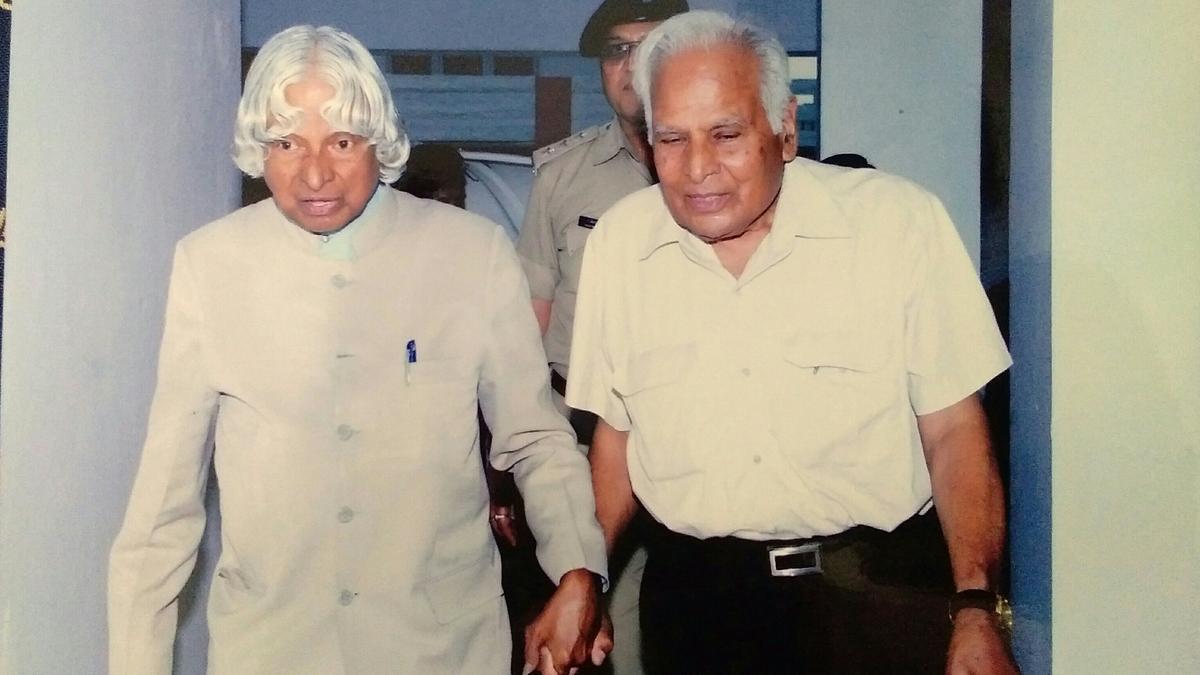
Remembering Dhirendra Sharma, quintessential dissenter and academic-activist
The Hindu
Professor Dhirendra Sharma's legacy as a nuclear critic and science communicator in India, a life of activism and advocacy.
With the passing away of Professor Dhirendra Sharma (1932-2024) in Dehradun this week, a highly contested and sensational chapter in the history of nuclear technology development in India has ended. Prof. Sharma was the first intellectual to publicly criticise the nuclear programme in India and lead a campaign against nuclear power. Though the government did not roll back its nuclear energy development efforts, Prof. Sharma’s relentless campaign on the safety and techno-economic issues forced long-term systemic changes in the field. He did all this as a public policy expert working in a public university – Jawaharlal Nehru University (JNU) in Delhi – and ended up paying a price for raising uncomfortable questions.
Armed with a doctorate in philosophy from the University College London and a decade-long teaching experience in American universities, Prof. Sharma was appointed an associate professor in the newly established JNU in 1974. He was a member of the founding faculty of the Centre for Studies in Science Policy at the School of Social Sciences. The centre was headed by B.V. Rangarao — a pharmaceutical industry expert — and Prof. Sharma succeeded him.
The period coincided with several political and technological changes in India and worldwide: the oil shock, the ‘Peaceful Nuclear Explosion’ (PNE) at Pokhran, the emergency, and the emergence of the Janata Party regime. The nuclear power programme, by this point, was more than two decades old and the Department of Atomic Energy (DAE) was drawing up ambitious plans for generating commercial nuclear power. Against this backdrop, Prof. Sharma decided to focus on the study of nuclear and energy policies in India but within the ambit of the academy. He began by studying the sociology of science and organised lectures on energy policy and writing research papers and monographs on energy policies with a focus on nuclear energy.
In one such paper, Prof. Sharma warned of “a great danger of our energy policy becoming the captive of the nuclear technological elite”. He argued: “Our national energy planning and our military and defence interests would be better served by developing solar technology” and not nuclear energy and the bomb. To achieve the target to produce 10,000 MW of nuclear electricity by 1990, he estimated India would require 2,000 tonnes of heavy water every year to run 44 reactors with 230 MW capacity each, an army of trained personnel, and massive investments. It was the first-ever critical evaluation of nuclear power in India.
With his experience of participating in antiwar, anti-nuclear, and civil rights movements in the U.K. and the U.S. while being in academia, Prof. Sharma took the next step: he organised the Committee for a Sane Nuclear Policy (COSNUP) in June 1981, the first such civil society body in India. The committee issued a statement signed by eminent citizens, including former diplomat and Mr. Nehru’s sister Vijayalakshmi Pandit, expressing concerns over the emergence of a nuclear bomb lobby in India and calling for a rethink.
All this did not go well with the establishment. JNU formed a nine-member panel headed by none other than Raja Ramanna, the ‘father’ of the PNE and soon to be the head of the DAE, to review the working of the science policy centre chaired by Prof. Sharma. As expected, the panel recommended the centre’s closure and said science policy research should focus on topics like the law of the seas, science education, etc. and that this did not warrant a dedicated centre. The centre was not shut but Prof. Sharma remained the target of the university establishment.
In a landmark book, ‘India’s Nuclear Estate’, released in May 1983, Prof. Sharma gave an inside view of the nuclear establishment and pointed to several holes, like the lack of an independent regulatory authority and any plan for safe disposal of nuclear waste. The book was based on information he collected during the Janata Party regime (1977-1979), when he was allowed to visit nuclear installations, meet scientists and access internal records.


Discover the Minor Planet Centre, the key hub for tracking and verifying observations of small solar system bodies.

Discover the Minor Planet Centre, the key hub for tracking and verifying observations of small solar system bodies.

In this week's Science for All newsletter, XX explains

Test your knowledge with the quiz on Science films at the Oscars through history

Set between the Siwalik hills and the plains, Butwal offers travellers a mix of regional cuisine, pilgrimage trails to Lumbini and the comfort of Hyatt’s new hospitality landmark

Explore 2026's wallpaper trends in India, highlighting botanicals and handmade designs that enhance modern homes with nature-inspired aesthetics.

Mercedes-Benz CLA 250+ with EQ Technology review: design, performance, range and features explained. Discover how the new electric CLA combines advanced AI, long range, fast charging and futuristic styling for the next generation of luxury EVs.

AI tool for sparrow conservation

BTS’s comeback with ‘Arirang’ marks a major global music event. When does the album release, and where can you watch their concert live stream? We have all the details

The 2026 U.S. cholesterol guidelines urge starting screening and treatment at 30 to prevent cardiovascular disease effectively.

Olam Festival 2026 in Thiruvananthapuram returns March 27-29 with 120+ vendors, music, art, and cultural zones.

A few storytellers in Thiruvananthapuram share their journeys, challenges, and evolving methods on World Storytelling Day, inspiring young minds.

76-year-old Kurian Jacob from Kerala triumphs with seven medals, including five golds, at the Open Masters Games in Abu Dhabi.