Recounting Velpur’s story in ending child labour Premium
The Hindu
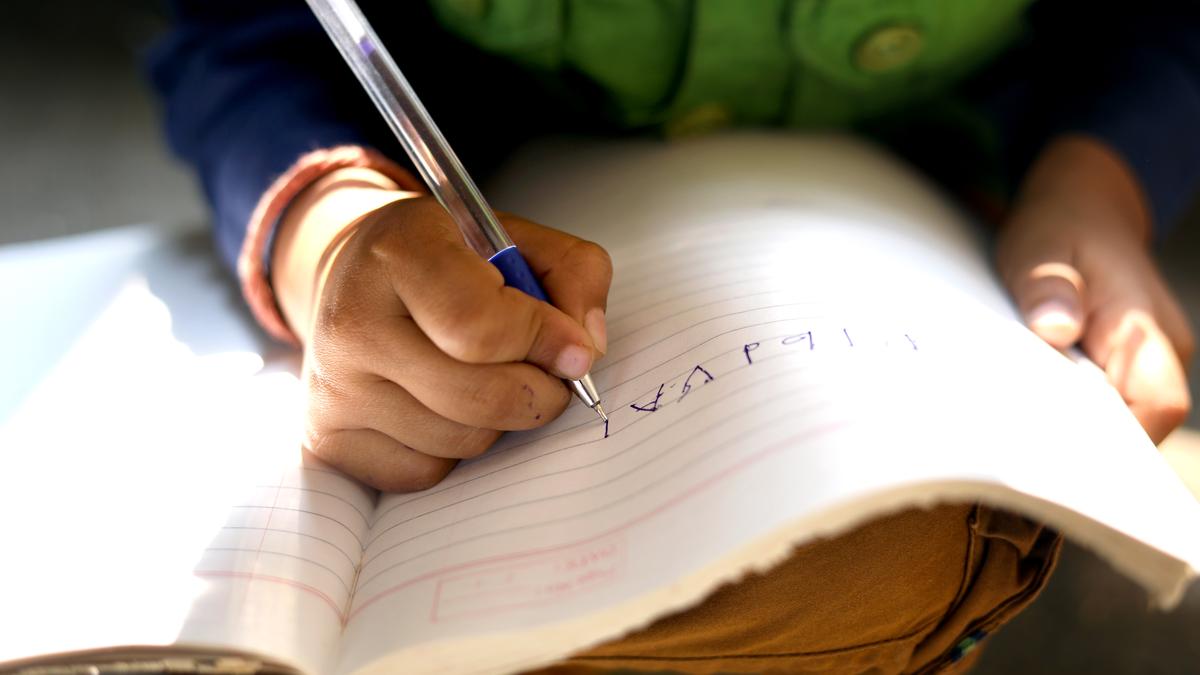
Velpur Mandal of Nizamabad district in erstwhile Andhra Pradesh was once notorious for child labour, but, in a dramatic way, became a rare exception of shunning child labour
Every year, June 12 is observed as World Day Against Child Labor (WDACL) under the auspices of the International Labour Organization (ILO). In an attempt to draw the attention of the world on the issue of child labour, the day brings together governments, employers and workers’ organisations as well as civil society to work towards ending child labour. Though Sustainable Development Goal Target 8.7 calls on the global community to take effective measures to end child labour in all its forms by 2025, we are far from achieving this.
Child labour is prevalent all over the world, robbing many children of their basic right to live with dignity, enjoy their childhood and attain their full development potential. Across the world, 160 million children are estimated to be involved in child labour — which is almost one among 10 children. The Africa, Asia and the Pacific regions together account for almost nine out of every 10 children being in child labour. The COVID-19 pandemic exacerbated the situation for many underprivileged children, when their schools closed, and their parents lost their jobs/wages. Many children who dropped out of school, and who were forced to work to supplement their family income, have not returned to school.
India has a significant incidence of child labour. Census 2011 estimated that 43.53 lakh children in the age group of five to 14 were involved in child labour due to factors such as poverty, non-accessibility and illiteracy. Child labour is preferred in beedi, carpet-weaving and firework factories.
India enacted the Child Labour (Prohibition and Regulation) Act (CLPRA) in 1986, while the National Policy on Child Labour, 1987 sought to adopt a gradual and sequential approach with a focus on rehabilitation. Its action plan included strict enforcement of the CLPRA and implementation of the National Child Labour Project (NCLP) in areas where there is a high incidence of child labour. The CLPRA was replaced with the Child Labour (Prohibition and Regulation) Amendment Act, 2016, which prohibited the employment of children below 14 and had provisions for the prohibition on employment of adolescents (14-18 years) in scheduled hazardous occupations. The Right to Education now mandates that the state shall provide free and compulsory education to all children in the age group six to 14 years.
Most drives against child labour have been effective but only for a short time. There are several instances of children who were engaged earlier in labour and who dropped out of school returning to their workplace. But there is a success story.
Velpur Mandal (tehsil) of Nizamabad district in erstwhile Andhra Pradesh (now Telangana), was once notorious for child labour. But in a dramatic way it became a rare exception of shunning child labour due to the total control, the commitment and the involvement of the local community. In June 2001, a drive involving the community was started in Velpur to ensure that all children in the age group of five to 15 years went to school and that no child would be engaged as labour in any form. After a sustained campaign for about 100 days, Velpur was declared to be a “child labour free mandal”, on October 2, 2001. Twenty-four years later, there is 100% retention in schools and no child labour in a mandal once notorious for it.
The campaign to identify and track every out-of-school child and enrol them in schools was initially led by a committed set of officials. But the fact is that there was large-scale resistance in the beginning. Canards were spread that the teams moving in villages were part of a nationwide racket to kidnap children and sell their organs such as kidneys and eyes. Hotels refused to serve even tea, with those in hotels making sarcastic remarks that all their servers had joined school.


Horses shone at Auroville's 2026 event, showcasing equestrian talent through dressage, derby, and show jumping competitions.

Telangana Governor Shiv Pratap Shukla attends Bihar Foundation Day celebrations in Hyderabad, honoring Bihar's historical and cultural contributions.

Samsung workers protest for the reinstatement of 27 suspended employees, citing unfulfilled promises from the Labour Minister.

The Vice-Chancellor of Rajiv Gandhi University of Health Sciences (RGUHS) B. C. Bhagavan said on Sunday that the university will soon open a research centre on Yoga and Naturopathy on 60-acre land in Bengaluru.

UT Matters: Construction of Uppar drain road overbridge in Puducherry to be completed in four months, amid traffic regulations.

Union Minister Dharmendra Pradhan highlights Bharat Innovates' aim to elevate Indian deep-tech startups to the global stage.

In an exclusive interview, DMK MLA Ezhilan discusses Tamil Nadu's 2026 elections, party structure, and local governance challenges.

Minister Satish Jarkiholi asserts confidence in retaining Davangere and Bagalkot seats in upcoming bypolls amid addressing internal discontent.

Sunil Ambekar of RSS emphasizes national unity, defending road prayer restrictions and promoting awareness of shared ancestry in India.

Opposition MPs and activists voice strong concerns against proposed amendments to the Transgender Persons Act at a Delhi hearing.

Four Assam police commandos injured in an extremist attack during a gunfight in Tinsukia district, officials report.

Campaigning intensifies in Ernakulam district as candidates engage voters ahead of the crucial Assembly polls.

Lord Rama rides Hanumantha Vahanam on sixth day of Brahmotsavams in Tirupati