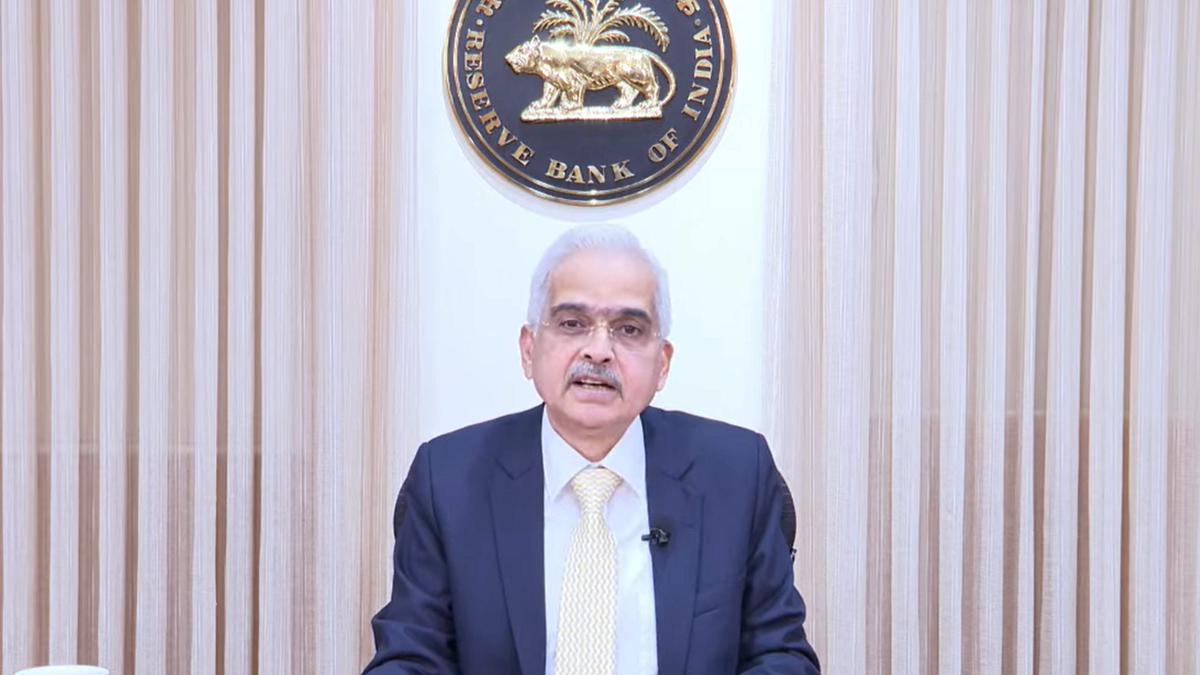
RBI to introduce offline eRupee transactions soon: Shaktikanta Das
The Hindu
Digital Rupee users will soon be able to execute transactions in areas with limited internet connectivity as the Reserve Bank of India (RBI) on February 8 announced that offline capability will be introduced on the Central bank digital currency (CBDC) pilot project.
Digital Rupee users will soon be able to execute transactions in areas with limited internet connectivity as the Reserve Bank of India (RBI) on February 8 announced that offline capability will be introduced on the Central bank digital currency (CBDC) pilot project.
RBI Governor Shaktikanta Das said that programmability-based additional use cases will be introduced as part of the pilot project. RBI launched a pilot of the retail CBDC in December 2022 and achieved the target of having 10 lakh transactions a day in December 2023.
It can be noted that other payment platforms, especially the very popular Unified Payments Interface (UPI), already offer offline possibilities.
"It is proposed to introduce an offline functionality in CBDC-R (Retail) for enabling transactions in areas with poor or limited internet connectivity," Mr. Das said while announcing the bimonthly monetary policy review.
He said multiple offline solutions, which include both proximity and non-proximity based ones, will be tested across hilly areas, rural and urban locations for the purpose.
On the programmability front, he said that currently, the system enables Person to Person (P2P) and Person to Merchant (P2M) transactions using digital rupee wallets provided by pilot banks.


India imposes anti-dumping duties on Chinese steel and refrigerant gas to protect domestic industries from unfair pricing.

Sensex declines for the third day, losing 367 points due to foreign fund outflows and thin trading conditions.

Let’s take a look at some of the biggest crypto events of the year.

Silver futures soar to ₹2.32 lakh/kg as global prices exceed $75, marking a record high in commodities trading.

Stock markets decline as Sensex and Nifty fall amid foreign fund outflows and low trading volumes on December 26, 2025.

Rupee drops 23 paise to 89.94 against the dollar amid negative equity trends and rising crude prices.

The commencement of commercial flight from the Navi Mumbai International Airport (NMIA) is expected to speed up infrastructure and real estate development across Navi Mumbai and surrounding regions, analysts & industry executives said.

GCCs keep India’s tech job market alive, even as IT services industry embarks on a hiring moratorium
Global Capability Centres, offshore subsidiaries set up by multinational corporations, mostly known by an acronym GCCs, are now the primary engine sustaining India’s tech job market, contrasting sharply with the hiring slowdown witnessed by large firms in the country.

India’s manufacturing sector underperforms compared to China and South Korea, partly due to public sector wages that raise costs and reduce competitiveness.

Non-Resident Indians (NRIs) from the Gulf Cooperation Council (GCC) region, once prominent investors in the Indian equity market are seen shying away due to rupee depreciation and have moved to global funds, said a top financial services executive.

Mobile phones are increasingly migrating to smaller chips that are more energy efficient and powerful supported by specialised Neural Processing Units (NPUs) to accelerate AI workloads directly on devices, said Anku Jain, India Managing Director for MediaTek, a Taiwanese fabless semiconductor firm that claims a 47% market share India’s smartphone chipset market.

In one more instance of a wholly owned subsidiary of a Chinese multinational company in India getting ‘Indianised’, Bharti Enterprises, a diversified business conglomerate with interests in telecom, real estate, financial services and food processing among others, and the local arm of private equity major Warburg Pincus have announced to collectively own a 49% stake in Haier India, a subsidiary of the Haier Group which is headquartered in Qingdao, Shandong, China.

Indian stock markets closed lower amid volatility, with key firms lagging as global trends influenced trading activity.