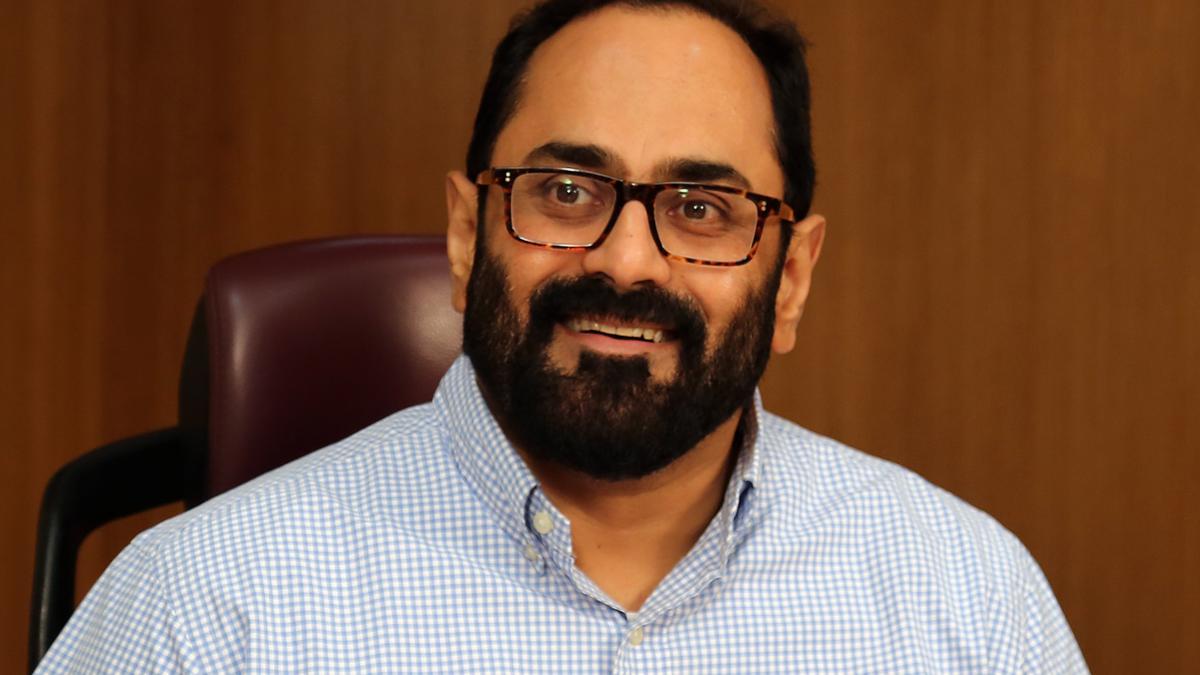
RBI action on Paytm Payments Bank has drawn fintechs' attention to compliance of laws: Chandrasekhar
The Hindu
Paytm Payments Bank issue: Union Minister Rajeev Chandrasekhar emphasizes the importance of regulatory compliance for fintech firms amid Paytm Payments Bank crisis.
The Reserve Bank's regulatory action on Paytm Payments Bank has drawn the attention of fintech firms to the importance of complying with laws, Union Minister Rajeev Chandrasekhar has said.
The Minister stressed that regulatory compliance cannot be "optional" for companies, rather it is an aspect every entrepreneur must pay full attention to.
In an interview to PTI, Mr. Chandrasekhar — the Minister of State for Electronics and IT — said the issue of Paytm Payments Bank is a case where a hard-charging and aggressive entrepreneur has failed to realise the need for regulatory compliance, and that no company can get away if it is non-compliant with law.
Also Read | Enforcement Directorate questions Paytm executives; gets documents on latest RBI action
Any company, be it from India or abroad, big or small, has to abide by the law of the land, the Minister asserted amid the unfolding Paytm Payments Bank Ltd (PPBL) crisis.
The Reserve Bank of India (RBI) has barred PPBL from accepting new deposits from March 15, and ruled out any review of its action against the company.
Mr. Chandrasekhar said the notion that RBI action on PPBL had rattled fintechs, was not a correct characterisation. The politician, entrepreneur and technocrat disagreed that the Paytm Payments Bank issue had raised worries about detrimental consequences for the entire fintech industry.


RBI approves HDFC Bank's chairman transition plan, affirming the bank's strong financials and competent management.

Markets fall 2% as Israel attacks Iran’s South Pars gas field, pushing Brent crude above $112 and rupee below ₹93.

HDFC Bank shares drop over 4% following chairman’s ethical resignation, raising insider trading and management concerns.

Erran Berger, the Vice President of Product Engineering at LinkedIn, thinks the former type of division of labour is rapidly disappearing

India mandates oil and gas firms to share import and export data to mitigate consumer shortages amid rising global prices.

HDFC Bank's chairman Atanu Chakraborty resigns over ethical concerns; Keki Mistry appointed interim chairman for three months.

Stock markets continue to rise for the third day as Sensex and Nifty gain nearly 1%, fueled by IT stocks.

Indian-flagged vessels in the Strait of Hormuz carry 2 lakh MT LNG and 16.7 lakh MT crude, amidst geopolitical tensions.

Equity analysts downgrade earnings forecasts for oil marketing companies, citing rising costs and market pressures for fiscal 2027.

Plastic product prices may surge by 50-60% in April due to rising polymer costs amid ongoing geopolitical tensions.

Centre offers 10% more LPG to States that accelerate piped gas rollout amid ongoing supply challenges and increased consumer demand.

Indian-flagged vessels in the Strait of Hormuz carry 2 lakh MT LNG and 16.7 lakh MT crude, amidst geopolitical tensions.

Stock markets continue to rise for the third day as Sensex and Nifty gain nearly 1%, fueled by IT stocks.