Rare tree species get conservation space at Goodrickal forests in Kerala
The Hindu
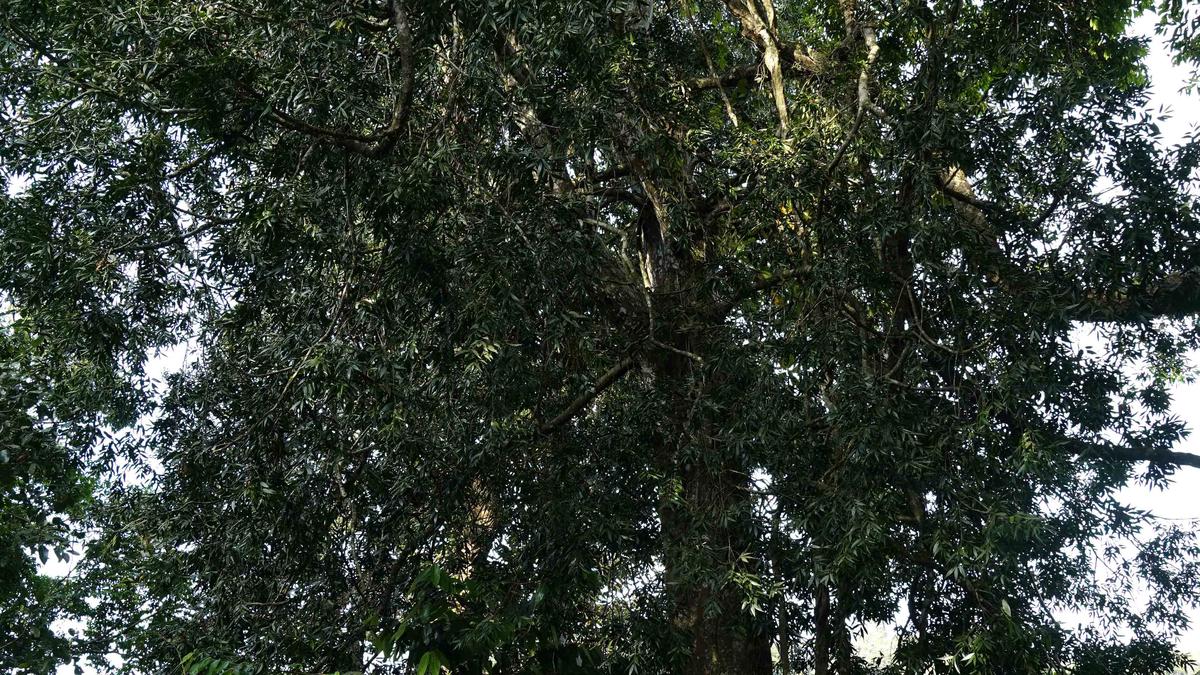
Gophers (Nageia wallichiana) have even found a mention in the Bible
Deep inside the dark green forests of Goodrickal at Ranni, there are a couple of patches of land that serve as a hub of trees with a brown-and-white mottled appearance. Called gophers ( Nageia wallichiana), these trees belong to a fabled species – one that has even found a mention in the Bible.
At the sites here, they remain under the strict eyes of the Forest department, with a special team patrolling the area regularly and tending to the trees which are in different stages of growth.
These locations, at Thirukuthi and Kadamankunnu, form the centrepiece of an effort by authorities to offer an optimum habitat for the rare species that has been on the brink of extinction. A break in its regenerative cycle over the decades, according to forest officials, has severely affected its natural distribution here.
“Our conservation sites, spread over a total area of 4.5 hectares, have 38 gopher trees that are over two years old and five others that are matured,” says Money S., range officer, Goodrickal.
According to the official, the plots were identified on the basis of a study by the Kerala Forest Research Institute (KFRI). To ensure the protection of trees, moisture conservation pits have been dug at these sites and fire lines have been erected. Forest officials from the Pachakkanam station and fire watchers have been deployed to keep the sites under close watch.
Found only in a few parts of the world, the gopher trees were believed to have been used by the Biblical patriarch Noah to build the ark to survive the great deluge. However, beyond this biblical connection, the species assumes a botanical significance for maintaining a strict habitat integrity.
“In India, these trees grow only in pure, evergreen forests to the South of the Palakkad Gap on the Western Ghats,” explains Jomy Sebastian, a botanist who has studied the species extensively. He attributes the dwindling population of the species to a threat to its natural habitat due to human interventions.


Assembly protest ends in arrests as BJP targets Government over guarantees

Andhra Pradesh accelerates city gas distribution with streamlined approvals, enhancing access to cleaner energy and supporting sustainable urban development.

Sattankulam father-son custodial deaths case: Trial court convicts all nine accused police personnel
Nine police personnel convicted in Sattankulam custodial deaths; sentencing to be announced on March 30.

Minister Laxmi Hebbalkar supports local protests against a solid waste management plant in Turmuri, addressing residents' concerns.

Sattankulam father-son custodial deaths case: Trial court convicts all nine accused police personnel
Nine police personnel convicted in Sattankulam custodial deaths; sentencing to be announced on March 30.

Erode district conducts first EVM randomisation for April 23 Assembly elections, ensuring transparency and fairness in allocation.

TNCC conducts public consultation in Erode to gather community input for its upcoming election manifesto.

CID to investigate sexual assault allegations against suspended Moodbidri Police Inspector P.G. Sandesh, reveals Home Minister Parameshwara.

A 50-year-old woman was found dead in southwest Bengaluru’s Kengeri in the early hours of Monday, the police said.

Papanasam dam's water level reaches 66.15 feet, with inflow at 76 cusecs and discharge at 300 cusecs.

Development without impact: Coastal residents of Kanniyakumari and Nagercoil constituencies voice discontent

Rampant encroachments in Tiruchi threaten pedestrian safety and traffic flow, undermining smart pavement initiatives and exacerbating congestion.

Discover Kerala's electoral history in 'Vottarivu,' a 201-page booklet released ahead of the 2026 Assembly elections.