‘Raksha Bandhan’ movie review: Akshay Kumar shines in this festival crowd-pleaser
The Hindu
The film’s engaging powerful anti-dowry sentiments, along with Akshay’s brilliant comic timing, ensures that there is enough to keep the audience tied for two hours
When players are out of form, they are advised to spend some time on the home turf. It seems director Aanand L. Rai and Akshay Kumar have listened to the advice and have conjured up a festival crowd-pleaser that celebrates the brother-sister bond, and makes a stinging comment on dowry.
If judged through the trailer, the film might appear like a regressive idea wrapped in an outdated package. It has been three decades since the Hindi film industry asked Yeh Aag Kab Bujhegi (1991). Dowry deaths continue to happen despite stringent laws, but they have stopped making headlines or inspiring filmmakers.
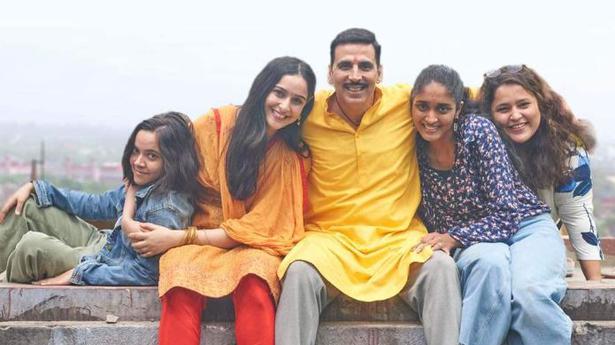
Set in Old Delhi, in the week of gol gappas, Akshay plays Lala Kedarnath, who runs a chaat shop where his speciality is water pancakes for pregnant women who want a male child. A brother to four sisters, his principal aim in life is to arrange dowry for their weddings, even if it means selling his kidney. It is hard to believe that the idea of financial independence for girls hasn’t gained ground in the national capital, but the writers, Himanshu Sharma and Kanika Dhillon, have woven in a bouquet of emotions. Raksha Bandhan has enough material to keep the audience tied for two hours, and the pace and pitch of the narrative are such that it doesn’t allow you to easily gauge the gaps.
The politically-incorrect Dilli humour of the first half seamlessly flows into the equally powerful anti-dowry sentiments of the second. In between, backed by Himesh Reshmmaiyya’s Punjabi tunes, Aanand evokes the traditional brother-sister love that has gone missing from Hindi cinema.
An expert at pulling the heartstrings, in a way, Aanand has returned to the Tanu Weds Manu zone which lends Akshay the platform to flex his irreverent funny bone. It has been a while since the actor gave such a free-flowing performance where his comic timing and emotional vulnerability are evenly matched. Sadia Khateeb, Deepika Khanna, Smriti Shrikant and Sahejameen Kaur provide good support as doting sisters.
Despite having a well-oiled heart, some of the creaking nuts and bolts in the narrative are very apparent. Kedarnath is so worried about the wedding of his sisters that he delays his own marriage with his love interest Sapna (Bhumi Pednekar). Why can’t his sisters find love or why can’t Sapna pick up a job? Why the girls are so focused on finding a groom at an age where they should be keen on finding their feet is left without a discussion. If the brother is out of tune with the times, the sisters could voice their concerns. It seems the sisters have little agency... because the brother is being played by Akshay. Education doesn’t seem to be on the priority list of the formidable wedding planner (Seema Pahwa) either.
There are times when it feels that, in the name of creating an atmosphere of everyday toxic patriarchy, the writers begin to enjoy fat-shaming and colour-shaming the sisters. But eventually, Himanshu and Kanika return to 2022 and redeem Raksha Bandhan.


Bollywood actor Akshay Kumar paid tribute to the martial arts grandmaster and Hollywood’s action star, Chuck Norris, who passed away on Thursday, March 19, 2026.

Renowned Odissi dancer Madhumita Raut, aged 59, dies of cardiac arrest, leaving behind a legacy of artistic achievements.

Chuck Norris, iconic martial arts master and actor, dies at 86, leaving behind a legendary legacy and internet memes.

South African naturalist Steve Boyes speaks on ghost elephants, ancestral tracking, and Werner Herzog’s documentary exploring Angola’s elusive highland giants

Actor-director Amol Palekar will receive META's Lifetime Achievement award for 2026 on March 25 in New Delhi.

India's artists unite against rising censorship, advocating for creative freedom and support for marginalized voices in the arts.

Written and directed by Kunal, the film also stars Sparsh Shrivastava and Vanshika Dhir

This year, Bharatnatyam artistes will present the Tyagaraja Aradhane as a dance performance

This year, Bharatnatyam artistes will present the Tyagaraja Aradhane as a dance performance

The actor, along with director Sushant Shah, speak about their upcoming series ‘Chiraiya’, Divya’s process of working on the dialect, Sushant’s approach to telling a story about women, and more

An independent video, ‘Feel the Spark’ by Raleigh Rajan with vocals by Ciera Dumas that celebrates Tamil literary giants, garnered 1.4 million views in less than 36 hours.

In ‘Jack Ryan: Ghost War’, John Krasinski is back as the savvy CIA analyst, diving headfirst into a high-stakes mission that unravels a deadly conspiracy and pits him against a rogue black-ops unit

Shriram Bharatiya Kala Kendra’s Shankarlal festival showcased rare ragas, radiant artistry, and inclusive performances, from Pt Madhup Mudgal’s serene morning ragas to Ramana Balachandran’s Saraswati veena.