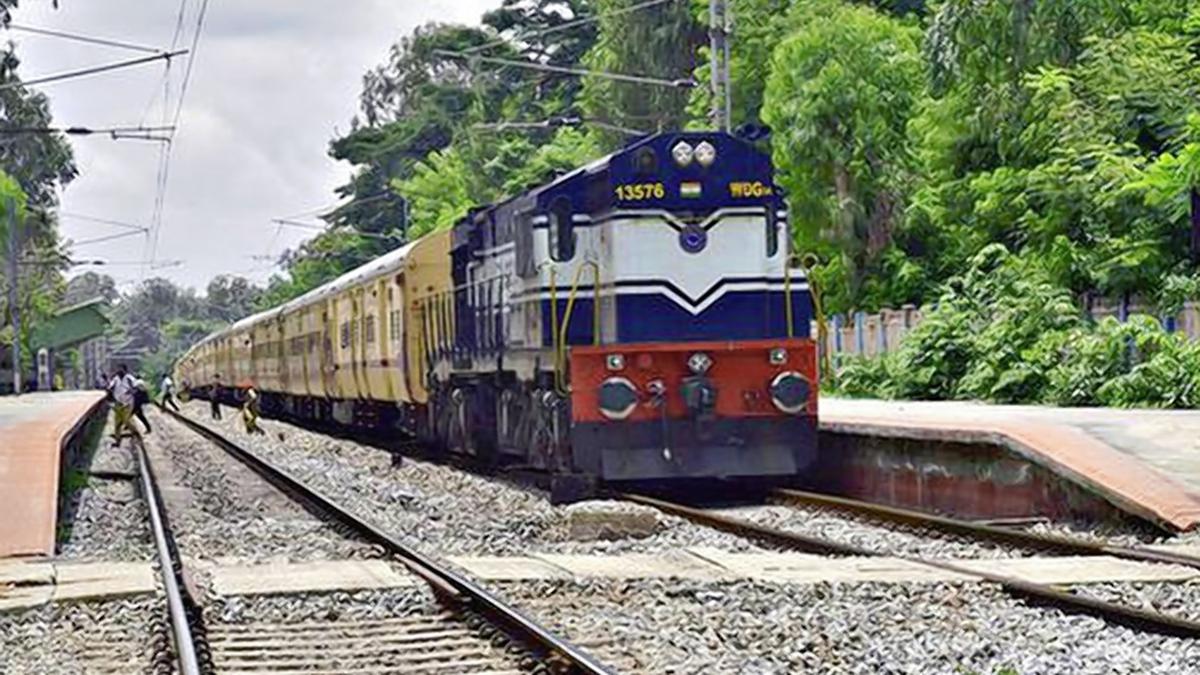
Railways withdraws emergency cashless treatment scheme
The Hindu
Railways withdraw Cashless Treatment Scheme in Emergencies (CTSE); no refund for card holders. Special case for retired employees aged 75+ to seek OPD consultation in empanelled private hospitals.
The Indian Railways has withdrawn the Cashless Treatment Scheme in Emergency (CTSE), a medical facility which benefitted a few lakh serving and retired employees and their dependent family members across the country.
A pilot project for providing cashless treatment during emergencies in private Railway-empanelled hospitals was initially launched in metro cities in 2016. Later the ambit of the scheme was expanded across the railway network facilitating serving and retired employees and their dependent family members to avail treatment in private hospitals during emergencies.
The Railway Board reviewed the implementation of the scheme and after a careful deliberation decided to withdraw the CTSE with immediate effect. It was also decided that no refund would be issued to CTSE-card holder for the amount that was deposited for subscription to the scheme.
While introducing the scheme, the Railways had said comprehensive healthcare facilities were being provided through a network of hospitals to serving and retired employees, and their dependent family members.
It was felt that a large number of retired beneficiaries lived in the newly-developed suburbs of various cities across India. These suburbs were often far away from the established railway health institutions. In this scenario, precious time was lost in the travel to the Railway hospitals in case of emergency.
The CTSE was rolled out and empanelled private hospitals were nominated to provide necessary treatment in emergencies and raise the bill directly to the Railways.
The scheme, designed to work seamlessly on a pan-India basis, facilitated any retired employee settling in any city or moving from place to place to get emergency treatment anywhere in the country without the need for any referral from the local railway medical authorities.


Perundurai's industrial growth faces challenges of pollution, water scarcity, and healthcare, impacting residents ahead of the 2026 elections.

The Travancore Devaswom Board asserts that courts should respect community beliefs in its Supreme Court submission on Sabarimala's entry issue.

Karnataka cancels Deendayal Upadhyay event at KSOU due to protocol violations, citing inconsistency with university objectives.

Illegal pickle unit busted in Hyderabad, one arrested; unhygienic stock worth ₹3 lakh seized

Karnataka has entered a state of demographic transition where a large working-age population will no longer be enough to drive economic growth, and future gains will depend on how productively people are employed, the ‘State of Working India 2026’ report said.

Key demands in Sulur Assembly constituency include reviving the powerloom sector, addressing farmers' needs, and protecting River Noyyal.

Kodihalli urges Karnataka CM to allocate ₹10,000 crore revolving fund for seamless procurement of farm products under MSP scheme.

Kerala's political parties continue to marginalize women candidates, highlighting a troubling disconnect between gender demographics and representation.

The High Court of Karnataka on Tuesday ordered the issue of a notice to the State government on a PIL petition, which had complained about disturbances caused to people residing in the localities around the National Public School situated in Rajajinagar 5th block due to use of loudspeakers with high volume in the school and parking of school buses in residential areas.

China is extensively mapping ocean floors to enhance submarine warfare capabilities against the U.S. and allies across key oceans.

AIADMK's 2026 manifesto promises free rations, women's benefits, education reforms, and economic growth initiatives for Tamil Nadu.

The vehicle towing drive will soon resume in the city to ease traffic congestion. The Bengaluru Traffic Police (BTP), in coordination with the Greater Bengaluru Authority (GBA), is set to relaunch the vehicle towing drive across the city shortly to tackle traffic congestion and illegal parking.

Panic buying, not shortage, is leading to long queues at Hyderabad petrol pumps.