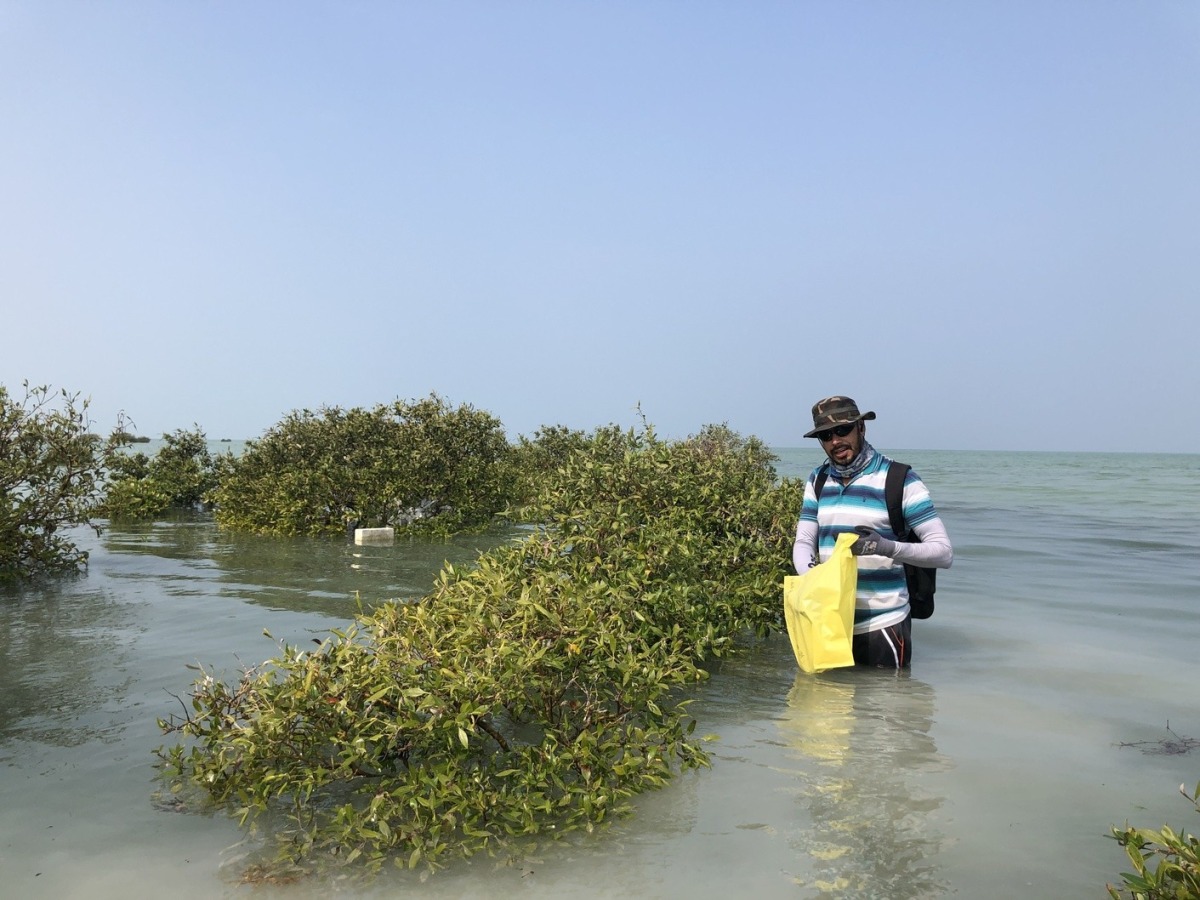
QF’s Earthna rebuilding Qatar’s mangroves to combat climate change
The Peninsula
Doha, Qatar: In the harsh heat and arid landscapes of Qatar, survival depends on adaptation and the country s biodiversity is uniquely suited to the...
Doha, Qatar: In the harsh heat and arid landscapes of Qatar, survival depends on adaptation — and the country’s biodiversity is uniquely suited to these challenging conditions.
From tenacious desert plants like the Kaff Maryam, or Mary’s Palm (Anastatica hierochuntica), which can stay closed and dry for years to protect its seeds, to mangrove trees that flourish in coastal waters, life in Qatar’s ecosystems is a delicate balance of endurance and resilience.
Yet even the most robust ecosystems are vulnerable to environmental pressures. To help protect them, Qatar Foundation’s (QF) Earthna Center for a Sustainable Future, in collaboration with partners, has undertaken a five-year mangrove restoration project aimed at safeguarding critical coastal habitats and expanding the native Avicennia marina mangrove cover. The initiative combines scientific research, community engagement, and hands-on restoration to ensure the long-term resilience of this vital ecosystem across the region.
Senior Biodiversity Specialist and Mangrove Restoration Project Manager at Earthna, Sara Abdul Majid said, “Mangroves are unique because they are the only trees in Qatar that can survive in the intertidal zone, flooded with seawater twice a day.
“While most trees cannot tolerate saline conditions, mangroves have adapted by filtering out most salt at the roots and releasing it on the underside of their leaves. These adaptations help them cope with salt. Mangrove forests also serve as nursery grounds for fish and invertebrates, providing structural complexity, food, and essential sediment and nutrient cycling.


Muscat: Omani Foreign Minister Badr bin Hamad Al Busaidi has emphasised that Oman is ramping up extensive efforts to ensure safe passage through the S...

Cairo: Egyptian Foreign Minister Badr Abdelatty discussed the back to back regional developments and the fallout from the dangerous military escalatio...

Doha, Qatar: The Operations Center at the Ministry of Commerce and Industry (MoCI) has carried out intensive inspection campaigns and responded to com...

Doha, Qatar: The Operations Center at the Ministry of Commerce and Industry (MoCI) has carried out intensive inspection campaigns and responded to com...

Doha, Qatar: The Ministry of Interior has emphasised the importance of following approved safety instructions and preventive guidelines as educational...

Doha, Qatar: The Ministry of Interior has emphasised the importance of following approved safety instructions and preventive guidelines as educational...

Qatar announces gradual return to in-person learning after Eid; full school attendance from March 29
Doha, Qatar: The Ministry of Education and Higher Education has announced the gradual resumption of in person learning across educational institutions...

Qatar announces gradual return to in-person learning after Eid; full school attendance from March 29
Doha, Qatar: The Ministry of Education and Higher Education has announced the gradual resumption of in person learning across educational institutions...

Doha, Qatar: The University of Doha for Science and Technology has announced the resumption of in person classes and on campus work starting tomorrow,...

Doha, Qatar: The University of Doha for Science and Technology has announced the resumption of in person classes and on campus work starting tomorrow,...

Manama: The General Command of the Bahrain Defense Force (BDF) revealed that its air defense systems have intercepted and neutralized 147 projectiles...

Doha, Qatar: Deputy Prime Minister and Minister of State for Defense Affairs HE Sheikh Saoud bin Abdulrahman bin Hassan Al Thani, received a phone cal...

Doha, Qatar: Deputy Prime Minister and Minister of State for Defense Affairs HE Sheikh Saoud bin Abdulrahman bin Hassan Al Thani, received a phone cal...