Purity of electoral process, probity of participants strengthens democracy, says Bombay HC
India Today
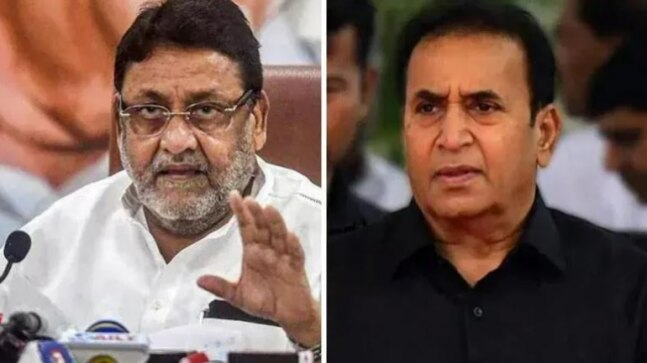
The Bombay High Court said that purity of the electoral process and the probity of participants strengthen democracy while rejecting pleas by Nawab Malik and Anil Deshmukh to allow them to vote in the Maharashtra Legislative Council polls.
While stating that Maharashtra cabinet minister Nawab Malik and former Maharashtra home minister Anil Deshmukh had not made an exceptional case for the court to use its discretion, the Bombay High Court rejected their plea to grant permission to vote during the upcoming Maharashtra Legislative Council poll on June 20.
Justice NJ Jamadar said, "I am mindful of the fact that the Court may be confronted with a situation, where, despite the rigours of the law, to uphold the constitutional norms and democratic values, the Court may be required to summon the inherent powers to remedy the malady. The Court cannot be said to be completely denuded of the authority to exercise such jurisdiction."
The court gave an example of a situation where, on the eve of an election, a number of members of the electoral college are put behind bars with a view to deprive them of the opportunity to vote in the election so as to achieve the desired result.
The bench said that in such an exceptional situation, the Court may be justified in issuing directions so that the ‘custody’ of the members of the electoral college does not become a subterfuge for divesting them of their right to vote.
The bench added, "In the case at hand, the applicants (Malik and Deshmukh) have been in custody for long. No such motive for putting the applicants behind the bar so as to prevent them from participating in the election process can be attributed, at least, at this length of time."
The court also observed that the right to vote was not absolute.
The bench said, "Indisputably, the applicants profess to exercise their right to vote in the capacity of the Members of the Legislative Assembly, which constitutes the electoral college for electing the Members of the Legislative Council under Article 171(3)(d) of the Constitution of India. The claim to the exercise of this constitutional right can, by no stretch of the imagination, be said to be absolute.”


We can't be a dalal nation, S Jaishankar says at all-party meet when asked about Pak mediating US-Iran talks

Enough energy security, more ships on the way, government assured at all-party meet

Delhi Chief Minister Rekha Gupta highlighted several costly additions to the former CM's residence, including around 50 air conditioners, 70 fans, a Rs 18 lakh coffee machine, and a centralised climate control system.


Delhi Police busted an illegal LPG racket in Sangam Vihar, seizing 183 cylinders and arresting four delivery agents accused of diverting and storing supplies meant for customers.

Amazon's price history analysed by India Today over the past 90 days, shows a steady rise in household items. A similar pattern is visible in aviation: airfares have climbed following the February 28 US-Israel strikes on Iran.


US President Donald Trump dialled Prime Minister Narendra Modi on Tuesday, four weeks after the Iran war started. The timing is crucial, coming on the back of Pakistan's emergence as Trump's choice as a mediator. Was Trump's call a damage-control exercise?

The armoured regiments of the Army have inducted around six Shaurya Squadrons that add the power of drone-warfare to the tanks.

The Iranian embassy in New Delhi thanked India and Kashmir for sending humanitarian aid, then quietly deleted the posts. Could pressure and online vitriol from Pakistan-based users be to blame?

The incident is believed to have taken place between 2 am and 3 am on Sunday. The viral footage of the incident showed the luxury car executing high-speed turns and repeated drifts at the Anil Kumble Circle in Bengaluru.

Lalu Prasad Yadav's elder son, Tej Pratap, is speaking of wisdom and devotion again. He's no longer the Krishna bhakt that he was. He is now sporting saffron attire in Reels, and is propagating Shiva bhakti. His new Instagram handle is SantTejPratapYadav. After political and personal isolation, Teju bhaiya seems to have found solace in Rudraksha, Shiva bhajans and the Shiva Puran.

"At that time, we did not know that one of them was an Indian billionaire," a Maldives official said after rushing to aid victims of a speedboat crash involving industrialist Gautam Singhania.