Protests in Hasdeo Aranya | 10 years with a coal mine for a backyard Premium
The Hindu
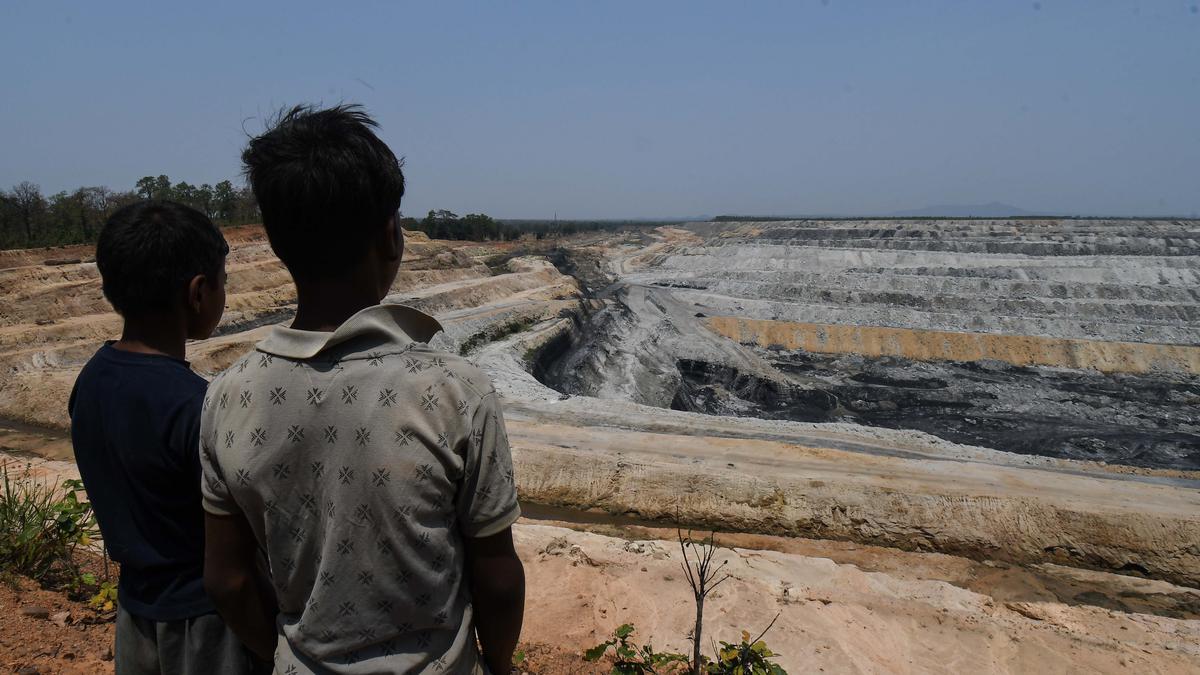
For more than a year now, locals, largely from the Gond tribe, in Hariharpur, Ghatbarra, and Fattepur villages in Chhattisgarh’s northern region, have been holding a sit-in against mining by the Adani Enterprises Limited over the past decade in Parsa East and Kente Basan coal blocks in Hasdeo Aranya area.
In Chhattisgarh’s harsh dry summer of 2016, Mohar Sai, who has lived all his 43 years in Hariharpur village in Salhi panchayat of Surguja district, received an offer from “the company”. The job, which was to pay ₹9,000 every month, entailed keeping count of coal sites where blasting was being carried out. “The company” is Adani Enterprises Limited (AEL), which has been mining over the past decade in Parsa East and Kente Basan coal blocks, quite literally, in Mr. Sai’s backyard.
For more than a year now, locals, largely from the Gond tribe, in Hariharpur, Ghatbarra, and Fattepur villages, have been holding a sit-in at the entrance to Hariharpur against mining.
In March 2022, the Chhattisgarh government had granted expansion approval for the project to open the Parsa Coal Block, which would dig under Hariharpur. Here, about 2 lakh trees have been marked for felling. The mines will expand into Fattepur and Ghatbarra.
In 2007, the Parsa Kente Collieries Limited (PKCL) was formed, in a joint venture between AEL (74%) and Rajasthan Rajya Vidyut Utpadan Nigam Ltd (RRVUNL: 26%). The following year, Adani Mining Private Limited (a wholly-owned subsidiary of AEL) was given the sub-contract of mine development and operations. Work began in 2013-14, with the contract extending for 30 years, permitting the operation to extract and supply 15 million tonnes per annum.
The villages lie in a crescent, between the coal mines on one side and the Hasdeo forest on the other. “Mining will lead to the loss of about 8 lakh trees of the Sal forests in Hasdeo Aranya, which will end up affecting the catchment of the Hasdeo river,” says Alok Shukla, Chhattisgarh-based environmental activist who has been protesting against mining for over a decade now. The Adani Group did not respond to The Hindu’s queries.
Mr. Sai accepted the job with “the company” and today earns ₹15,000 a month, moving ‘up’ from working in the mines to an office job. He originally farmed his 6-7 acres and collected forest produce from 2-3 acres for which he held individual forest rights (IFR), granted under the Forest Rights Act (FRA), 2006. This was enough to sustain his family.
In the year that he was offered the job, he also realised that the mine had consumed his forest land. “I was never notified by the district authorities that my FRA patta was being cancelled or stayed or withdrawn,” Mr. Sai says, adding that he felt it was better to settle for whatever money the company was paying for the rest of the land: ₹6 lakh. Despite his discontent, Mr. Sai is scared for his job and does not participate in the strike.


First randomisation of EVMs and VVPATs for Tiruchi and Perambalur districts completed with political party representatives present.

Puducherry elections see ongoing DMK-Congress rift over seat-sharing, leading to candidate conflicts on nomination day.

Einstein College and Sri Sarada College in Tirunelveli celebrated significant events, honoring academic excellence and cultural heritage.

Priyanka Gandhi criticises PM Modi's West Asia remarks, urging for a comprehensive Parliament discussion on the matter.

Learn who can vote by postal ballot in the upcoming Tamil Nadu Assembly election, including seniors and persons with disabilities.

Decomposed body of a missing 25-year-old man discovered in Dindigul stone quarry, prompting calls for investigation and quarry closure.

SVEEP activities launched in The Nilgiris aim to boost voter turnout at 13 polling booths with low participation rates.

Learn who can vote by postal ballot in the upcoming Tamil Nadu Assembly election, including seniors and persons with disabilities.

Shorts News:Watch: UDF linked to communal forces in Kerala: CPI(M) leader A Vijayaraghavan

Karnataka government postpones Deendayal Upadhyaya event at KSOU Mysuru due to protocol violations and lack of government involvement.

Sameer Wankhede denies bribery allegations involving Shah Rukh Khan’s son in drugs case during Bombay High Court proceedings.

What does it take to design gloves, masks and uniform that factor in the various challenges faced by workers on the waste beat? Indore, Bengaluru and Pune have an answer

Gaurav Gogoi files nomination for Jorhat Assembly seat, marking his electoral debut in the upcoming Assam elections.