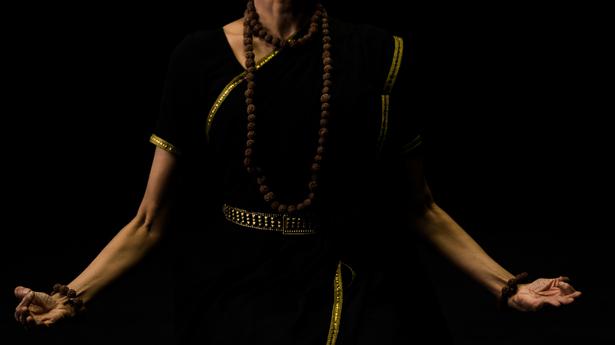
Priyadarsini Govind on the making of ‘Yavanika’
The Hindu
Priyadarsini Govind presents her perspective of art in Yavanika - The Screen of Illusion
A creative endeavour is born out of reflection and meditation. A theme or an idea takes shape after going through a thought process and journeying through time and space. It also involves intense exchanges among inter-related genres of creative expression. At the end of it all, the artiste finds his or her individual self and connect with the art. And this finally finds its way into the performance.
What’s a performance? How does an artiste deal with the challenges of making the most of those moments? A performance is the internal and external experiences that an artiste shares with the audience. While doing so a performer discovers, innovates, and evolves to create a unique aesthetic ambience.
Priyadarsini Govind’s dance film, Yavanika, captures the aura of a performance. It takes you back to the time when she dealt with the challenges posed by the pandemic and the state of her mind and body then. As the world came to a standstill, Priyadarsini began engaging with the camera as she had to send a recorded performance to the Singapore-based Apsaras Arts.
She approached the award-winning director, Sruti Harihara Subramanian, who had directed and conceptualised the documentary series — Harmony with A.R. Rahman, and A Far Afternoon on painter Krishen Khanna.
“ Yavanika looks at the concept of the self, first identifying it with the physical body and then with the will, the mind and the ego,” says Priyadarsini.
As the title suggests, Yavanika - The Screen of Illusion, the film also explores the idea of illusion through a vital aspect of a stage performance, the curtain, that both hides and reveals. “I collected poems from various languages that talk about the body and the energy within. It is this energy that cultures have shaped into evocative sequences of physical activities that result in dance. I let the camera capture this primal energy and the subtle layers of emotions and movements to reach out to the audience. So I began to work on the choreography. My students, Apoorva Jayaraman and Shweta Prachande, joined in this exploration.”
Though conceived for the stage initially, Yavanika was reworked for the camera.


South African naturalist Steve Boyes speaks on ghost elephants, ancestral tracking, and Werner Herzog’s documentary exploring Angola’s elusive highland giants

Actor-director Amol Palekar will receive META's Lifetime Achievement award for 2026 on March 25 in New Delhi.

India's artists unite against rising censorship, advocating for creative freedom and support for marginalized voices in the arts.

Written and directed by Kunal, the film also stars Sparsh Shrivastava and Vanshika Dhir

This year, Bharatnatyam artistes will present the Tyagaraja Aradhane as a dance performance

This year, Bharatnatyam artistes will present the Tyagaraja Aradhane as a dance performance

The actor, along with director Sushant Shah, speak about their upcoming series ‘Chiraiya’, Divya’s process of working on the dialect, Sushant’s approach to telling a story about women, and more

An independent video, ‘Feel the Spark’ by Raleigh Rajan with vocals by Ciera Dumas that celebrates Tamil literary giants, garnered 1.4 million views in less than 36 hours.

In ‘Jack Ryan: Ghost War’, John Krasinski is back as the savvy CIA analyst, diving headfirst into a high-stakes mission that unravels a deadly conspiracy and pits him against a rogue black-ops unit

Shriram Bharatiya Kala Kendra’s Shankarlal festival showcased rare ragas, radiant artistry, and inclusive performances, from Pt Madhup Mudgal’s serene morning ragas to Ramana Balachandran’s Saraswati veena.

Explore "Threads that Bind: The Kantha Project," an exhibition in Delhi reimagining kantha as a medium of repair and renewal.

Sean Penn skips the Oscars to meet Ukraine's Zelenskyy, who praises him as a "true friend" amid the war.

The teaser of Tamil star Suriya’s much-awaited film with director Venky Atluri, titled Vishwanath and Sons, was unveiled by the makers on Monday