Private agencies create infrastructure in Chennai’s waterways to prevent plastic pollution
The Hindu
Private agencies in Chennai launch a pilot project to build infrastructure preventing plastic pollution in waterways, funded by Danish Ministry of Foreign Affairs.
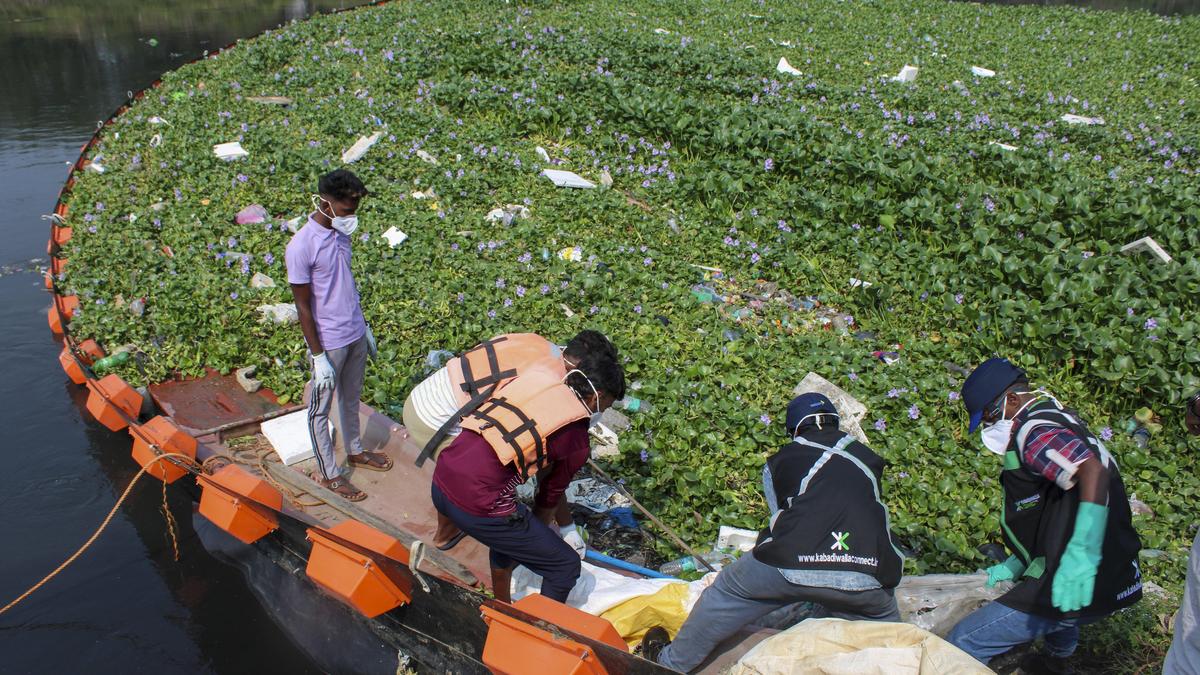
Various agencies, including waste management companies with support from the informal sector, have started creating infrastructure to prevent plastic pollution in waterways of the city, following approval from the Greater Chennai Corporation (GCC) and the Water Resources Department.
The pilot project to install a trash barrier at Buckingham Canal to collect waste was launched on Tuesday. The infrastructure has been designed to intercept plastics before they reach the sea by working with neighbourhood scrap shops and waste-pickers and integrating them into trash boom operations and recycling systems.
The project is expected to be expanded to other parts of the city. According to estimates, banned plastics constituted more than 50% of the five tonnes of trash trapped in the trash barrier in a period of two days. The project has been funded by Danida green business partnerships, an agency of the Danish Ministry of Foreign affairs developed and implemented by Ocean Plastic Forum, Kabadiwalla connect and Gleco.
Swathi Lakshmi, Research Manager, Kabadiwalla Connect, said institutions such as Anna University were studying how to utilise various materials collected by the trash barrier. “This project is different from the trash barrier created by GCC. It involves the informal sector. In addition to plastic waste, we have collected water hyacinth. Research institutions are studying how to use the fibre from water hyacinth before disposing of the waste in the GCC landfill. We have obtained permission from the Chennai Corporation to dispose of the waste in the landfill. We have roped in the informal sector and residents’ associations to successfully intercept plastic before it reaches the sea by working with neighbourhood scrap shops and waste-pickers and integrating them into trash boom operations and recycling systems. In 2017, we identified 2000 scrap shops in the city. The number has increased now,” she said.
“While materials like HDPE, PP, PET and other hard plastics have a proper recycling stream, the low-value plastics like flexible films and MLPs don’t have a proper recycling stream. The majority of them are incinerated or sent to feedstock for cement industries, which is not actual recycling. For this pilot project, we are working with five scrap shops and 50 waste pickers in the first phase. Rotary Club will help in creating awareness about plastic pollution among schools and communities.”
“Scientists who are working on researching the pollution in the oceans and coastal areas, and lake rejuvenation projects and low-cost sustainable solutions will help us scale this project further,” she said.


Discover how to turn creative passion into a sustainable business by mastering finance, IP, and strategic growth.

Arjun Krish and Ria Dinesh win Best Telefilm at Kerala State Television Awards for their impactful short film, F for Freedom.

redBus data reveals a significant 76% rise in solo women travelers from Karnataka since 2019, highlighting increasing independence in travel.

Air India and AI Express will operate 44 flights to West Asia amid Dubai airport restrictions on foreign carriers.

Maharashtra Assembly passes the Freedom of Religion Bill, imposing strict penalties for unlawful conversions, ensuring protection for vulnerable individuals.

Trump claims he can do “anything” with Cuba amid U.S.-Cuba talks, escalating tensions over political intervention and economic crises.

Amrutanjan owes ₹9.74 crore in rental arrears for Mylapore Kapaleeswarar Temple land, despite lacking a landlord-tenant relationship.

BJP intensifies campaign in Palakkad for the 2026 Assembly elections, targeting UDF amid scandal surrounding MLA Mamkootathil.

Jeevan Reddy leads a rally for maize farmers in Jagtial amid speculation of leaving Congress for BRS.

BJP and AINRC likely to maintain 2021 seat-sharing formula for Puducherry's 2026 Assembly elections, confirms party president.

BJP reveals 144 candidates for Bengal Assembly polls, featuring Suvendu Adhikari contesting against Mamata Banerjee in Bhabanipur.

Anna University partners with Ramco Systems to create an advanced ERP lab for enhanced industrial engineering education.

NDA announces candidates for 12 Kozhikode seats in Kerala Assembly polls 2026 as UDF and LDF ramp up campaigning.