Privacy concerns prompt states to reexamine storing newborns' heel blood tests
CBSN
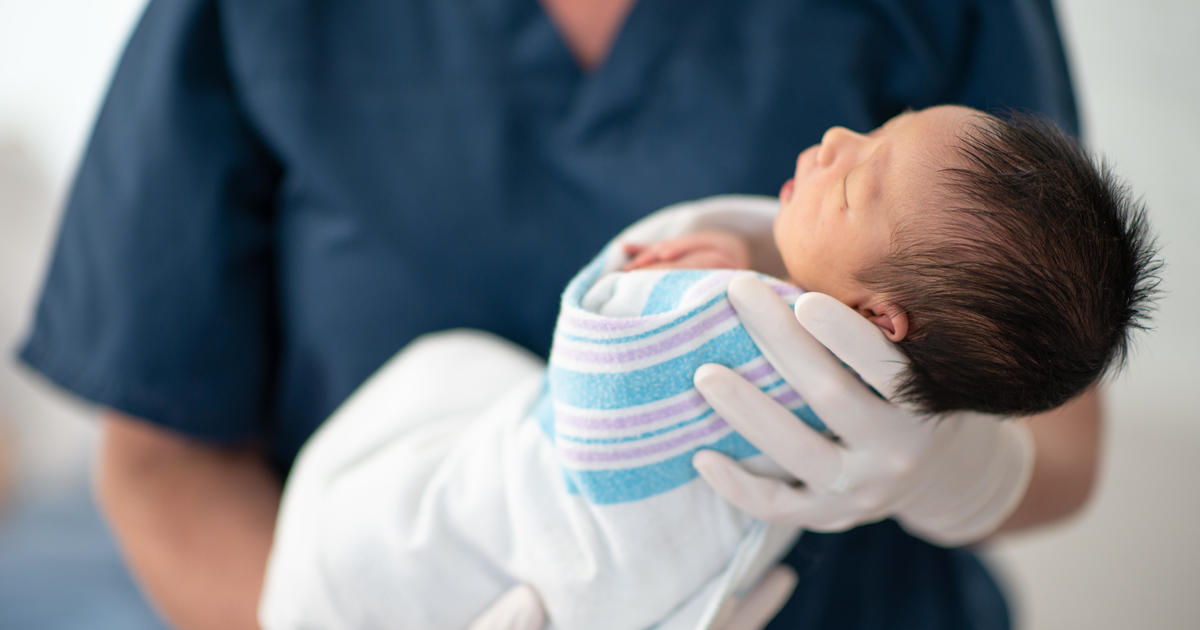
Close to 4 million babies are born in the United States every year, and within their first 48 hours nearly all are pricked in the heel so their blood can be tested for dozens of life-threatening genetic and metabolic problems. The heel-stick test is considered such a crucial public health measure that states typically require it and parents aren't asked for their permission before it's done.
But the lab tests for newborn screenings generally don't use all of the half-dozen or so drops of blood collected on filter paper cards. So states hold on to the leftover "dried blood spots," as they're called, often without parents' knowledge or consent. In recent years, privacy-related concerns have grown about the sometimes decades-long storage and use of the material.
Some states allow the blood spots to be used in research studies, sometimes by third parties for a fee, or provided to law enforcement personnel investigating a crime. Permitting these or other uses without parents' informed consent that they understand and agree to the use has prompted lawsuits from parents who want to make those decisions themselves and who seek to protect their children's medical and genetic information.


Two orphaned bear cubs are settling in at a California animal welfare center after their mother was euthanized for attacking people, the San Diego Humane Society said Tuesday. In:

Travelers at a Houston airport voiced shock and disbelief over seemingly endless TSA security lines caused by a severe staffing shortage. In:

Paul Kovacich, a K-9 commander serving life for his wife's 1982 murder, has a mixed message for the California parole board ahead of his first chance of freedom: He doesn't want an early release — and he didn't kill his beloved German shepherd. In:

A California court denied the state attorney general's appeal to halt the Riverside County Sheriff's election fraud investigation on Tuesday. In:

The Justice Department's investigation of a $2.5 billion renovation project at the Federal Reserve didn't find any evidence of a crime, a federal prosecutor privately conceded under questioning by a skeptical judge earlier this month, according to a transcript of the sealed hearing. In:

Early this week, Senate Republicans and the president appeared to be edging closer to a framework to ending the Department of Homeland Security shutdown, which is now in its second month — but a breakthrough has remained out of reach.

Democrat Emily Gregory won a special election for a Florida state House seat on Tuesday, The Associated Press has projected, flipping a district that is home to President Trump's estate, Mar-a-Lago. In:

The two Canadian pilots who died in Sunday's runway collision at LaGuardia Airport in New York were young, ambitious men at the start of their careers who each had pursued their yearslong dream of flying. In:

A judge sharply questioned a lawyer for the federal government on Tuesday over the Pentagon's efforts to cut Anthropic out of its classified systems — the latest development in a dispute between the company and the Trump administration over AI guardrails. In:

Washington — The Senate on Tuesday rejected the latest Democratic-led effort to rein in President Trump on Iran as the U.S. and Tehran send conflicting messages about how the war might end.

FedEx said Tuesday that it will offer same-day delivery in partnership with logistics company OneRail, with the announcement following a recent move by Amazon to offer expedited deliveries across the U.S. Edited by Alain Sherter In:

OpenAI said Tuesday that it is discontinuing its Sora AI video app. Edited by Alain Sherter In:

The Pentagon is expected to send parts of the 82nd Airborne division to the Middle East as the Iran war extends into its fourth week, according to two sources. In: