Pottery’s powerful pull on Bengaluru’s citizens
The Hindu
Pottery’s powerful pull on Bengaluru citizens
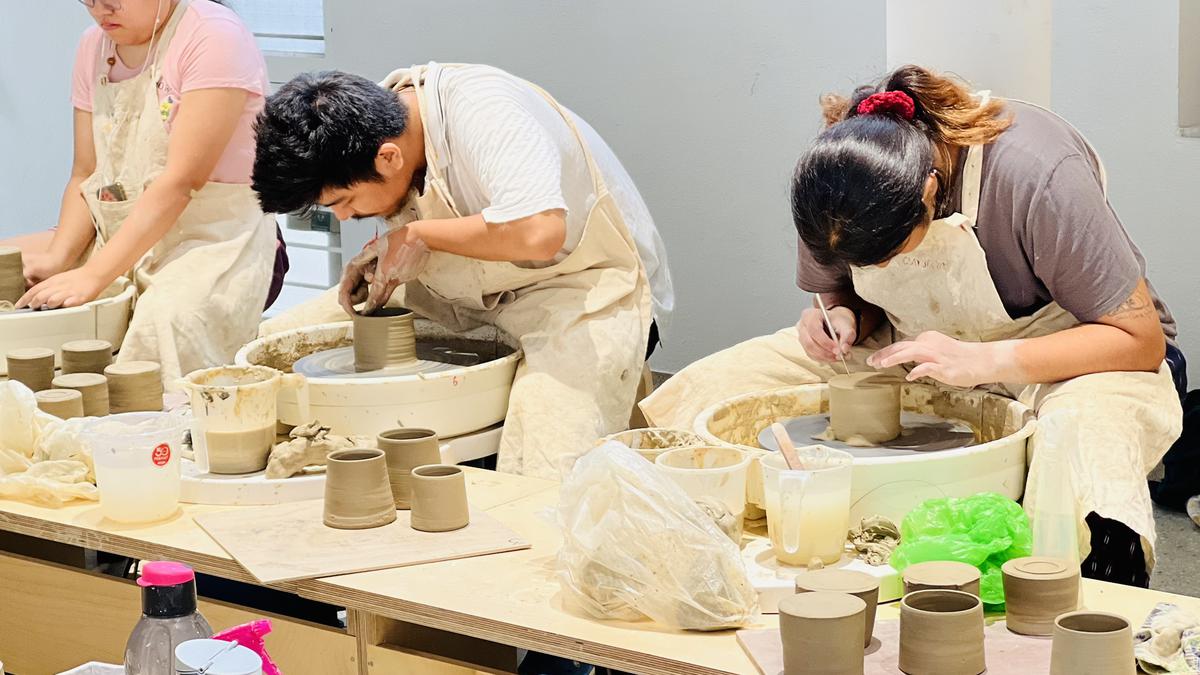
Some view it as meditation. Some do it for fun. Some find it therapeutic. Others transition to it as a profession. Whatever the intent or end result, there is no denying that Bengaluru’s pottery community has been thriving in the last five years. Almost every locality now houses a pottery studio or class.
COVID-19 was one of the factors that is believed to have triggered the interest in pottery. Many owners of pottery studios in the city say people started taking hobbies seriously after the pandemic — everyone wanted a life beyond work and a creative outlet for themselves.
For many, the pandemic was the time when they needed something calming and therapeutic, and so they turned to pottery. Whether it is hand-building and working with tools, throwing clay on the wheel, getting pieces fired in the kiln or learning to glaze them, the city has slowly built the expertise and infrastructure so that all these bases are covered. Today, you can hire a modern potter’s wheel at home, rent studio spaces by the hour to practice your skill, take your finished works to studios to be fired in professional kilns, or if you are serious and have the means, set up a full-fledged studio at home.
Most studios offer courses of different levels — beginners, intermediate and advanced — that run into a couple of days or months. What is rather popular is the two-hour “experiential” sessions, which appeal to all age groups. These sessions are often gifted to family and friends. Couples attend this session to do something meaningful together or celebrate an anniversary. Sometimes these sessions bring two or three generations together, spending quality time with each other.
Swathi Rao, who has been running Artfully Yours in HRBR Layout since 2016, observes how a lot of parents are now turning to pottery for their children with special needs — whether they are on the spectrum or have learning disabilities. On one hand, clay is a very primal element, and on the other, learning to throw clay on a wheel and spin it is scientific. She explains why clay and pottery work wonders for many.
“Pottery is a sensorial activity that helps these children. Clay in itself is a forgiving medium and a major confidence booster for children because you can easily undo your mistakes. It’s an open-ended medium and not intimidating. Children can connect to the medium from their perspective.” Swati has also worked with dementia patients, who have taken to this medium well.
Anupama Bhat, 44, an electrical engineer and former lecturer, details her pottery journey from her student days. She had her first experience with clay in 2007, when she was in the US studying for her Masters. Ever since, her love for clay and pottery has only grown — she attended a week-long pottery workshop in Art Canvas, Jayanagar, then started learning pottery from online videos. Around 2015, she bought herself a potter’s wheel, coaxed by her husband, who felt she was not happy at work. Soon after, she began refining her skills at the Mud Effects Pottery Studio in Whitefield.


Explore 2026's wallpaper trends in India, highlighting botanicals and handmade designs that enhance modern homes with nature-inspired aesthetics.

Mercedes-Benz CLA 250+ with EQ Technology review: design, performance, range and features explained. Discover how the new electric CLA combines advanced AI, long range, fast charging and futuristic styling for the next generation of luxury EVs.

AI tool for sparrow conservation

BTS’s comeback with ‘Arirang’ marks a major global music event. When does the album release, and where can you watch their concert live stream? We have all the details

The 2026 U.S. cholesterol guidelines urge starting screening and treatment at 30 to prevent cardiovascular disease effectively.

Olam Festival 2026 in Thiruvananthapuram returns March 27-29 with 120+ vendors, music, art, and cultural zones.

A few storytellers in Thiruvananthapuram share their journeys, challenges, and evolving methods on World Storytelling Day, inspiring young minds.

76-year-old Kurian Jacob from Kerala triumphs with seven medals, including five golds, at the Open Masters Games in Abu Dhabi.

Explore the nature of the human mind as an emergent property of brain activity and complex neural interactions.

CERN's Large Hadron Collider discovers the Xi-cc-plus particle, enhancing understanding of quantum mechanics and baryon behavior.

Vibha Batra’s latest book, Spotless (Hachette India) is a novel in verse for young adults

In its first edition, the Madras Art Salon spotlights the works of journalist and artist Narayan Lakshman at The Botanical Club, a social space in the British Deputy High Commission, Chennai

Cholesterol enhances melanoma cell invasion by making nuclei squishier, revealing a potential treatment target in cancer progression.