Portraying historicals on celluloid
The Hindu
Kanisetty’s debut book harks back to Kalki’s writing with its dramatic potential
Moving images begin with the written word. Irrespective of genre, good writing makes us feel joy, sorrow, and valour; and Anirudh Kanisetty achieves this with his debut book, Lords of the Deccan. It’s wonderful to see how his writing style harks back to the great Kalki. Kanisetty’s historical has a fiction-styled narrative that throws the spotlight on the mighty Cholas, Pallavas and Pandyas, along with the main players, the Chalukyas and Rashtrakutas. Each chapter has high drama, ensuring that a history book becomes a binge read.
The book’s non-linear narration, which begins with one king, cuts across to another, and comes back to pick up the plot point, makes it ideal for the visual medium. The royal durbars and anthappurams (courts and harems) emerge effortlessly before us. We hear the sound of elephants and horses in blood-stained armour and the war cries of valiant soldiers. The historical cities of Kanchipuram, Hampi, Ajanta, or the riverbanks of Cauveri, Godavari, and Narmada witness wars and victories. Kanisetty’s lucid writing gives sight, sound and life to a world long gone, much like movies do.
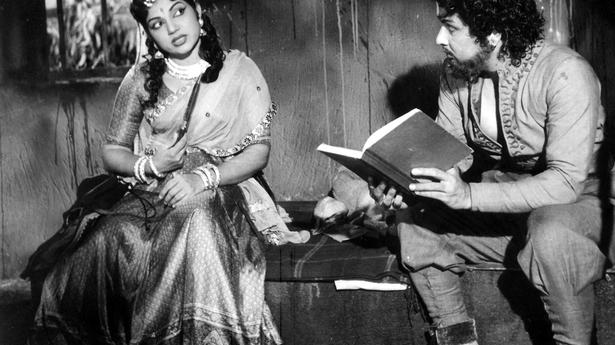
Kalki had his book Parthiban Kanavu made into a film starring Gemini Ganesan and Vyjayanthimala in 1960. Now, his most popular book, Ponniyin Selvan, will become a two-part film directed by Mani Ratnam. Part 1 will hit the screens in September. Mani Ratnam’s magnum opus stars leading actors and is a project that’s been the dream of many film legends (beginning with MGR) with its gripping script, known by rote to most Tamil literary readers.
Tamil and Telugu cinema have a long legacy of historicals. If you dream of a scene in Rajaraja Chola’s court and the king who flashes in your head looks like Sivaji Ganesan, or if you imagine fencing with Madurai Veeran and he looks like MGR, you’re not far off the mark.
In his long acting career MGR played the swashbuckling prince in more than two dozen films, his key roles being in films like Marmayogi, Manthirikumari, Gulebakavali, Alibabavum 40 Thirudargalum and his own directorial production Nadodi Mannan. He has played Raja Desingu, Prithviraj Chauhan, and Malaikallan apart from being hailed as Mannadhi Mannan, Rajarajan and Madurai Veeran. His last film to release after he became Chief Minister was Maduraiyai Meetta Sundarapandiyan. MGR’s filmography is a series of historical movies from 1936 to the mid-60s, the peak of his film career, after which he shifted to social dramas.
The 1957 film where MGR played the great Chola king failed at the box-office, but when Sivaji made the character his own in the 1973 Rajaraja Cholan, filmed in Thanjavur’s Big Temple, it was a huge hit. Sivaji also played freedom fighters (VOC in Kappalottiya Thamizhan); and Greek and Roman icons such as Socrates ( Rajarani 1956) and Caesar ( Sorgam 1970).
The count of historical characters is even higher in Telugu, where actors like N.T. Rama Rao have played gods and kings countless times. (NTR was Krishna to Sivaji’s Karna and Krishnadevaraaya to the latter’s Tenalirama).


South African naturalist Steve Boyes speaks on ghost elephants, ancestral tracking, and Werner Herzog’s documentary exploring Angola’s elusive highland giants

Actor-director Amol Palekar will receive META's Lifetime Achievement award for 2026 on March 25 in New Delhi.

India's artists unite against rising censorship, advocating for creative freedom and support for marginalized voices in the arts.

Written and directed by Kunal, the film also stars Sparsh Shrivastava and Vanshika Dhir

This year, Bharatnatyam artistes will present the Tyagaraja Aradhane as a dance performance

This year, Bharatnatyam artistes will present the Tyagaraja Aradhane as a dance performance

The actor, along with director Sushant Shah, speak about their upcoming series ‘Chiraiya’, Divya’s process of working on the dialect, Sushant’s approach to telling a story about women, and more

An independent video, ‘Feel the Spark’ by Raleigh Rajan with vocals by Ciera Dumas that celebrates Tamil literary giants, garnered 1.4 million views in less than 36 hours.

In ‘Jack Ryan: Ghost War’, John Krasinski is back as the savvy CIA analyst, diving headfirst into a high-stakes mission that unravels a deadly conspiracy and pits him against a rogue black-ops unit

Shriram Bharatiya Kala Kendra’s Shankarlal festival showcased rare ragas, radiant artistry, and inclusive performances, from Pt Madhup Mudgal’s serene morning ragas to Ramana Balachandran’s Saraswati veena.

Explore "Threads that Bind: The Kantha Project," an exhibition in Delhi reimagining kantha as a medium of repair and renewal.

Sean Penn skips the Oscars to meet Ukraine's Zelenskyy, who praises him as a "true friend" amid the war.

The teaser of Tamil star Suriya’s much-awaited film with director Venky Atluri, titled Vishwanath and Sons, was unveiled by the makers on Monday