Pondicherry on an iPhone: How Marathi filmmaker Sachin Kundalkar captured the town and its characters
The Hindu
The National Award-winning filmmaker’s latest feature stars Sai Tamhankar, Vaibhav Tatwawadi, Amruta Khanvilkar, Tanmay Kulkarni and Neena Kulkarni
Sachin Kundalkar places a lot of emphasis on his films’ locations. To him, they are as important as the people that inhabit them. This prominence for the place is readily apparent in his latest feature, Pondicherry. The evidence is not just in the title. The film’s poster, for instance, has a pastel-coloured tiled-roof house with long windows, a vintage lamp post, coconut palms, a bicycle and other quintessential aspects of the erstwhile French colonial town.
The film revolves around a Marathi woman, Nikita (played by Sai Tamhankar), who stays in an old villa in Pondicherry with her eight-year-old son and runs a homestay. Her husband, a Tamilian, is in the Navy. So, he is away from her most of the time. Pondicherry is about the characters Nikita encounters and the resultant conflicts that arise from these encounters.
“We meet so many migrated Maharashtrian families with amazing stories to tell. And nobody’s telling them. So, my co-writer Tejas Modak and I decided to make a film about this Marathi family, who’s staying away from Maharashtra, in a multilingual place. That was the genesis of of P ondicherry,” explains Sachin, a two-time National Film Award recipient.
But it could have been any place in India. Why Pondicherry in particular?
“We chose Pondicherry because it’s not just beautiful but also houses many cultures. It has so many languages, so many kinds of people come there in search of something.”
But to know Pondicherry, it was not enough to just visit the place; he had to live there. “When you go to Paris, the day you get extremely bored of the Eiffel Tower and the Mona Lisa, that’s when you start living there,” he says, “Likewise, in Pondicherry, there is an influx of weekend tourism and people come there to visit the ashrams. You really have to get rid of both these extremes to find your own Pondicherry.”
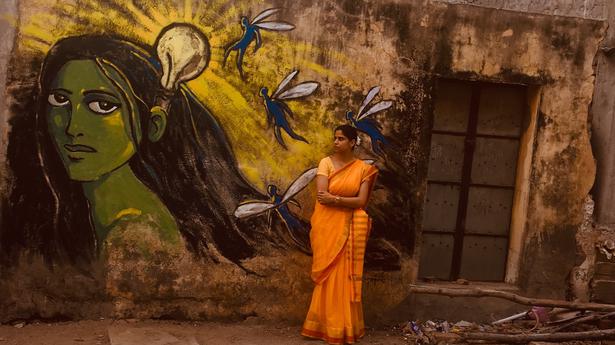
And, “finding Pondicherry” took several months. He rented a homestay, travelled around in two-wheelers, went for long walks, brought groceries, and cooked his own food. As much as he could, he imbibed the town. The buildings, roads, foods, and the colours of Pondicherry fascinated Sachin. .


Prasads Multiplex Hyderabad unveiled one of India’s largest HDR cinema auditoriums, the PCX HDR by Barco

From staged funerals to rented fatherhood, Brendan Fraser turns rented intimacy into something disarmingly real in Hikari’s poignant Tokyo fable

Meet Nivrritii Mahesh, a Bharatanatyam dancer who dances with Cochlear implants

In a surprising turn of events, Urvashi theatre, one of Bengaluru’s iconic single screens, has re-opened, with the much-talked-about Dhurandhar: The Revenge running to a full house in the theatre. After the expiry of the 45-year lease, it seemed like curtains would come down on the king-size theatre but for now, it’s good news for fans.

The thrilling ‘Peaky Blinders’ finale is a farewell tour tailored for Tommy Shelby, while passing the baton to a new generation

BTS's comeback concert in Seoul drew over 100,000 fans, featuring their new album "ARIRANG" and a global livestream.

Khalid Rahman is reuniting with Malayalam superstar Mammootty after Unda (2019). The Thallumaala director has teamed up with the veteran for Mattancherry Mafia.

Bollywood actor Akshay Kumar paid tribute to the martial arts grandmaster and Hollywood’s action star, Chuck Norris, who passed away on Thursday, March 19, 2026.

Renowned Odissi dancer Madhumita Raut, aged 59, dies of cardiac arrest, leaving behind a legacy of artistic achievements.

Chuck Norris, iconic martial arts master and actor, dies at 86, leaving behind a legendary legacy and internet memes.

South African naturalist Steve Boyes speaks on ghost elephants, ancestral tracking, and Werner Herzog’s documentary exploring Angola’s elusive highland giants

Actor-director Amol Palekar will receive META's Lifetime Achievement award for 2026 on March 25 in New Delhi.

India's artists unite against rising censorship, advocating for creative freedom and support for marginalized voices in the arts.