Pig kidneys transplanted into brain-dead human donor in new study
CTV
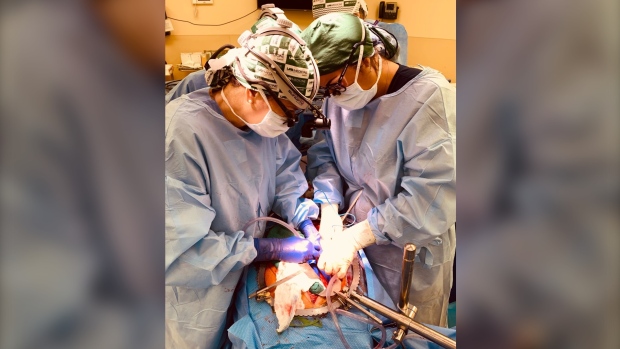
For the first time, scientists have successfully transplanted a genetically modified pig kidney into the body of a brain-dead human, an important step toward animal organs potentially becoming viable for transplants to save human lives in the future, something that could help address organ shortages worldwide.
On Thursday, researchers with the University of Alabama (UAB) published the first peer-reviewed study to document this process in depth.
The pig kidneys were taken from pigs that had been genetically modified with 10 key gene edits in order to make the kidneys capable of being transplanted into a human body.
After transplantation, researchers confirmed that the kidneys were not rejected and were able to filter blood and produce urine for the three days of the study.
"This game-changing moment in the history of medicine represents a paradigm shift and a major milestone in the field of xenotransplantation, which is arguably the best solution to the organ shortage crisis," Jayme Locke, director of the Comprehensive Transplant Institute in UAB's Department of Surgery and lead surgeon for the study, said in a press release.


Friday marks the first official day of spring in the northern hemisphere, but it will still feel like winter this weekend for many Canadians, as snow, sleet, rain and sub-zero temperatures are forecast across the country.

A social media post from the U.S. Food and Drug Administration this week shows a big-eyed macaque staring out from behind bars.

Young people in southeast England and beyond are lining up for the meningitis B vaccine after an outbreak killed two people, sparking supply warnings from pharmacies and raising broader questions about the best public health response to the disease.

Many wage earners are engaging in “microshifting,” a flexible scheduling approach that involves tackling job duties in short, productive bursts instead of a single nine-to-five stretch.

Tyson Atleo, a hereditary leader of the Ahousaht First Nation, says the creation of three new forestry areas to be managed by his community and two others on the west coast of Vancouver Island marks the realization of a long-standing promise.

As artificial intelligence continues to reshape industries worldwide, Canadian universities are emerging as key players – not only in developing technology but in teaching students how to use it responsibly.

Switching up your exercise routine does more than fight boredom. Engaging in varied forms of movement may significantly boost your longevity, according to research.

A seven-bedroom, five-bathroom home in Ottawa’s Rothwell Heights neighbourhood is currently the most expensive home on the market in the capital.

David Suzuki, the geneticist-turned-environmentalist, who is days away from his 90th birthday, reflected on his legacy as he prepared to release his latest book, “Lessons from a Lifetime,” which compiles photos and stories from his life, as well as testimonials written by those he inspired.

Microsoft subsidiary Bethesda said Tuesday hit space exploration game “Starfield” will appear on rival Sony’s PlayStation 5, effectively ending the practice of keeping some releases exclusive to Xbox consoles.

A woman visiting her family in Canada from the United States became ill and was admitted to the hospital, and without travel insurance, the family was shocked to get a bill for more than $110,000.

Renowned Canadian angler Jeff Gustafson back in Kenora Ont. after Bassmaster Classic absence.

A special weather statement remains in effect for Toronto Tuesday morning with winds gusting up to 80 km/h in some areas after an overnight snowfall.