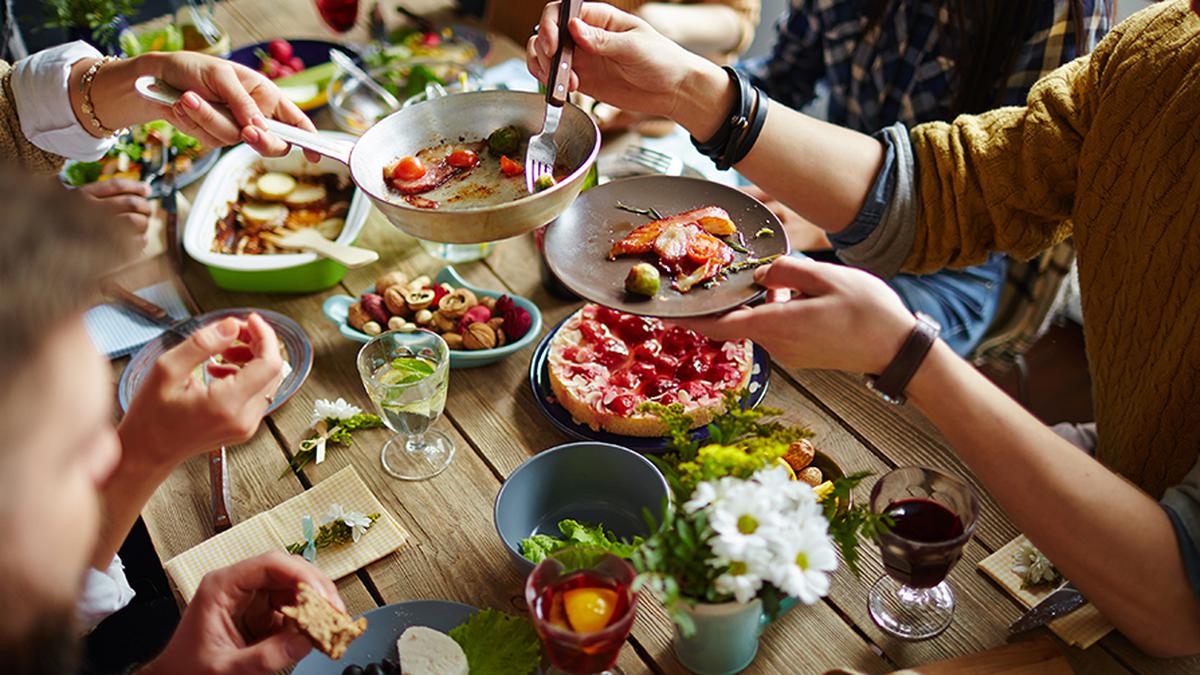
Picky eater? Research shows it could be in your DNA
The Hindu
Researchers identified 325 different genes, mostly in the brain, implicated in determining what we like to eat.
In the last 40 years obesity has been constantly rising. This has happened despite the popularity of all kind of diets ranging from low carb, paleo or even ice cream based.
Many scientists believe this is because cheap junk food has filled supermarket shelves and fast food takeaways. This food is high in calories and other not-so-healthy ingredients such as saturated fats, simple sugars, and salt. But it’s designed to taste delicious. Taste is a dealbreaker when it comes to deciding what to eat, diet plans or not. Yet our understanding of what makes food taste good is limited.
My team’s research explored how genes and biological processes influence which foods we find irresistible. We partnered with UK biobank to ask the participants in our study how much they liked 139 foods, rating them from one to nine on a questionnaire, with nine being the most delicious. UK biobank is a collection of almost 500,000 UK volunteers, who agreed to provide their personal information for scientific purposes. They were aged from 50 to 70 at the time of our study.
Also Read | The COVID-19 pandemic, food and socialising
We sent the questionnaire by email and received close to 189,000 responses. The first step in our study was to analyse links between food people said they liked. For example if someone likes pears, can we expect them to also like apples and strawberries. We mapped the relationships between different foods.
We found food can be categorised in three groups: highly palatable foods which include meat, junk food and desserts; low calorie foods, mostly fruit and salad vegetables, but also oatmeal and honey; and acquired taste foods which are strong tasting foods children generally dislike but learn to enjoy such as coffee, alcohol and spices.
The map revealed some surprises. Foods didn’t group by flavour type (such as sweet vs savoury) but by how likeable they were. For example, a taste for fruit juices correlated more with preference for desserts rather than fruit. So fruit juice went in the highly palatable category rather than low calorie. Foods people think of as vegetables do not cluster together.


Set between the Siwalik hills and the plains, Butwal offers travellers a mix of regional cuisine, pilgrimage trails to Lumbini and the comfort of Hyatt’s new hospitality landmark

Explore 2026's wallpaper trends in India, highlighting botanicals and handmade designs that enhance modern homes with nature-inspired aesthetics.

Mercedes-Benz CLA 250+ with EQ Technology review: design, performance, range and features explained. Discover how the new electric CLA combines advanced AI, long range, fast charging and futuristic styling for the next generation of luxury EVs.

AI tool for sparrow conservation

BTS’s comeback with ‘Arirang’ marks a major global music event. When does the album release, and where can you watch their concert live stream? We have all the details

The 2026 U.S. cholesterol guidelines urge starting screening and treatment at 30 to prevent cardiovascular disease effectively.

Olam Festival 2026 in Thiruvananthapuram returns March 27-29 with 120+ vendors, music, art, and cultural zones.

A few storytellers in Thiruvananthapuram share their journeys, challenges, and evolving methods on World Storytelling Day, inspiring young minds.

76-year-old Kurian Jacob from Kerala triumphs with seven medals, including five golds, at the Open Masters Games in Abu Dhabi.

Explore the nature of the human mind as an emergent property of brain activity and complex neural interactions.

CERN's Large Hadron Collider discovers the Xi-cc-plus particle, enhancing understanding of quantum mechanics and baryon behavior.

Vibha Batra’s latest book, Spotless (Hachette India) is a novel in verse for young adults

In its first edition, the Madras Art Salon spotlights the works of journalist and artist Narayan Lakshman at The Botanical Club, a social space in the British Deputy High Commission, Chennai