Parva: A new dimension to the Mahabharata
The Hindu
Prakash Belawadi’s adaptation of SL Bhyrappa’s ‘Parva’ to stage, will be staged in Bengaluru
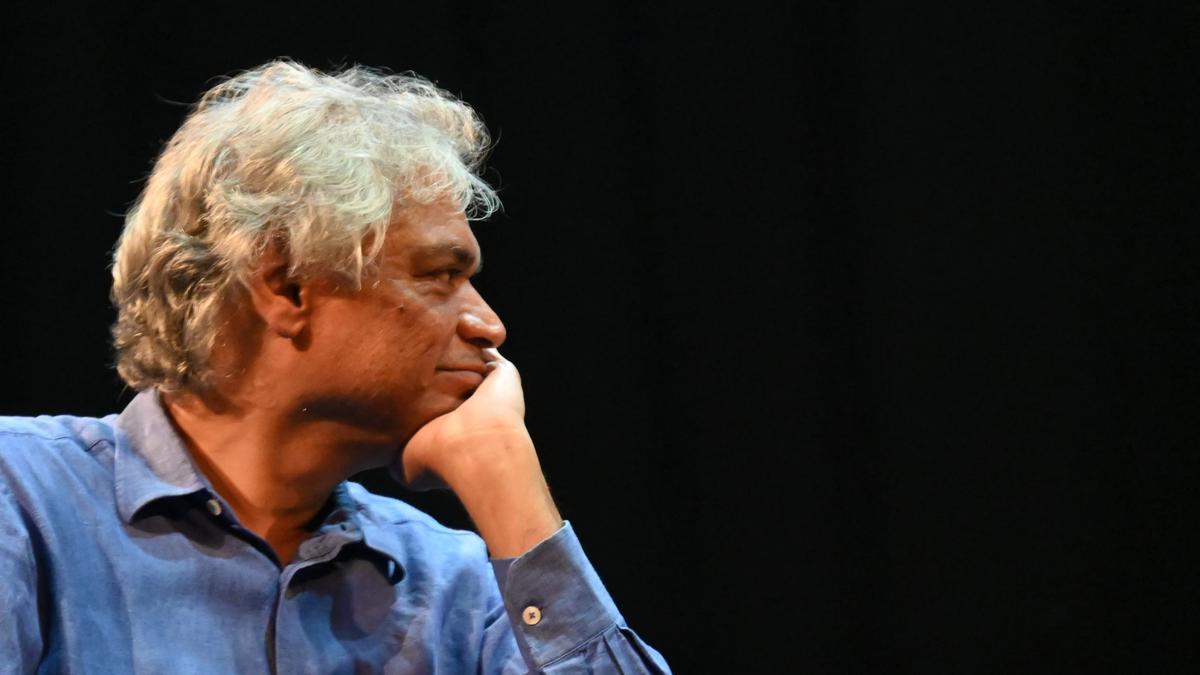
Dr SL Bhyrappa’s Parva will be staged in English this weekend in Bengaluru. The book is adapted for stage and directed by Prakash Belwadi. It has live music by Ravi Murur and troupe, costumes by Prasad Bidapa and sets by Shashidhar Adapa.
Prakash, who is known nationally and internationally in the world of cinema and television, started his career in theatre. He comes from a family of theatre practitioners. His mother, Bhargavi and father, Make up Nani, were renowned theatre artistes. “I took to theatre at the age of 15 and never left it, despite films and television,” says Prakash.
“I just returned from doing 28 shows of an Australian play and will soon head to the US for a 20-day show. I turned to cinema and web series, to keep doing theatre and sustaining myself. The credit also goes to my wife, Chandrika, for supporting me. I do not want to judge those who left theatre, I am sure they must have had their reasons.”
Parva, Prakash says, was originally performed in Kannada at Mysore Rangayana and it received a standing ovation. The English adaptation will be staged by the Centre for Film and Drama in five acts with four intervals. The Centre of Film and Drama was started in 2004. “We are hoping to travel abroad with this play. We are a small amateur theatre group and wanted to celebrate our 20th anniversary with this work.”
Parva reinterprets the Mahabharata and explores the tangled web of emotions, power struggles, and moral dilemmas. “I first read Parva 10 years ago in English. I immediately called Bhyrappa and sought his permission to adapt it to the stage. He was curious how I would adapt it and was worried whether I would give it a modern interpretation or politicise it. I was simultaneously amused, nervous and clueless and gave up the idea.”
Prakash had directed three plays for Rangayana and Addanda Cariappa, the then director of Rangayana, asked him if he would adapt any of Bhyrappa’s books for the stage. “I instantly thought of Parva, but they chose another of Bhyrappa’s stories to adapt.”
Prakash adapted Parva for stage during the first lockdown. “Bhyrappa approved the adaptation. Bhyrappa, who has watched the play quite a few times, describes Parva as ‘20 % Mahabharata and 80 % his perception’. In March 2021, we announced three shows. It was a 10-and-half hour long show and I am still amazed at how the audience sat through it.”


South African naturalist Steve Boyes speaks on ghost elephants, ancestral tracking, and Werner Herzog’s documentary exploring Angola’s elusive highland giants

Actor-director Amol Palekar will receive META's Lifetime Achievement award for 2026 on March 25 in New Delhi.

India's artists unite against rising censorship, advocating for creative freedom and support for marginalized voices in the arts.

Written and directed by Kunal, the film also stars Sparsh Shrivastava and Vanshika Dhir

This year, Bharatnatyam artistes will present the Tyagaraja Aradhane as a dance performance

This year, Bharatnatyam artistes will present the Tyagaraja Aradhane as a dance performance

The actor, along with director Sushant Shah, speak about their upcoming series ‘Chiraiya’, Divya’s process of working on the dialect, Sushant’s approach to telling a story about women, and more

An independent video, ‘Feel the Spark’ by Raleigh Rajan with vocals by Ciera Dumas that celebrates Tamil literary giants, garnered 1.4 million views in less than 36 hours.

In ‘Jack Ryan: Ghost War’, John Krasinski is back as the savvy CIA analyst, diving headfirst into a high-stakes mission that unravels a deadly conspiracy and pits him against a rogue black-ops unit

Shriram Bharatiya Kala Kendra’s Shankarlal festival showcased rare ragas, radiant artistry, and inclusive performances, from Pt Madhup Mudgal’s serene morning ragas to Ramana Balachandran’s Saraswati veena.

Explore "Threads that Bind: The Kantha Project," an exhibition in Delhi reimagining kantha as a medium of repair and renewal.

Sean Penn skips the Oscars to meet Ukraine's Zelenskyy, who praises him as a "true friend" amid the war.

The teaser of Tamil star Suriya’s much-awaited film with director Venky Atluri, titled Vishwanath and Sons, was unveiled by the makers on Monday