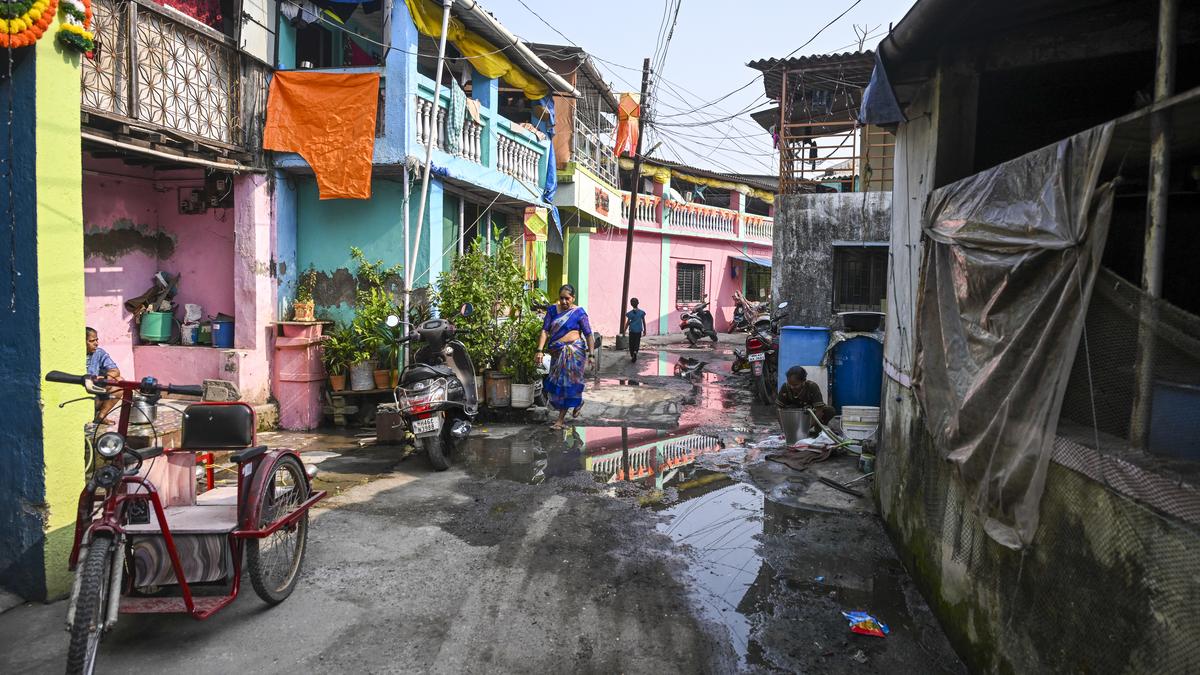
Party workers tried to force us to vote, Sheva Koliwada transit camp residents say
The Hindu
Sheva Koliwada residents boycott elections after 40 years in transit camp, demand rehabilitation, face threats from political parties.
Residents of Sheva Koliwada in Uran taluka of Raigad district, who have been living in a transit camp for 40 years, boycotted the State Assembly election on Wednesday, November 20, 2024.
Following The Hindu’s report, ‘40 years in a transit camp’ (November 17), officials from the Election Commission of India (ECI), and the Raigad District Collector visited the village to convince people to vote, and promised to convey, after the election, their demand for rehabilitation.
Since Monday, residents have alleged that political parties had been threatening them with job losses in the private sector, and the loss of documents, including as the Aadhaar card, Voter ID, and Ration Card.
Also Read:Infrastructure projects in Mumbai | Development and its discontents
Sheva Koliwada, situated about 54 km from Mumbai, has about 600 families living in eight-by-eight square feet homes with single-brick walls, tin roofs, and no windows.
In 1984, when the Jawaharlal Nehru Port Trust (JNPT) township project was coming up, the people of Sheva gaon (village), were moved to two transit camps, 12 km away from their current location.
The fisherfolk were moved to Boripakhadi village, also known as Hanuman or Sheva Koliwada; the farmers were moved to Bokadvira village, also known as Navin Sheva. They were promised compensation for the loss of their land, livelihoods, and way of life. In their original village, Sheva gaon, they had an abundance of livelihood opportunities — salt pans, fishing in the creek, and agriculture.


Environmental activist Bolisetty Satyanarayana urges urgent action to protect Kolleru Lake from ecological degradation and illegal aquaculture.

A 27-year-old man was murdered in east Bengaluru, with police suspecting a financial dispute as the motive.

A survey reveals a drastic decline in Thiruvananthapuram's house sparrow population, prompting calls for urgent conservation efforts.

AIADMK announces candidates A. Anbalagan and A. Gandhi for Puducherry Assembly elections in Oupalam and Orleanpeth constituencies.

Shorts News: Landslide hits Mandi after rain, nine houses evacuated

Three men arrested in Delhi for hoarding 74 LPG cylinders, facing charges under the Essential Commodities Act.

Bengaluru police summon Muthappa Rai's son, Ricky Rai, after a Lamborghini was caught performing dangerous stunts, raising public safety concerns.

LPG cargo ship from the US arrives at New Mangalore Port as charges waived amid West Asia conflict concerns.

Modi convenes ministerial meeting to address energy supply challenges amid West Asia conflict and ensure stable logistics nationwide.

CPI(M) negotiates with DMK over seat allocation for Tamil Nadu Assembly elections, aiming for six seats amid alliance talks.

Join our webinar to explore the necessity and impact of foreign universities establishing campuses in India.

PM Modi praises Bihar's rich culture and history in a heartfelt letter to CM Nitish Kumar on Bihar Diwas.

Former Minister Semmalai urges parties to limit freebies and prioritize development for Tamil Nadu's future prosperity.