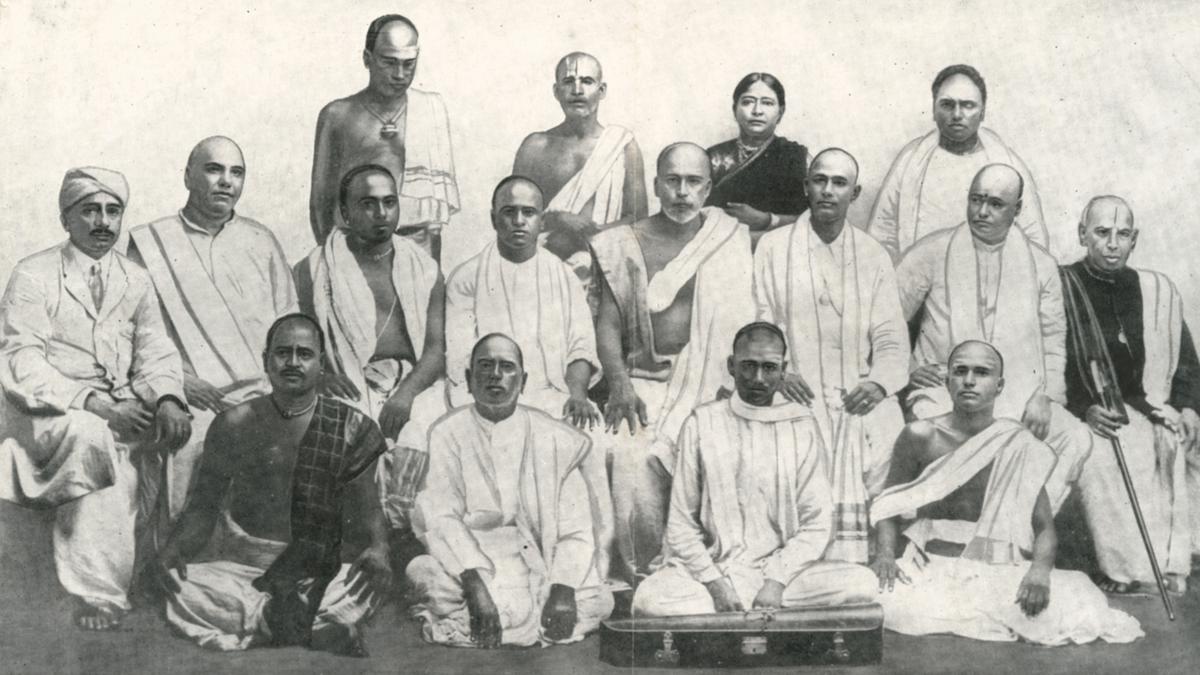
Parivadini Isai Malar - Vol 1 takes a peek into the life and contributions of past masters
The Hindu
Discover a detailed study on T. Janakiraman's music mastery, anecdotes on legendary musicians, and insightful articles in Parivadini Isai Malar.
As you turn the pages, you are drawn to a detailed study on T. Janakiraman’s mastery in music and its reflection in his works. This is followed up with an appreciation of his scholarship by Lalgudi Jayaraman as it appeared in a Tamil magazine. Enjoyable segments of T. Janakiraman’s novels, Marappasu and Mogamul are peppered throughout the book. The article on Konerirajapuram Vaidyanatha Iyer by M. Vaidyanathan (1936) has a strong and healthy dose of humour. The encounter between Konerirajapuram Vaidyanatha Iyer and Fiddle Krishna Iyer is a thought-provoking one. These and more such anecdotes and pieces make the book Parivadini Isai Malar (Volume 1) an interesting read. The book is a compilation of new and published articles.
En Sangeetha Ninaivukal by S. Sivakumar, who has also edited this volume, is a musical journey by itself. His recollections of the well-known and unsung musicians are heart-warming. His piece on M. Balamuralikrishna elaborates the legendary vocalist’s distinct approach to every facet of his art. It also highlights how his persona was as unique as his music. The piece also refers to Veena Gayatri and talks about a station master with a passion for Carnatic music. This piece, in a way, is dedicated to every rasika, who goes out of the way to listen to their favourite artistes. This is also what made the station master face departmental action.
Sivakumar has paid rich tributes to Tiruvaiyaru Chellam Iyer, who is referred to as an encyclopaedia on music and musicians, and to Kannan, who started the trend of bringing out the music concert guide during the December Season.
An especially absorbing write-up on Madurai Mani Iyer’s music by S. Nilakantan, son of violin maestro Thiruvalangadu (Suswaram) Sundaresa Iyer, throws light on the bond between the two legends. Along with it comes a short but gripping excerpt from Kothamangalam Subbu’s Thillana Mohanambal , wherein the author brings out the grandeur of the Mallari by a group of nagaswaram artistes to the accompaniment of the great Ammappettayar’s thavil.
Tiger Varadachari’s reminiscences of musicians broadcast on AIR Tiruchi in the 1940s shed light on an era that shaped Carnatic music and laid the foundation for the future generation. He speaks of Thachur Singarachariar, Veena Nilakanta Sastrigal, Mutthayalpettai Tyagarayar, Muthuswami Thevar, Ghatam Devarajan, Morsing Govindarajulu, Chennai’s nagaswaram artistes Parthasarathy and his son Narayanaswamy, the famous Nadhamuni Band and Clarinet Appayi.
That P.S. Narayanaswamy had translated the original Malayalam biography of Swati Tirunal into Tamil is a revelation to me. An abridged version of the foreword written by Semmangudi Srinivasa Iyer finds a place in this book.
Sujatha Vijayaraghavan’s lively recollection of the chamber music concerts by visiting Carnatic musicians during her Delhi days is engaging.
