Pampakkuda Malpanate a rare legacy crying out for upkeep
The Hindu
Historic Konat Malpanate in Pampakuda, Kerala, seeks maintenance to preserve its legacy as a training center for Syrian Orthodox priests.
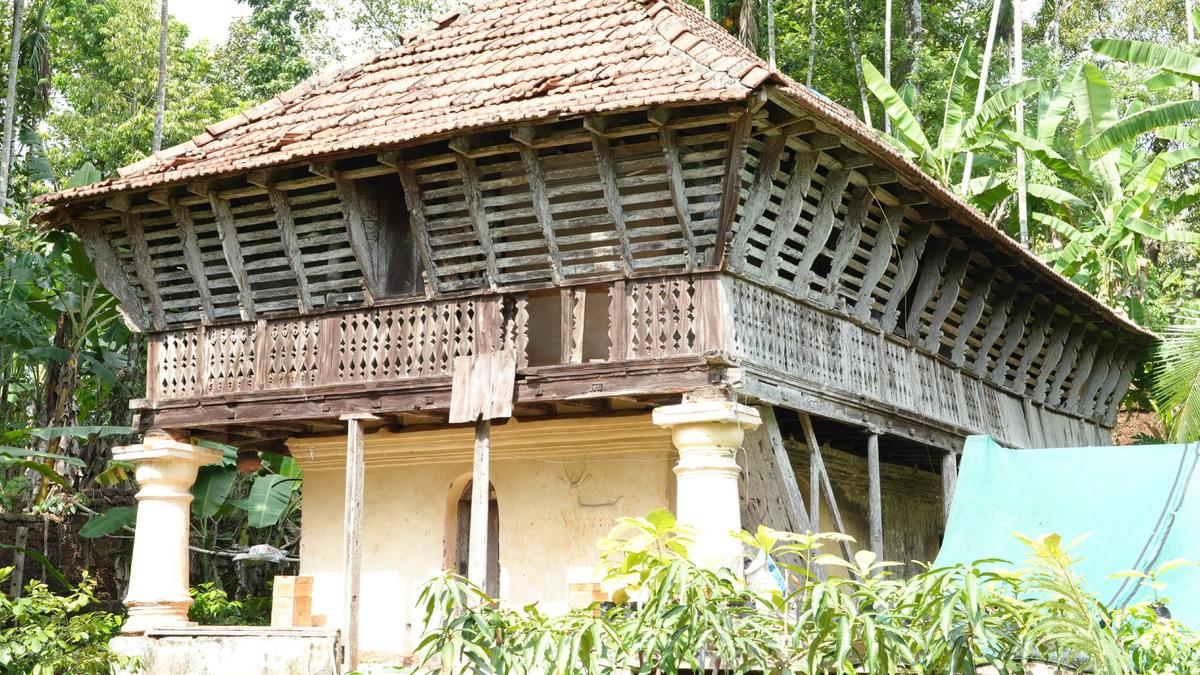
The 200-year-old building that once housed the ‘Konat Malpanate’, a training centre for priests of the Syrian Orthodox Church, is crying out for maintenance and upkeep as a significant historical legacy that sheds light on the illustrious history of the Malankara Church.
The Malpanates, or houses of the ‘Malpans’ (teacher in Syriac), operated similarly to the Gurukula system. Located in Pampakuda, aroound 40 km east of Kochi, the site is under the care of the Konat family that has a longstanding tradition of priesthood, with the present priest being the 23rd in line.
The family has appealed to the State Archaeology department for the maintenance of the historic building, according to Father Johns Abraham Konat. He said that the two-storey structure, now in a dilapidated condition, once accommodated students training for priesthood who lived alongside the Malpan during their formation. Father Konat added that there were a few auxiliary buildings near the Malpanate.
The historical connections of the Malpanate are evident. Close by is St. John’s Orthodox Valiyapally, established in 1825. There is also a small building nearby containing two tombs—one belonging to a bishop and the other to four Malpans. Father Konat said that the church and the Malpanate could be contemporary, though the pre-Christian history of the area remained unclear. “It is possible that the Malpanate was built before the church, supported by a small Christian population in the vicinity,” he added.
An initial examination showed that both the church and the Malpanate used the same construction materials, with similar techniques and styles of pillars. While the church has undergone repairs and renovations, the Malpanate has retained its original architecture. Both structures feature extensive use of wood, although it is unclear whether the timber was provided by a local chief or king. The wooden ceiling is intricately carved in a style typical of the eighteenth and nineteenth centuries.
It cannot be ascertained when the Konat Malpanate house was built, as there are no inscriptions or writings on the building. However, according to the family’s oral tradition, the house was constructed before the church, which was established in 1825. One manuscript preserved in the Konat library suggests that the house was built in ‘Kolla Varsham 1000’.
The formation houses for the priests of the Syrian Christians in Kerala predate the Portuguese, who introduced seminary-based education for the clergy. The Portuguese first established seminaries in and around Kochi, specifically in Vaipinkotta and Kodungallur. However, the Malankara Orthodox Syrian Church continued to operate Malpanates until the early 20th century. In fact, Malpanates in Kottayam, Piravom, and Angamaly persisted even after the Portuguese influence.


T.N. CM Stalin challenges PM Modi on government preparedness for West Asia crisis, emphasising leadership responsibility over public outsourcing.

Telangana DCA warns against unsupervised semaglutide use, stressing the importance of medical supervision and safe purchasing practices.

From origami classes at Rosary matriculation school to the two-day Makers Market in Mylapore, Chennai resident Priya Subramaniam has come a long way.

Election Commission bans exit poll results in Tamil Nadu from April 9 to April 29 ahead of Assembly elections.

Residents of Tambaram express concern over inadequate infrastructure amid rapid urban growth, highlighting traffic, drainage, and waste management issues.

Explore the defining moments and developments of Tamil Nadu's 16th Assembly, marked by political confrontations and administrative innovations.

Kerala CM Pinarayi Vijayan defends his remarks on G. Sudhakaran, labeling him a 'class traitor' amid election tensions.

Social media rumors spark panic buying of petrol in Belagavi, causing long queues and temporary fuel shortages at stations.

Delhi Budget 2026 LIVE: Follow live updates from The Hindu on the Delhi state budget for 2026-27, on March 24, 2026

Shorts News:WatchNetanyahu says Trump sees chance of striking deal with Iran

The facility in New Colony will benefit over 17,000 consumers, say officials

Water pipeline leak causes traffic congestion and waterlogging in Miyapur, Hyderabad, prompting detours and delays for commuters.

VCK exits the DMK-Congress alliance in Puducherry, deciding to contest alone due to dissatisfaction with seat allocation.