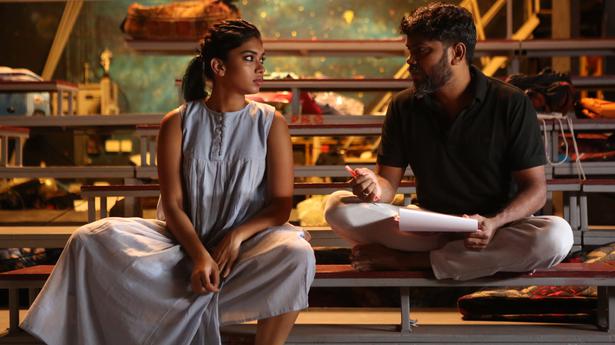
Pa. Ranjith: the game changer of Tamil cinema
The Hindu
The filmmaker’s success over a decade has ensured that Dalit culture, traditions and anti-caste politics have become an important part of the mainstream
Filmmaker Pa. Ranjith emerged onto the scene 10 years ago but Tamil cinema is still grappling with the unprecedented impact he continues to have on film narratives, culture and politics. In just 10 years, Pa. Ranjith has put anti-caste politics in the front and centre of Tamil cinema, which had previously normalised the glorification of dominant and upper caste characters and feudal society that they inhabit, their lives and culture.
In the 1990s and 2000s, Tamil cinema was churning out movies that were centred around a dominant caste — a male with immense social power within the village. Films such as Ejamaan, Nattamai, Chinna Gounder, Thevar Magan and others justified the caste — Hindu male’s glory and power derived from the remnants of the feudal system and the narratives would typically call the audience to imagine the past in the present. These films have had a deep social and political impact, particularly in the southern and western districts of Tamil Nadu, where each of the socially and politically dominant castes had their own on-screen heroes.
Ranjith’s success in mainstream Tamil cinema has meant that Dalit culture, traditions and anti-caste politics have become an important part of the mainstream. Credit to Ranjith, the filmmakers of today — both young and old — are bound by the code of social justice and it is no more acceptable to portray Dalit characters, women, transgenders, queer from the disadvantaged sections of the society negatively on screen.
When producers were reluctant to fund these movies, the success of Ranjith’s movies had opened up the space for filmmakers from disadvantaged sections to tell their stories.
Right from his film Attakathi, though not as stridently political or ideological as his other films, Pa. Ranjith has steadily featured assertive Dalit characters, who swear by their anti-caste politics inspired by B.R. Ambedkar and many other Tamil political icons such as Iyothee Thass and so on.
While Attakathi, which was an enjoyable film about a youth failing repeatedly in pursuit of love, showcased the colourful life and culture in the villages around Chennai, it wasn't noticed for these reasons.
It was his second film, Madras, featuring actor Karthi, which put Ranjith on the map for his politics. It was a searing critique of Dravidian politics from the ground-up. It featured ambitious and politically conscious Dalit characters and its narrative critiqued mainstream Tamil politics for setting aside its emancipatory ideals for meagre political gains. The film notably re-imagined ‘North Madras’ as a place where software engineers, and hip-hop artists thrive rather than as a den of rowdies and drug peddlers.


South African naturalist Steve Boyes speaks on ghost elephants, ancestral tracking, and Werner Herzog’s documentary exploring Angola’s elusive highland giants

Actor-director Amol Palekar will receive META's Lifetime Achievement award for 2026 on March 25 in New Delhi.

India's artists unite against rising censorship, advocating for creative freedom and support for marginalized voices in the arts.

Written and directed by Kunal, the film also stars Sparsh Shrivastava and Vanshika Dhir

This year, Bharatnatyam artistes will present the Tyagaraja Aradhane as a dance performance

This year, Bharatnatyam artistes will present the Tyagaraja Aradhane as a dance performance

The actor, along with director Sushant Shah, speak about their upcoming series ‘Chiraiya’, Divya’s process of working on the dialect, Sushant’s approach to telling a story about women, and more

An independent video, ‘Feel the Spark’ by Raleigh Rajan with vocals by Ciera Dumas that celebrates Tamil literary giants, garnered 1.4 million views in less than 36 hours.

In ‘Jack Ryan: Ghost War’, John Krasinski is back as the savvy CIA analyst, diving headfirst into a high-stakes mission that unravels a deadly conspiracy and pits him against a rogue black-ops unit

Shriram Bharatiya Kala Kendra’s Shankarlal festival showcased rare ragas, radiant artistry, and inclusive performances, from Pt Madhup Mudgal’s serene morning ragas to Ramana Balachandran’s Saraswati veena.

Explore "Threads that Bind: The Kantha Project," an exhibition in Delhi reimagining kantha as a medium of repair and renewal.

Sean Penn skips the Oscars to meet Ukraine's Zelenskyy, who praises him as a "true friend" amid the war.

The teaser of Tamil star Suriya’s much-awaited film with director Venky Atluri, titled Vishwanath and Sons, was unveiled by the makers on Monday