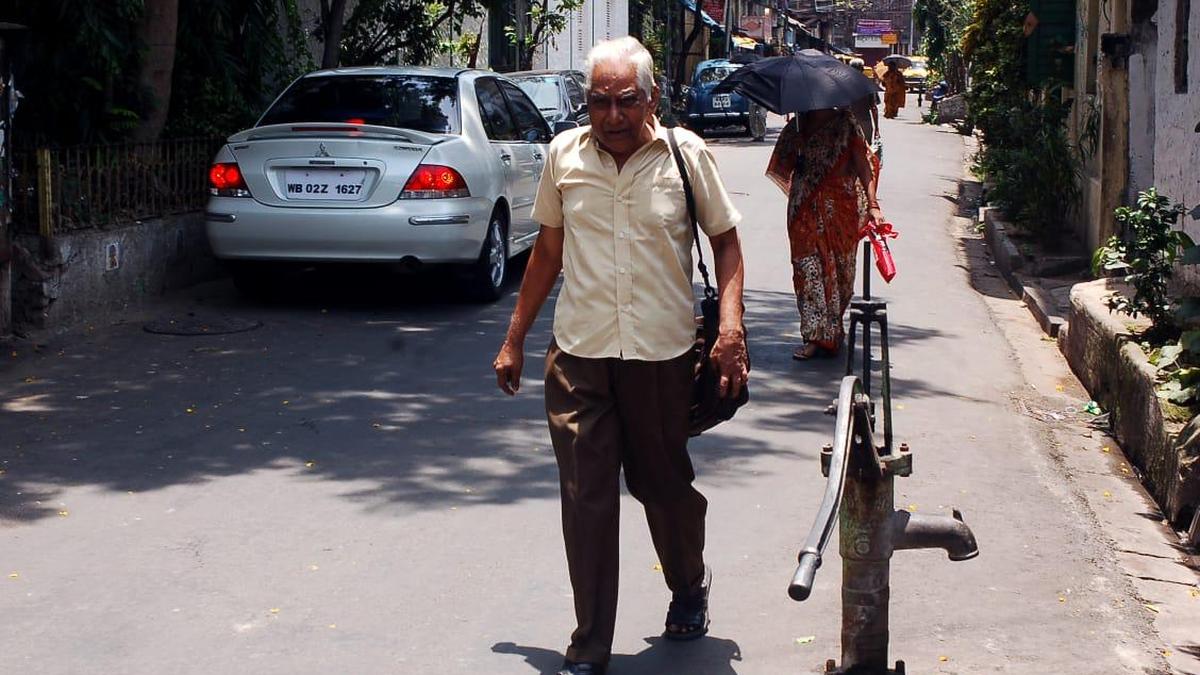
P. Thankappan Nair: Remembering Kolkata’s ‘barefoot historian’
The Hindu
P. Thankappan Nair, the 'Barefoot Historian of Kolkata', left behind a legacy of passion for history and dedication to truth.
People who were associated with P. Thankappan Nair, affectionately called the ‘Barefoot Historian of Kolkata’, hold him in awe, remember him with great love and respect and continue to wonder how a humble job-seeker came to Kolkata in 1955 from a remote village in Kerala, fell in love with the City of Joy, settled in the city and left behind an impressive bunch of works on its history, written with the dedication of a passionate historian. Despite all his efforts, the late historian remained distant from the institutions that hold sway over how history is told, written and transmitted in our times.
On his passing on June 18 at the age of 93, they mourned the passing of an era, passing of a friend, and, above all, of a guide in the labyrinthine country we call the past.
As a father, he set an example of quiet dedication. Even after he returned to Chendamangalam, near North Paravur, in Ernakulam district of Kerala after 63 years in Kolkata, he continued to read books, newspapers and engage in farming activities as health permitted, says his younger son Manoj Nair, a school teacher at nearby Elanthikkara.
In his mission, he was a self-less seeker of truth and a human being who represented a great detachment from the lures of money and position, says P.A. Sojan, who has been long associated with him.
The late Mr. Nair went first to Assam seeking a job after he passed Class 10 and a typing course. He later returned to Kolkata and took up a small job in the city, where he soon immersed himself in the history of the metropolis.
He left behind more than 60 books on various aspects of the history of West Bengal’s capital city and had a large and priceless collection of books. The latter turned into a major attraction for history lovers in the city.
Senior journalist Ravi Kuttikkadu recalls Mr. Nair as sitting in the middle of several heaps of books when he visited him a few years ago for an interview. He says that by that time, the historian had already authored more than 70 books and several were waiting to be written.


Explore North East India with South Star Rail's three unique 14-day train tour packages from Mangaluru, starting April 25.

A woman and her son sustained burn injuries in a gas cylinder fire in Bagalkot, Karnataka, and were hospitalised.

Directed by Nicholas Kharkongor, the show also stars Angira Dhar, and Ranveer Brar in pivotal roles

T.N. CM Stalin blames Centre's delimitation focus for diverting attention from the cooking gas shortage crisis.

UDF plans to challenge Kerala BJP chief Rajeev Chandrasekhar over alleged asset concealment and criticizes CPI(M) for corruption.

Telangana's Civil Supplies Commissioner assures no fuel shortage, with 20,000 kilolitres of petrol available

Delhi Assembly faces second bomb threat in two days amid Budget session; security measures intensified, but no suspicious items found.

Protect your eyes this summer with simple habits like wearing sunglasses, staying hydrated, and maintaining proper hygiene.

Hyderabad Collector assures no fuel shortage, urges public to ignore rumors and avoid panic buying.

Learn how elderly and disabled voters can easily cast their ballots from home in the 2026 Assembly Elections.

Parliament Budget Session LIVE: Track updates on the Parliament Budget Session as the Transgender Bill moves to the Rajya Sabha. Follow The Hindu for the latest updates on the Budget Session on March 25, 2026.

Congress leaders in Kerala accuse LDF and NDA of a secret deal to undermine their influence in the upcoming Assembly elections.

Agnikul Cosmos successfully test-fires a revolutionary 3D printed booster engine, enhancing launch efficiency and scalability in space transportation.