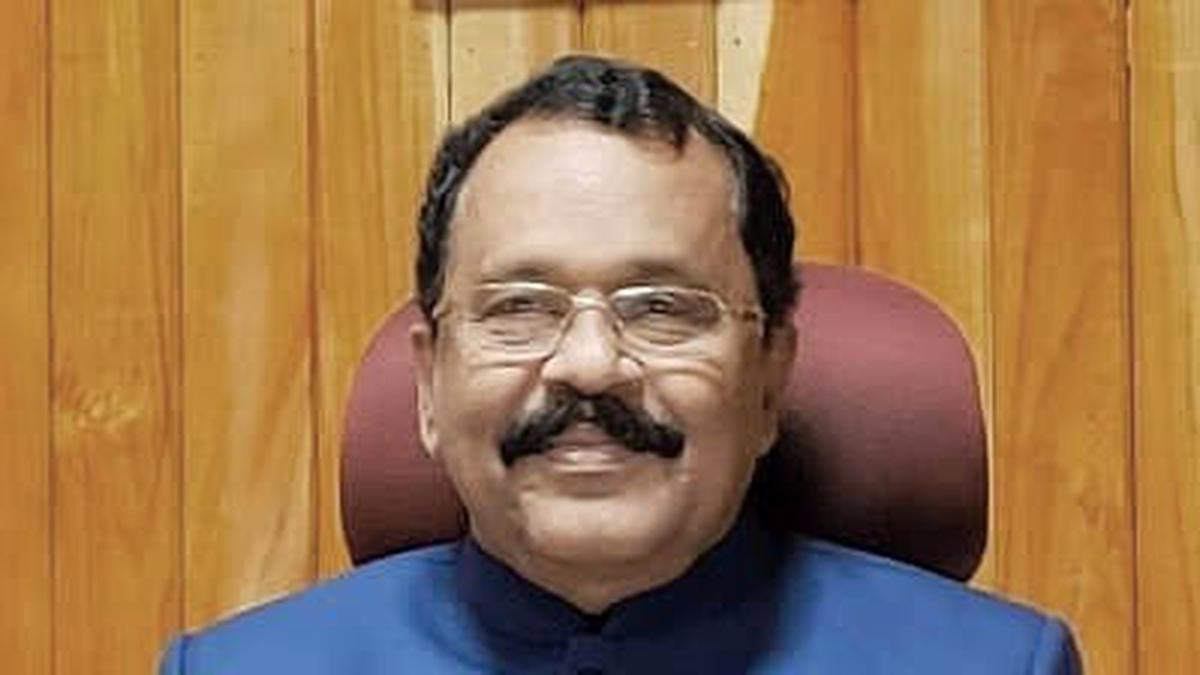
P.S. Sreedharan Pillai: A Governor in his literary labyrinth
The Hindu
As Goa Governor, P.S. Sreedharan Pillai takes full advantage of his bully pulpit, speaking about, and disseminating his passion for reading and literature. He has authored more than 200 books which traverse an astonishing range of subjects – from history, politics, law to poetry and economy, being possibly the only personage in the Indian political scene with so many literary credits under his name
From his perch as Governor of the western Indian coastal State of Goa, P.S. Sreedharan Pillai takes full advantage of his bully pulpit, speaking about, and disseminating his passion for reading and literature.
A prodigious writer, he has authored more than 200 books which traverse an astonishing range of subjects – from history, politics, law to poetry and economy, being possibly the only personage in the Indian political scene with so many literary credits under his name.
Mr. Pillai firmly abides by his maxim that “Art and literature can unite people” and has utilised his love of literature to achieving this object, whether as a respected attorney, as a former two-time State president of the Bharatiya Janata Party (BJP), or as Governor of first Mizoram and now Goa.
“Art and literature can guarantee unity among people. Private study in form of reading and writing has an educative dimension far greater than merely reading something to prepare a political speech,” says Mr. Pillai, speaking to The Hindu.
A respected figure across the political spectrum in today’s polarised times, Mr. Pillai rues the plummeting standards of literary output and reading among today’s crop of politicos.
“Be it Gandhiji or Dr. S. Radhakrishnan, there used to be a rich tradition of scholar-politicians on the Indian political scene, particularly during the freedom struggle and the immediate decades after 1947. Regrettably, that tradition has seen a decline in recent times,” he says.
Recalling his childhood days in Travancore’s Venmony village, Mr. Pillai says he was a dedicated reader of newspapers even as a boy.


U.S.-Israel war on Iran LIVE: Follow The Hindu for updates on the West Asia conflict on March 24, 2026

Join the 'Click & Commit' campaign on World TB Day, uniting Chennai's community to pledge against tuberculosis.

Brahmin candidates join Naam Tamilar Katchi, marking a significant shift in Tamil Nadu's political landscape and inclusivity.

Over 750 wheelchairs are prepared in Thoothukudi for accessible voting, ensuring convenience for differently abled and elderly voters.

Madras HC dismisses S.P. Velumani's petition challenging I-T assessment of ₹7 crore as unexplained election expenses from 2016.

The Lok Sabha passes a contentious Transgender Bill, sparking praise from the government and criticism from opposition parties.

Kamal Haasan announces support for DMK in 2026 elections, emphasizing the need for 'Dravidian Model 2.0' for Tamil Nadu's welfare.

Y.S. Sharmila critiques massive concessions for the AMNS steel plant while advocating for the Visakhapatnam Steel Plant and job creation.

Puducherry Assembly elections test the INDIA bloc's unity as parties file nominations amidst seat allocation uncertainty.

T.N. CM Stalin advocates for constitutional safeguards to maintain state representation in delimitation amid women’s reservation discussions.

Rohit Pawar files complaint in Bengaluru alleging conspiracy in Ajit Pawar's air crash; Maharashtra police had refused FIR.

Armed extremists attack Mongkot Chepu village again, firing on students and injuring civilians amid rising tensions in Manipur.

TGNPDCL bags ‘Governance Now’ award