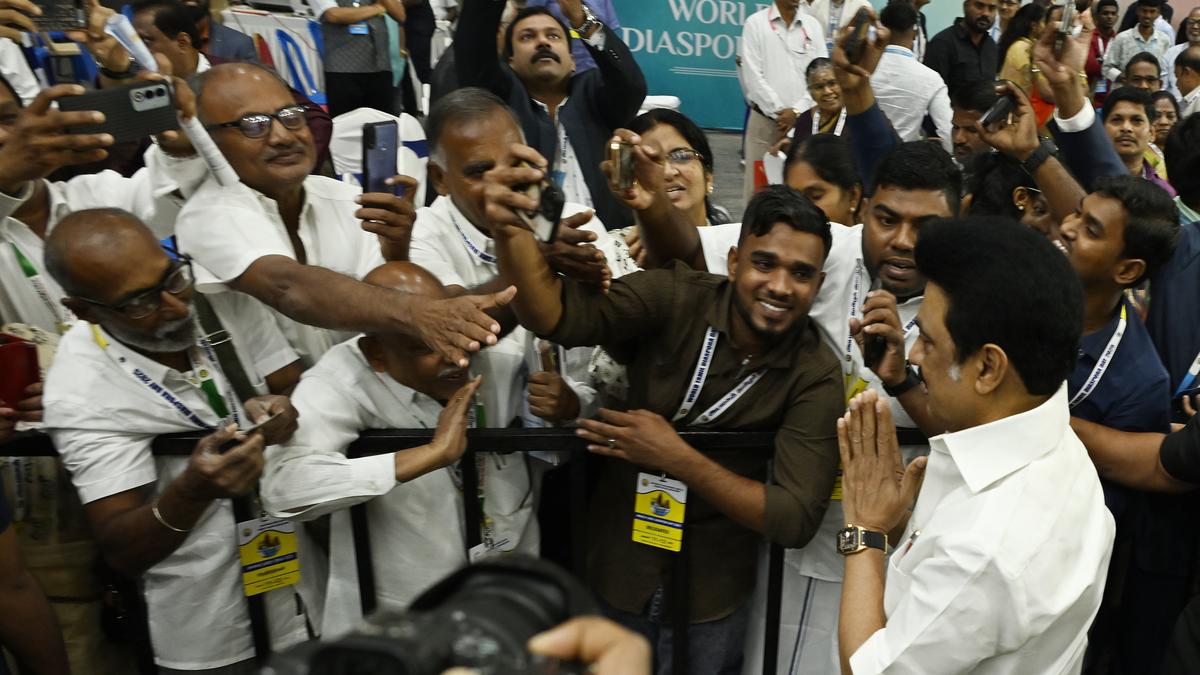
Over 26,600 register themselves as non-resident Tamils in eight months
The Hindu
The Non-Resident Tamils (NRT) Welfare Board’s initiative to register and issue identity cards to members of the Tamil diaspora is gaining momentum, as over 26,600 persons have registered over the past eight months. A substantial number of registrations have been done by the Tamil diaspora living in West Asian countries.
The Non-Resident Tamils (NRT) Welfare Board’s initiative to register and issue identity cards to members of the Tamil diaspora is gaining momentum, as over 26,600 persons have registered over the past eight months. A substantial number of registrations have been done by the Tamil diaspora living in West Asian countries.
Since the launch of the initiative on May 15 last year, over 26,600 registrations have been done and ID cards have been issued to all of them, officials said. During the Tamil Diaspora Day event in Chennai earlier this month, officials had put up a stall at the venue to create awareness on the initiative.
Issued by NRT Welfare Board, the ID card enables those from the Tamil diaspora to have easy access to departmental initiatives and to stay informed on relevant initiatives of the Tamil Nadu government.
The Board also offers insurance cover for personal accidents and critical illnesses, besides offering education and marriage assistance and support for the children of deceased NRTs. Besides Tamil Nadu, the State governments in Kerala and Gujarat too have been taking up registrations of citizens hailing from their States.
The ‘Verkalai Thedi’ initiative launched by Tamil Nadu Chief Minister M.K. Stalin in 2023 has been a success, officials said. The programme selects about 200 students a year, who are children of Tamils settled abroad, for a cultural tour of Tamil Nadu so as to help them revive their ties with the State.
Youth from about 20 countries have been covered under the programme so far, officials said. In the first batch, 57 students were given a tour of the State, where they were taken to sites of historical significance.
“Most of the youngsters who benefitted from the programme were coming to Tamil Nadu after two generations,” an official said.


Residents of Chettichavadi express concerns over deteriorating groundwater quality due to long-standing garbage dumping issues in Salem West.

Community Health Officers in Vijayawada protest for reduced workload and continued incentives amid growing dissatisfaction over salary changes.

Telangana faces 13,929 healthcare vacancies, primarily in doctors and nurses, as recruitment efforts aim to address the shortage.

For most patients with TB who are severely underweight, nutritional support is an essential and not optional part of treatment

Family of custodial death victims demands harsh punishment for nine convicted policemen to prevent future abuses of power.

Rajinikanth refutes TVK leader's claims about DMK threats preventing his political entry, expressing gratitude to supportive political figures.

CM announces Cabinet Sub-Committee on Musi rejuvenation; rehabilitation for all displaced

Ramanathapuram identifies 145 polling stations as sensitive, ensuring security with paramilitary forces ahead of assembly elections, says DEO.

BJP Puducherry president V. P Ramalingam files nomination for Raj Bhavan, joined by Union Minister Mandaviya and Khushbu Sundar.

History-sheeter 'Thoppai' Ganesh shot dead by police in Chennai after attacking officers during attempted escape.

The government plans to amend the FCRA, introducing new regulations for NGO asset management and accountability for key functionaries.

The draft policy for “Responsible Digital Use Among Students”, released on Monday by the Department of Health and Family Welfare, has recommended that parents set structured routines with clear screen-time rules and prioritise privacy, safety, and open conversation with children on digital well-being.

Police Observer Sushant Kumar Saxena conducts surprise inspection at Shencottai police station, reviewing warrants and security arrangements ahead of elections.