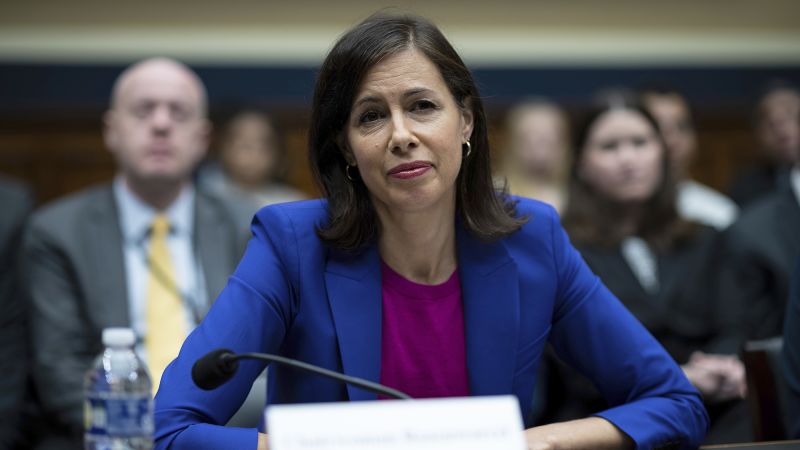
Outgoing FCC chair rejects high-profile TV petitions as attempt to ‘weaponize’ government
CNN
The outgoing Democratic chair of the Federal Communications Commission is taking bold action on the way out the door, rejecting what she described as four efforts to weaponize the government’s TV licensing authority for political purposes.
The outgoing Democratic chair of the Federal Communications Commission is taking bold action on the way out the door, rejecting what she described as four efforts to weaponize the government’s TV licensing authority for political purposes. Activists on both the right and left may be disappointed. But chair Jessica Rosenworcel said the agency needs to “take a stand on behalf of the First Amendment.” So on Thursday, according to a statement obtained by CNN, she is dismissing all of the pending petitions and complaints before the FCC that, she asserted, “seek to curtail freedom of the press.” One of the petitions targeted a Fox-owned TV station in an attempt to hold the Murdochs accountable for Fox News Channel’s falsehoods. The other three efforts were pro-Trump in nature and related to the recent presidential campaign. “The facts and legal circumstances in each of these cases are different,” Rosenworcel wrote. “But what they share is that they seek to weaponize the licensing authority of the FCC in a way that is fundamentally at odds with the First Amendment. To do so would set a dangerous precedent. That is why we reject it here.” Rosenworcel is not just tidying up before her term ends on Jan. 20, she is trying to convince others about the value of a clean house. She is clearly concerned that President-elect Donald Trump might use the agency that oversees US telecommunications to punish media outlets he doesn’t like.


Oil prices held steady Wednesday after Iraq clinched a deal to resume some crude exports via Turkey. It’s not a ton of oil, but it’s what amounts for good news these days as the Strait of Hormuz remains largely blocked.

The US-Israeli war with Iran, now stretching into its third week, is dashing hopes that the Federal Reserve will lower interest rates at all this year.

A federal judge says the Trump administration must let more than 1,000 sidelined Voice of America employees return to work by next week.

Former judges side with Anthropic and raise concerns about Pentagon’s use of supply chain risk label
Nearly 150 retired federal and state judges have filed an amicus brief on Tuesday supporting AI company Anthropic in its lawsuit against the Trump administration for designating it a “supply chain risk,” CNN has learned.

Attacks on commercial ships in the Middle East this month have all but closed the vital Strait of Hormuz to oil tankers. One of the few alternative routes for oil exports from the region goes through the Red Sea. But now even that lifeline is in danger.

When Mona Panjwani opened One40 Rooftop, a swanky restaurant in lower Manhattan last year, one of the biggest dilemmas besides the menu was choosing the reservation platform.

What could get more expensive because of the war in Iran?

Gas prices have skyrocketed due to the US-Israel war on Iran, putting even more financial strain on many Americans’ wallets.

United Food and Commercial Union Local 7, the union representing the 3,800 striking workers, said that JBS failed to meet its demands during contract negotiations over higher wages, life-saving safety equipment and improved healthcare.

Every day brings a new complaint — or three — from the Trump administration about the American news media’s coverage of the Iran war.

Traffic through the strait, normally the conduit for a fifth of global oil output, has been severely curtailed since the start of the Iran conflict. But Iran itself is shipping oil through the waterway in almost the same volumes as before the war, earning the cash needed to sustain its economy and war effort.

How Anthropic may benefit from its fight with Trump

The price of oil rose to its highest level since July 2022 Sunday evening as the Trump administration suggested the war with Iran could last several more weeks and President Donald Trump called on the international community for help reopening the Strait of Hormuz to oil tankers.