Our bodies perform a kind of mRNA editing and we don’t know why Premium
The Hindu
The mystery of A-to-I RNA editing in evolution unraveled by researchers in China Agricultural University.
The noted geneticist and evolutionary biologist Theodosius Dobzhansky (1900-1975) published an essay in 1973 in the journal American Biology Teacher, titled ‘Nothing in biology makes sense except in the light of evolution’. The title became wildly popular in scientific circles. It was even engraved in the Jordan Hall of Science of the University of Notre Dame in the US.
Recently, an article in the Journal of Molecular Evolution by Qiuhua Xie and Yuange Duan from China Agricultural University, Beijing, posited that even in evolution’s light it is not easy to make sense of the widespread persistence of A-to-I RNA editing in animals and fungi.
A-to-I RNA editing had not yet been discovered in Dobzhansky’s time.
The DNA is basically a book of recipes. Each recipe tells the cells in our bodies how to make specific proteins by combining 20 ingredients, called amino acids, in different ways.
Sometimes a recipe is for a single protein, sometimes it’s for multiple. Either way, each recipe is called a gene. The recipes are written in the gene’s own language, which uses an alphabet consisting of four ‘letters’: A, T, G, and C. For example, the ingredient alanine can be written as GCA, glycine can be written as GGT, and so on.
A cell transcribes the recipe to make a protein from a gene in the DNA to an mRNA. Then the cell moves the mRNA from the nucleus to the ribosome, where the mRNA is ‘read’ to make the protein.
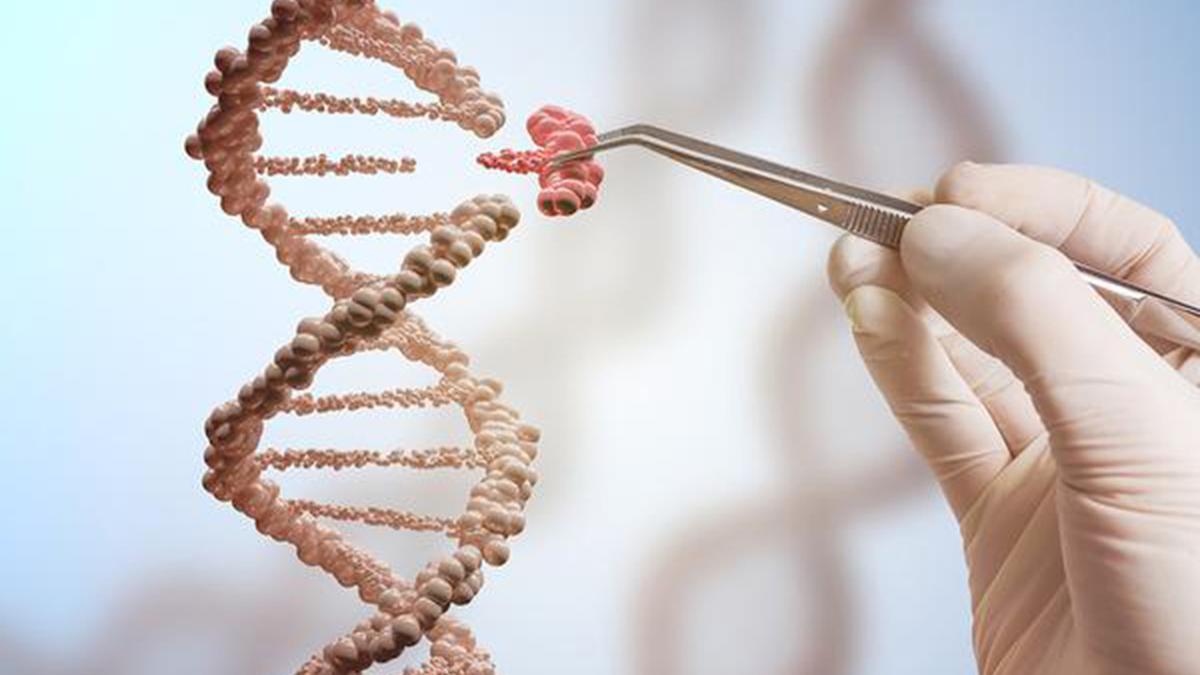
Sometimes, after the cell copies a recipe to the mRNA, it switches particular letters in it — specifically, the ‘A’ in the mRNA language above (standing for adenosine) to ‘I’ (inosine). This conversion is called A-to-I mRNA editing. Proteins in the cell called ADAR are responsible for it.


The 2026 U.S. cholesterol guidelines urge starting screening and treatment at 30 to prevent cardiovascular disease effectively.

Olam Festival 2026 in Thiruvananthapuram returns March 27-29 with 120+ vendors, music, art, and cultural zones.

A few storytellers in Thiruvananthapuram share their journeys, challenges, and evolving methods on World Storytelling Day, inspiring young minds.

76-year-old Kurian Jacob from Kerala triumphs with seven medals, including five golds, at the Open Masters Games in Abu Dhabi.

Explore the nature of the human mind as an emergent property of brain activity and complex neural interactions.

CERN's Large Hadron Collider discovers the Xi-cc-plus particle, enhancing understanding of quantum mechanics and baryon behavior.

Vibha Batra’s latest book, Spotless (Hachette India) is a novel in verse for young adults

In its first edition, the Madras Art Salon spotlights the works of journalist and artist Narayan Lakshman at The Botanical Club, a social space in the British Deputy High Commission, Chennai

Cholesterol enhances melanoma cell invasion by making nuclei squishier, revealing a potential treatment target in cancer progression.

The designers reinterpret the Swedish artist’s symbolic forms and colour energy through contemporary resortwear silhouettes

Discover the inspiring legacy of Bibha Chowdhuri, a pioneering woman in physics and a trailblazer in STEM history.

Discover the inspiring legacy of Bibha Chowdhuri, a pioneering woman in physics and a trailblazer in STEM history.

Ashdeen’s Spring 2026 collection features saris inspired by the designer’s Parsi gara archive