Opposition must debate Waqf bill, not walk out: Bengal’s Muslim leaders urge
The Hindu
West Bengal Muslim groups unite to oppose new Waqf bill, urge opposition MPs to participate in discussions.
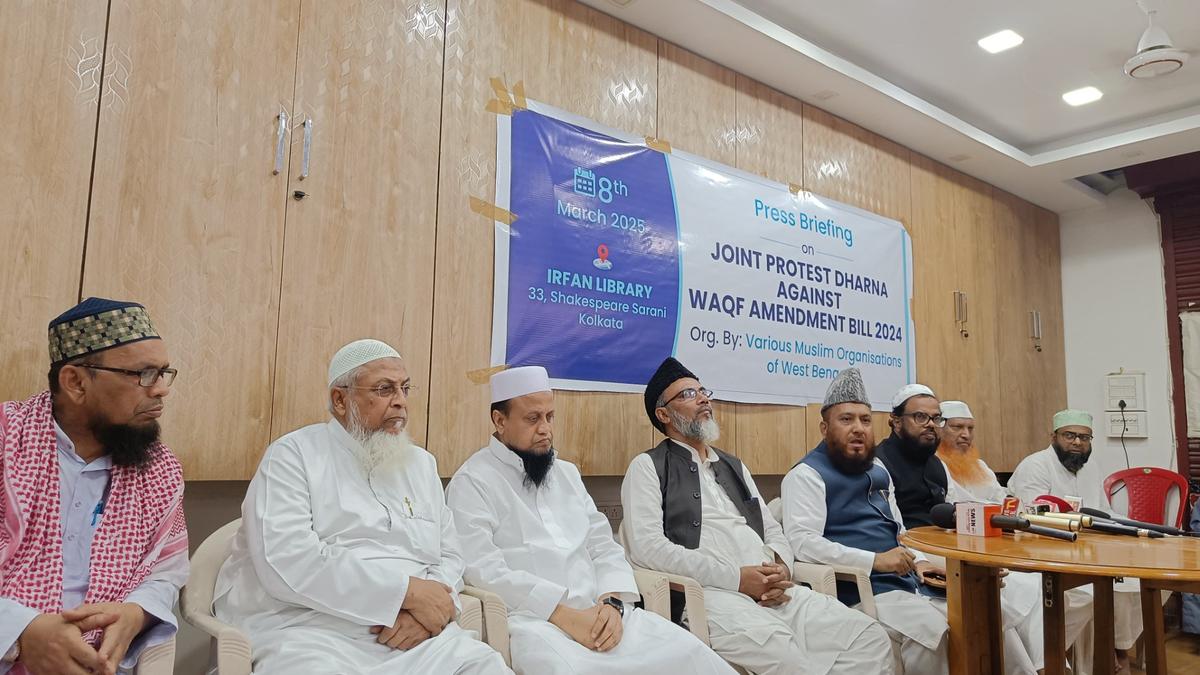
Multiple Muslim groups of West Bengal came together on March 8 and made an appeal to opposition MPs in the Parliament to not boycott the discussions on the Waqf bill and walk out. They have urged all of them to take part in the discussion if the Waqf issue is tabled and make their voices heard in the parliament.
Also Read | Opposition members raise an array of objections to Waqf Amendment Bill
The leaders of groups like All India Muslim Personal Law Board, Jamaat-e-Islami Hind, Jamiat-e-Ulema-e-Hind, All India Tabligh-e-Seerat, and many more were present at the meeting where they also announced a peaceful dharna (protest) in the heart of Kolkata scheduled for March 10. This dharna will come three days before the national dharna set to be held in Delhi on March 13 by pan-Indian Muslim groups to condemn the new Waqf amendment bill.
The organisations said that this bill is a “declaration of war against Muslims”. They also said that lack of consultation from Muslim leaders and stakeholders before amending the laws is “unconstitutional and undemocratic which is against the core value of a democratic country like India.”
Abu Talib Rahmani, Member of All India Muslim Personal Law Board said that allegations of Waqf board taking away other properties in the name of Waqf is a “wrong allegation”. He stated that it is illegal for any following Muslim person to forcefully take anyones land or property.
Mr Abu Talib added, “There is corruption in Waqf board as well, like any other organisation India. But it is the government’s responsibility to systematically stop the corruption. We will be in complete support if they do. But one corrupt person does not mean the whole body is corrupt.”
He urged, “I ask Mamata Banerjee to ask her MPs and all other opposition MPs to not walk out and boycott discussions on Waqf bill. They should stay in the parliament and participate in the debate, oppose, argue, and make the minority voices heard.”


Papanasam dam's water level reaches 66.15 feet, with inflow at 76 cusecs and discharge at 300 cusecs.

Development without impact: Coastal residents of Kanniyakumari and Nagercoil constituencies voice discontent

Rampant encroachments in Tiruchi threaten pedestrian safety and traffic flow, undermining smart pavement initiatives and exacerbating congestion.

Discover Kerala's electoral history in 'Vottarivu,' a 201-page booklet released ahead of the 2026 Assembly elections.

Experts at a floriculture conference in Shivamogga stress the need to reduce greenhouse gas emissions and enhance soil carbon levels.

First randomisation of EVMs and VVPATs for Tiruchi and Perambalur districts completed with political party representatives present.

Puducherry elections see ongoing DMK-Congress rift over seat-sharing, leading to candidate conflicts on nomination day.

Einstein College and Sri Sarada College in Tirunelveli celebrated significant events, honoring academic excellence and cultural heritage.

Priyanka Gandhi criticises PM Modi's West Asia remarks, urging for a comprehensive Parliament discussion on the matter.

Learn who can vote by postal ballot in the upcoming Tamil Nadu Assembly election, including seniors and persons with disabilities.

Decomposed body of a missing 25-year-old man discovered in Dindigul stone quarry, prompting calls for investigation and quarry closure.

SVEEP activities launched in The Nilgiris aim to boost voter turnout at 13 polling booths with low participation rates.

Learn who can vote by postal ballot in the upcoming Tamil Nadu Assembly election, including seniors and persons with disabilities.