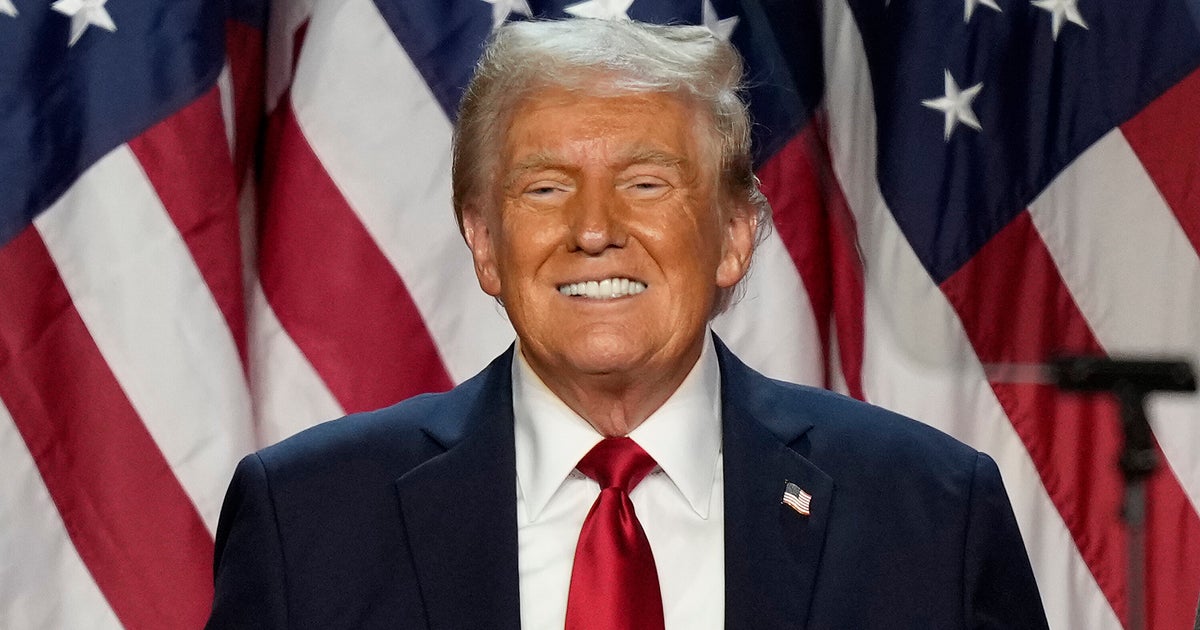
Only About 3 In 10 Highly Confident In Trump's Ability To Pick Qualified People: Poll
HuffPost
Americans don't have high confidence in Trump's ability to choose well-qualified people for his Cabinet or effectively manage government spending and the military.
WASHINGTON (AP) — Americans may have recently elected Donald Trump to a second term, but that doesn’t mean they have high confidence in his ability to choose well-qualified people for his Cabinet — or effectively manage government spending, the military and the White House, according to a new poll from the AP-NORC Center for Public Affairs Research.
As Trump names his appointees for key posts in his administration — some of whom could face difficult confirmation fights in the Senate even with Republicans in control — about half of U.S. adults are “not at all confident” in Trump’s ability to appoint well-qualified people for his Cabinet and other high-level government positions.
The appointment process and its breakneck speed have represented a manifestation of Trump’s pledge to voters to be a disruptive force in the country and a return to the chaotic era of governance that defined his first four years in the Oval Office. But only around 3 in 10 Americans are “extremely” or “very” confident that Trump will pick qualified people to serve in his administration. A majority of Republicans say they do have high confidence.
Trump has promised to shake up Washington with an aggressive approach that includes the Department of Government Efficiency, or DOGE, a nongovernmental task force assigned to find ways to fire federal workers, cut programs and slash federal regulations, to be helmed by billionaire Elon Musk and fellow entrepreneur Vivek Ramaswamy.
Beyond his appointments, though, the survey finds a similar level of confidence in Trump’s ability to manage government spending and perform other key presidential tasks, including overseeing the military and the White House — which, in Trump’s first term, experienced significant high-level staff turnover, particularly in its early days.


CBS News Radio will close after nearly 100 years of operation, the company announced.

If Mississippi loses this fight at the Supreme Court, it could mean major changes to how mail-in ballots are counted everywhere.

The courts, state election officials and even candidates themselves all have opportunities to stop any election trickery in its tracks.

Sanae Takaichi turned her Barron Trump shoutout into a baller diplomatic move.

The CNN data analyst warned Republicans of the "political nightmare waiting to happen."

The Economist's front page also came with a chilling warning.

It's the most notable difference of opinion between the two leaders since the start of the war against Iran.

A reporter for a Spanish-language news outlet who contends she was wrongly held in a detention center for more than two weeks has been released.

Alexia Moore, 31, has been charged with murder by police who say she took pills to induce an abortion.

Breaking off the student loan operation would mark the biggest step yet in closing the department.

The podcaster's spot-on impersonation left the head of Canada's Conservative Party, Pierre Poilievre, laughing.

The bill would make it illegal to flush abortion or miscarriage remains down a toilet "to protect both human dignity and America’s water systems."

The "Last Word" host praised the director of national intelligence for "defying" President Donald Trump during her testimony before unleashing on her.