On the ethanol blending programme
The Hindu
India aims to blend 20% petrol with ethanol by 2025-26, but food versus fuel concerns persist
India is on its way to achieve its target of blending 20% of petrol with ethanol by 2025-26, going by the milestones on blending percentages crossed so far and the increase in ethanol production capacity.
However, the food versus fuel equation continues to hang over the ethanol economy as recent events have shown. For example, maize import has increased from April to June of this year compared to last year at a time when maize has been used to produce more fuel ethanol to compensate for restrictions on using sugarcane products. The industry, however, opines India has enough grain and sugar surpluses. Tarun Sawhney, Vice-Chairman and Managing Director, Triveni Engineering and Industries, says, “With big food stocks across the country, there is absolutely no concern about food security in the near future. I am concerned the supplies and stocks are so large that it could lead to wastage and spoiling,” he said.
All the emphasis has been on first generation (1G) ethanol that is directly made from foodgrains and sugarcane. The government should diversify and move to 2G and 3G that are more benign in terms of impact on food security.
Twenty per cent by 2025-26 would mean producing some 1,000 crore litres of ethanol for blending with petrol. “We are now seeing 13% to 15% blending with a sharp increase since 2021,” says Sourabh Banerjee, consultant on ethanol and biofuels. In 2021, the blending was around 8%. Deepak Ballani, director general of Indian Sugar and Bio-energy Manufacturers Association, says the sugar industry has invested some ₹40,000 crore in the last few years in capacity expansion. In just two years, 92 crore litre capacity was added.
The roadmap for achieving ethanol blending targets, prepared by the Niti Aayog, had laid down that the capacity of sugarcane-based distilleries would need to increase from 426 crore litres in 2021 to 760 crore litres in 2026, while grain-based distilleries’ capacity should increase from 258 to 740 crore litres. In other words, a lot more of grain-based distilleries were to come up. Besides fuel ethanol, some 310 crore litres would be needed for making ethanol for consumable liquor as well as industrial uses. Taking stock in December 2023, the government said India’s ethanol production capacity had already increased to 1,380 crore litres — some 875 crore litres capacity from sugarcane and 505 crore from foodgrains. This means the targeted total ethanol capacity is nearly achieved although with a greater sugarcane-based component.
Two interest subvention programmes for establishing new distilleries had facilitated the ramping up of ethanol generation capacity. Industry has been demanding, that to maintain momentum and create surplus capacity for other uses such as blending with diesel, these programmes should be extended and that Oil Marketing Companies (OMCs) should sign more long-term contracts with distilleries until the supply chain is well and truly formed.
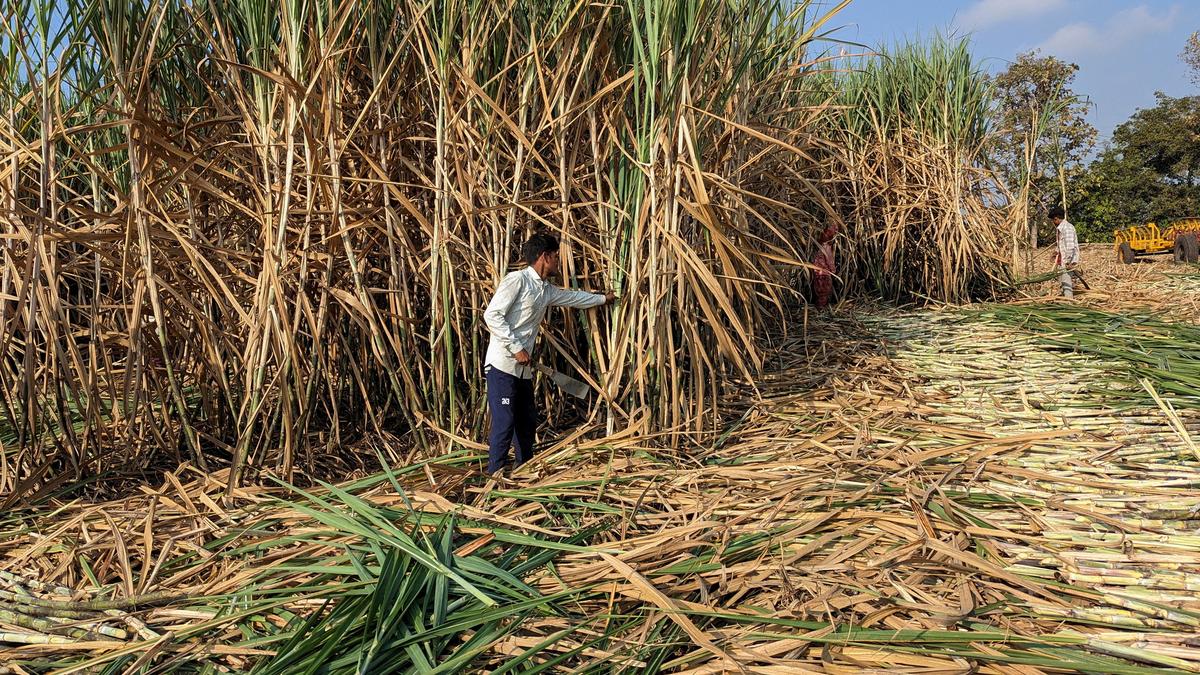
Sugarcane gives rise to three main related products — sugarcane juice and syrup, B-heavy molasses and C-heavy molasses, in the order of decreasing sugar content. The first two would typically go to making sugar while the third will be used for ethanol production. In a bid to up fuel ethanol production, the government had started permitting the diversion of the first two away from sugar production to fuel ethanol. Ethanol pricing depends on the sugar content of the input. In 2022-23, 63% of fuel ethanol came from B-heavy molasses and 33% from molasses. In December, 2023, the government restricted the diversion of the first two over fears of falling sugar stocks.


The Thane police have arrested two co-founders of cryptocurrency exchange platform CoinDCX in connection with an alleged fraud of Rs 71.6 lakh, officials said

Meta Chief Executive Mark Zuckerberg is building a CEO agent to help him do his job, the Wall Street Journal reported

Insurance penetration and density are often misunderstood and do not reveal how many families are insured or whether they would be financially secure if the main earning member were to die. The real issue is not reach but adequacy, as households may have life insurance but not enough cover to replace lost income, leaving them financially vulnerable.

Five top firms lose ₹1 lakh crore in market value, with HDFC Bank experiencing the largest decline of ₹56,124.48 crore.

L&T confirms 95% of its West Asia project sites are safe, while addressing logistics challenges amid ongoing regional conflicts.

Mines Ministry to auction 19 critical mineral blocks on March 23, expanding strategic resources for clean energy and technology sectors.

Mines Ministry to auction 19 critical mineral blocks on March 23, expanding strategic resources for clean energy and technology sectors.

Five top firms lose ₹1 lakh crore in market value, with HDFC Bank experiencing the largest decline of ₹56,124.48 crore.

HDFC Bank terminates three senior officials over client onboarding issues at its DIFC branch amid ethical concerns following chairman's resignation.

Air India CEO warns of potential flight cuts and reduced travel demand due to rising fuel costs amid ongoing Gulf conflict.

Options are widely used by retail traders to speculate on the value of the stock for immediate gains and such behaviour in large scale can distort the market

India achieves 1 billion tonne coal production for the second consecutive year, ensuring stable energy supply and economic growth.

Generic drugmakers in India launch affordable Semaglutide versions, targeting a $1 billion diabetes and weight loss market.