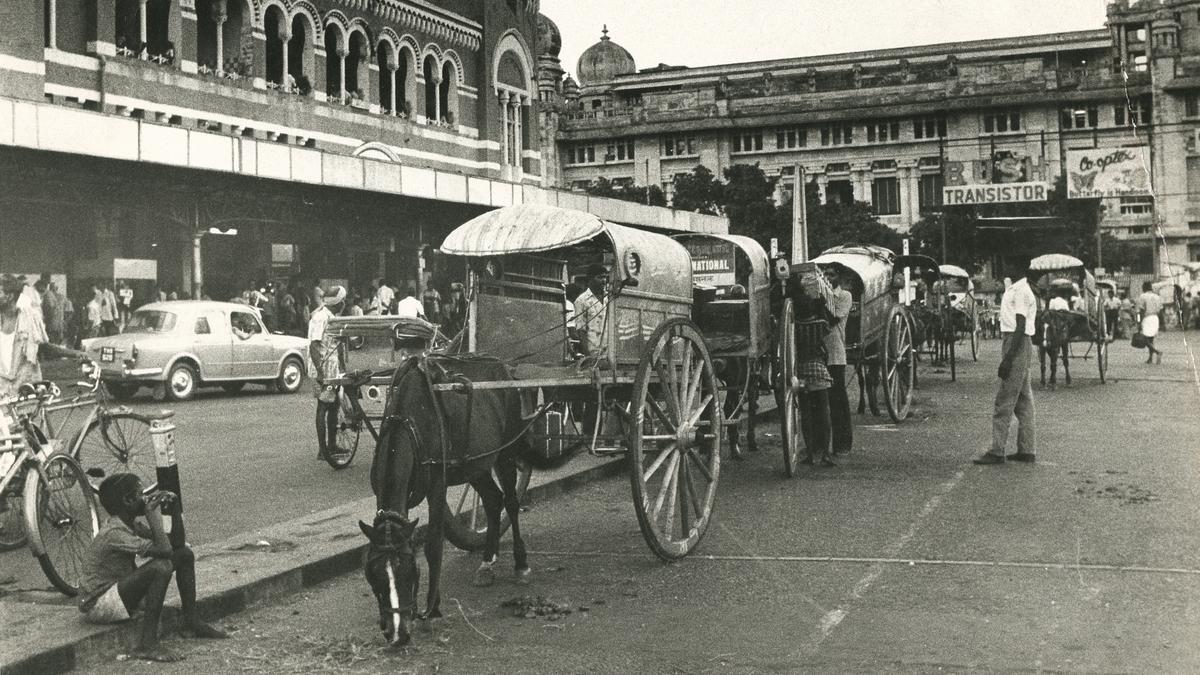
On a ride from Madras to Chennai
The Hindu
Chennai's transportation systems have evolved over time, from steam engines and trams to MRTS and Metro. People haggle with auto drivers and use apps to guide out-of-towners. Cinema has immortalised these systems, and this week we explore how Chennai got its wheels.
Every city that grows and pulsates cannot do so without expanding and building robust transportation networks. Madras-that-became-Chennai is no exception. As the city grew, so did its transit systems and as the habitable land expanded, its road network sneaked out, shooting out from the centre like a fast-growing hydra; as its people moved out to the peripheries, the snaking lines went further.
The delightful cacophony of old steam engines and rickety trams co-existed with the neighing horse-drawn jatkas, or the screech of the breaking cycle rickshaw. Madras has always felt at ease trying new moves, literally excited to try the new ‘flying train’ or MRTS, or slipping into the unparalled , though slightly expensive comfort of the metro.
They haggled with the horsecart and the cycle rickshaw pullers and went on to bitterly argue with the autorickshaw drivers. When the apps entered the transportation space, they slipped in there too, guiding poor out-of-town drivers with the same loud, friendly instructions they’d give the petta (area) autodrivers. And then, they will idolise and memorialise these transportation systems on their most favourite entertainment medium - celluloid.
Knowing the growth of the city is knowing its transportation systems, and that’s why we offer, for a week leading up to Madras Day, how our favourite city got its wheels.


CCB arrests three drug peddlers in Mangaluru, seizing ₹2.5 lakh worth of MDMA and other valuables.

TVK's 28 candidates in Puducherry include former BJP MLAs, a sitting Independent, and a retired police IG.

BRS submits notice on private member bill to Speaker

CPI-M accepts DMK's five-seat offer for Tamil Nadu Assembly elections, prioritizing INDIA bloc unity over seat demands.

Ricky Rai, son of former underworld operative Muthappa Rai, on Monday appeared before the Bengaluru Traffic Police for questioning in connection with a case involving a Lamborghini performing dangerous stunts at Anil Kumble Circle on March 21.

The Dispur election heats up as 'CongBJP' defections shape a high-stakes contest between veteran candidates from BJP and Congress.

Bengaluru's M. Chinnaswamy Stadium conducts readiness drill ahead of IPL 2026, ensuring upgrades and technical preparations are complete.

First-level randomisation of EVMs completed in Nagapattinam for upcoming elections, ensuring transparency and security.

A district-level committee in Krishnagiri has been formed to assess and verify seizure claims of goods and cash.

Minister Anam Ramanarayana Reddy pledges government support for local fishermen and farmers facing challenges in Andhra Pradesh.

MP M. Sribharat urges collective efforts to revive Visakhapatnam Steel Plant, highlighting key reforms for crucial recovery and growth.

141 candidates have filed nominations for Kozhikode's Assembly elections, with scrutiny on March 24 and campaigning intensifying.

BJP's Vijayendra accuses Congress of using money to influence Bagalkot bypolls, urging voters to reject their tactics.