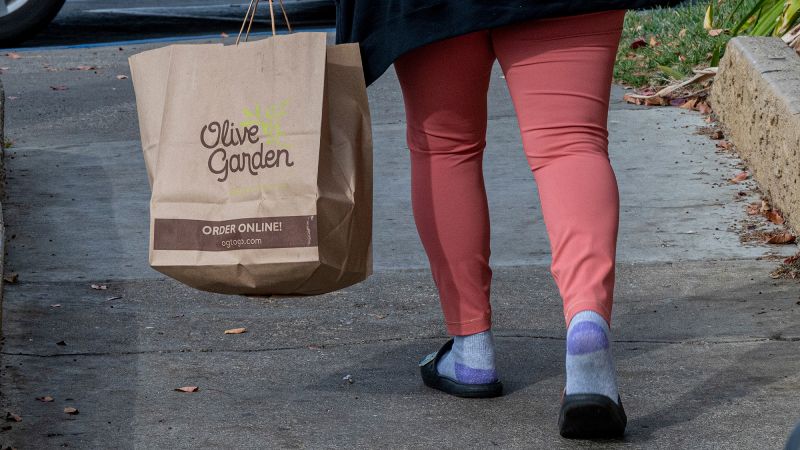
Olive Garden strikes a deal with Uber to deliver its food
CNN
Once a holdout on using third-party services, Olive Garden is reversing course and will use Uber to deliver breadsticks and pasta.
Once a holdout on offering delivery for the casual diner, Olive Garden is reversing course and will use Uber to deliver breadsticks and pasta. Darden Restaurants, the chain’s parent company, announced Thursday an “exclusive multi-year delivery partnership” with Uber that will begin later this year at a limited number of Olive Garden locations and likely expand nationally to its more than 900 locations next May if the pilot is successful. Olive Garden already offers delivery through its website and app for catering orders with a $100 minimum, delivered by the restaurant’s employees. Moving forward, the chain will outsource the delivery to Uber Eats drivers. However the restaurant still won’t be available on the the Uber Eats app and food can only be ordered on Olive Garden’s website and app. “Guests have been asking us for home delivery options and they continue to show they are willing to pay for the convenience,” said Darden CEO Rick Cardenas in a press release. He added Uber was a “clear choice” for a partnership because it’s giving the chain guest data and insights that doesn’t hamper its “competitive advantages and simple operating model.” Darden has shunned services like Uber and DoorDash in the past, saying that splitting the revenue with third-party service erodes the company’s profitability and the food isn’t delivered to its standards. Even during the height of the pandemic, Olive Garden didn’t use the services, although the services benefited their competitors. Shares of Darden (DRI) jumped 9% in midday trading. The partnership likely alleviated some of the pain of a dismal quarter for Olive Garden, which reported a 2.9% drop in same-store sales for the quarter.


The worst global oil crisis in decades could become a major problem for the Federal Reserve, whose policymakers meet this week to determine the next moves for the US economy.

President Donald Trump’s attack dog atop the FCC, Brendan Carr, garnered lots of attention on Saturday for threatening the licenses of local broadcasters over news coverage he deemed to be “fake.”

The first of the month can create anxiety for millions of renters across America.

US economic growth was even weaker than previously reported at the end of last year heading into President Donald Trump’s war with Iran.

Part of the pitch for using AI at work goes like this: It’s like having a team of people to delegate your grunt work to, freeing you up to think strategically and maybe, just maybe, take a long lunch or head home early. Or maybe even be more productive, to make more money. It’s a nice idea!

The war with Iran is complex, but the reason why the Middle East conflict matters to your financial well-being comes down to three simple facts.

The efforts to mitigate an global oil shortage did little to dampen the rise in crude prices

Buzzfeed, the digital media company that took the mid-2010s by storm, said on Thursday it has “substantial doubt” about its ability to continue as a business.

A bipartisan group of senators passed a bill Thursday aimed at improving housing affordability.

Stocks fell and oil prices surged Thursday as the war with Iran continued to stoke fears of higher energy costs and disruptions to the global economy.

Ever since the US and Israel struck Iran, the jump in oil and gas prices has become a major focus for markets and consumers alike. But that’s only the top of a long list of goods that stand to get more expensive.

Stocks have climbed, bond yields have fallen and the US dollar has weakened across President Donald Trump’s second term so far — market movements the president has welcomed.

Meta, the company that changed its entire brand identity five years ago on the promise of a technology it turned out no one wanted, just spent an undisclosed sum to acquire Moltbook, a “social network” built for “AI agents.”