Old techniques revived to restore Srikalahasti temple’s grandeur Premium
The Hindu
Renovation of ancient Srikalahastheeswara Swamy temple blends modern technology with age-old practices for lasting preservation.
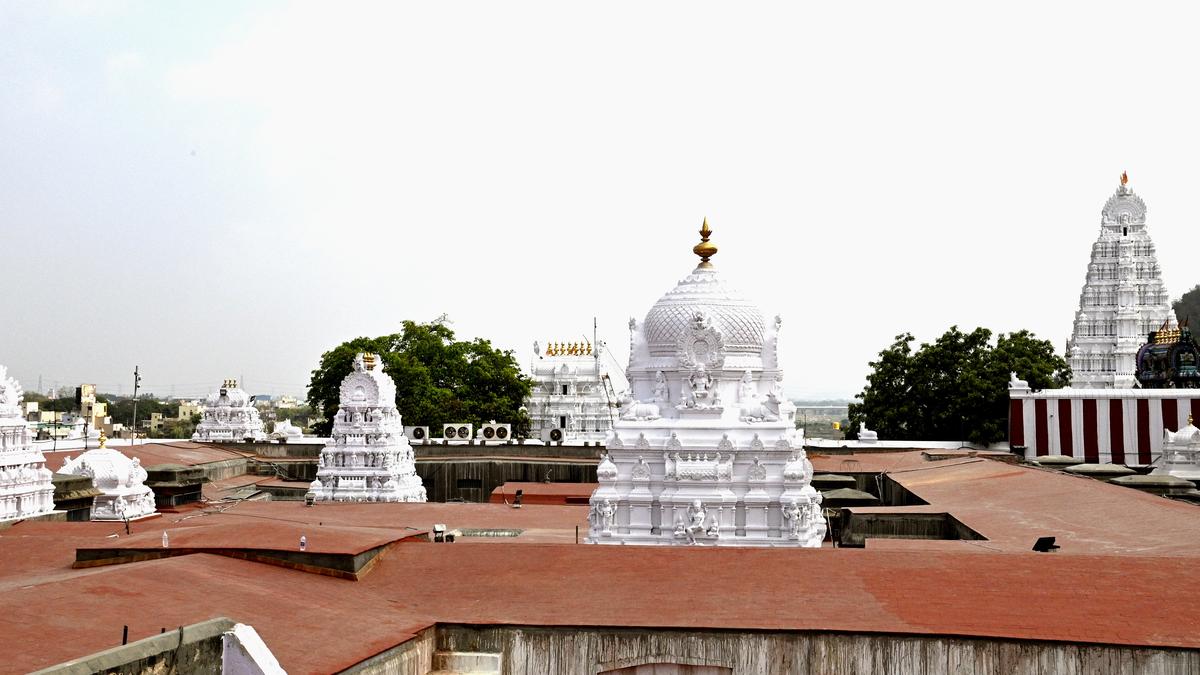
Renovation of ancient structures using modern technology and materials without denting their aesthetics and historical value has always been a challenge. And when the structure is a temple as old as the Srikalahastheeswara Swamy Devasthanam in Srikalahasti town of Tirupati district, there is no room for error.
The temple had been facing leaks at several spots on its roof for a long time, despite the application of concrete over the years. However, the temple management’s latest efforts, which blend age-old practices with modern technology, promise a lasting solution that also keeps the temple’s authentic beauty intact.
Srikalahastheeswara Swamy temple is a famous Saivite shrine revered as ‘Dakshina Kashi’ (southern Kashi). People from south, who find it difficult to visit the ancient town of Kashi on the banks of the Ganga river, offer prayers at this shrine. It is said that a visit to this temple is equal to that to the Kashi Vishwanath Mandir.
Mythology has it that the Shiva Linga here was initially worshipped by Sri (spider), Kala (serpent) and Hasti (elephant), hence the name. Moreover, the story of Bhakta Kannappa, a devotee from the Chenchu tribe who offered his eyes to Lord Shiva, is equally popular among the masses.
The ancient shrine was re-built and developed over the centuries by various kings. Rajendra Chola I of the Chola dynasty constructed the main structure in the 11th century. Temple inscriptions also mention the contributions of Rajaditya Chola, Rajaraja Chola and Kulothunga Chola among others to this shrine.
The hundred-pillar mandapam, considered a sight to behold with its ornate carvings, was built by Vijayanagara Emperor Sri Krishna Devaraya in 1516. It was during the same period that the ‘Raja Gopuram’ (the 120 feet tower at the entrance) was built. It collapsed in May 2010 but was rebuilt in its original form on the same spot and consecrated in 2017.
The temple structure has a massive common roof spread over 64,000 sq.ft., covering the sanctum sanctorum of Sri Swamivaru as well as Ammavaru, besides the other celestial beings (Parivara Devathalu).


Probe launched into trainee vet's death after hippo attack, raising safety concerns at Shivamogga zoo.

Explore Chennai’s thriving late-night biriyani culture, from Adambakkam to Puliyanthope, and from Pudupet to Triplicane, to where midnight food hubs serve fresh, aromatic biriyani to night owls across the city.

Two more bodies recovered from Godavari River after five youths drowned during a bathing incident in Eluru district.

A suspected kidnapping attempt on Himachal CM's aide's son was reported near Mashobra, prompting a police investigation.

Sobha Surendran refutes V.D. Satheesan's claims of a BJP-CPI(M) deal, attributing them to fear of electoral defeat.

V.D. Satheesan praises G. Sudhakaran as a just administrator, highlighting respect amid political differences in Kerala Assembly polls.

Kerala court sentences G. Sandeep to life imprisonment for the murder of Dr. Vandana Das, with appeals for a death penalty pending.

Erode (East) voters prioritize pollution control, traffic solutions, and urban infrastructure as key issues ahead of upcoming elections.

Civil supplies department seizes 55 illegal LPG cylinders, booking 19 individuals to prevent domestic supply shortages in Vizianagaram.

Hyderabad police bust illegal samosa unit, seizing 500 stale eggs and used cooking oil, risking public health.

Eid prayers are held in Delhi's Uttam Nagar under heavy police presence amid heightened communal tensions and security measures.

Tensions rise in Mathura as locals protest cow vigilante's death, prompting a strong response from authorities and police.

Join the Met Centre Hyderabad's open house on March 23 to learn about weather forecasting and its real-life applications.