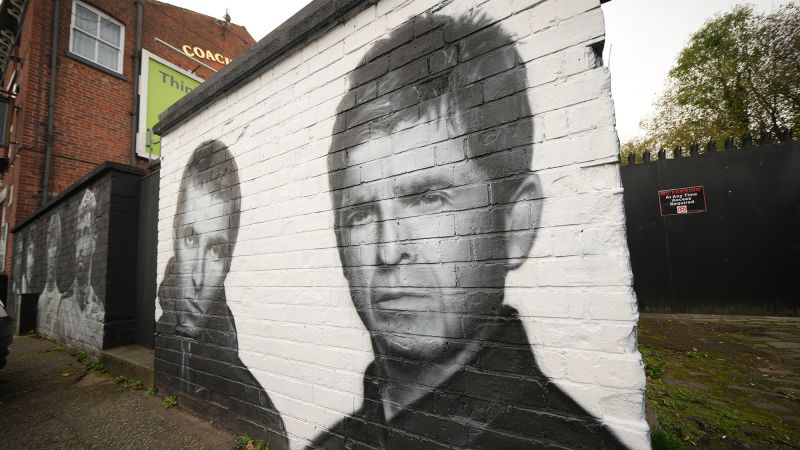
Oasis is canceling reunion tour tickets sold by resellers
CNN
Oasis is canceling around 50,000 tickets for its British tour dates that were resold on secondary websites like StubHub and Viagogo.
Oasis is canceling around 50,000 tickets for its British tour dates that were resold on secondary websites like StubHub and Viagogo. The band’s tour promoters are canceling tickets resold through unofficial secondary sites to stop price gouging, a spokesperson for Live Nation and SJM, the Oasis tour promoters, told CNN. Oasis fans are the latest to deal with the issue of ticket scalpers, who purchase tickets at face value and resell them for profit. The practice has ensnared — and enraged — fans of everyone from Taylor Swift to Coldplay, becoming the rare issue in Washington that lawmakers from both parties can agree on. Oasis, which dominated airwaves in the 90s, hasn’t performed since 2009, when an argument between bickering brothers Liam and Noel Gallagher led to its split. The band’s reunion tour was announced in August, and its popularity has brought renewed attention to frustrations around ticket accessibility and fans being priced out of major concerts. When tickets for Oasis’s UK and Ireland reunion tour went live in August, some fans took to social media to lament surging prices, long wait times and even missing out entirely on buying tickets. There were 1.4 million tickets available, with 10 million fans from 158 countries vying to buy them, according to Live Nation. With enormous demand and limited supply, tickets were promptly re-listed on secondary sites at inflated prices. CNN saw ticket prices as high as $7,294 for the Oasis tour on Viagogo, a secondary market for ticket sales.


If you only watched Fox News over the weekend, you didn’t hear about President Donald Trump’s widely condemned reaction to Robert Mueller’s death.

Oil prices rose Sunday after President Donald Trump threatened to “obliterate” Iran’s power plants if the Strait of Hormuz is not reopened by Monday evening.

Defense Secretary Pete Hegseth has been taking steps to thwart news coverage of the Pentagon for more than a year. Now he has finally met some resistance.

Defense Secretary Pete Hegseth has been taking steps to thwart news coverage of the Pentagon for more than a year. Now he has finally met some resistance.

Gerald Rodriguez, the general manager of an NPR affiliate in rural Colorado, expected federal funding for public media to shrink. He didn’t expect it to disappear almost overnight.

The much-touted new tax breaks for tips, overtime, seniors and car loan interest have a lot of income tax filers expecting a big bump in their refunds this year – or a big cut in their tax bill.

Looking out his shop window, across the street, just to the right, Paloma Clothing co-owner Mike Roach sees one of Portland, Oregon’s, most expensive gas stations.

Oil and liquefied natural gas tankers moving through the Strait of Hormuz carry around 20% of the world’s supply. But for countries on the Persian Gulf, the waterway is more than just an energy route – it’s a lifeline for more than 100 million people.

A California jury has largely sided with Twitter shareholders who accused billionaire Elon Musk of defrauding them by intentionally driving down the social media company’s stock ahead of his $44 billion acquisition in 2022.

The war with Iran is disrupting global oil flows, damaging energy infrastructure and raising fears of prolonged conflict. But gold, usually considered a safe haven during periods of economic uncertainty, has slumped.

US stocks and bonds fell, oil prices rose and gold had its worst week in four decades as the Iran war continues to ripple through financial markets.

The White House on Friday released its long-awaited national artificial intelligence legislative framework, a move to prevent states from enacting their own laws and enforce the Trump administration’s light-touch approach to AI regulation.

“Today is a difficult day,” CBS executives wrote to staff, explaining the cuts as a tough but necessary reallocation of newsroom resources.