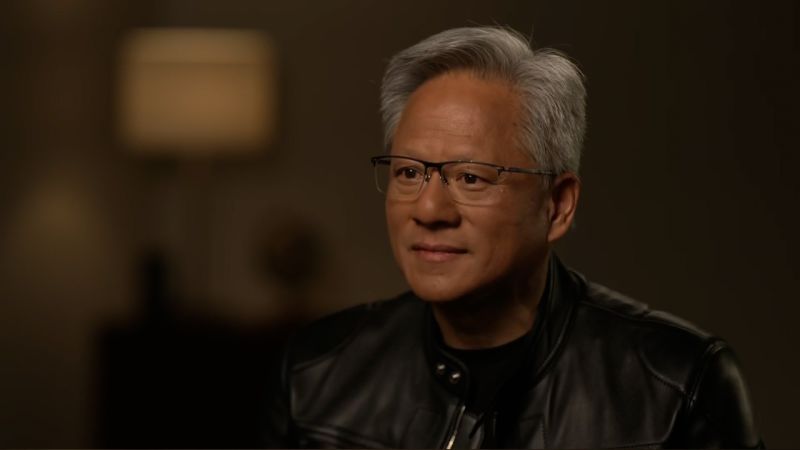
Nvidia’s CEO says the US should ‘reduce’ dependency on other countries, onshore technology manufacturing
CNN
The United States’ plan to “re-industrialize” technology manufacturing is “exactly the right thing,” Jensen Huang, CEO of the world’s largest chipmaker, said Thursday.
America’s plan to “re-industrialize” technology manufacturing is “exactly the right thing,” said Jensen Huang, CEO of the world’s leading AI chipmaker. In an interview with CNN’s Fareed Zakaria, Huang, who heads the Santa Clara, California-based Nvidia, said the United States should invest in manufacturing and is currently “missing that entire band in our industries.” “That passion, the skill, the craft of making things; the ability to make things is valuable for economic growth — it’s value for a stable society with people who can create a wonderful life and a wonderful career without having to get a PhD in physics,” Huang said. The Trump administration has instituted a slew of policies, including sweeping tariffs, in an effort to revive America’s declining manufacturing industries. It has been in part to boost the automotive and energy sectors, as well as investments in technologies. “President Trump has made it clear America cannot rely on China to manufacture critical technologies such as semiconductors, chips, smartphones, and laptops,” White House press secretary Karoline Leavitt said in a statement in April after a temporary tariff pause was instituted on smartphones and other electronics. Huang said that onshoring manufacturing would take the pressure off of Taiwan, where the world’s largest semiconductor maker, Taiwan Semiconductor Manufacturing Company (TSMC), is based. Trump announced in March that the chipmaking giant would invest at least $100 billion in US manufacturing.


Fed officials are set to announce their latest rate decision Wednesday afternoon, along with a new forecast for the path of the American economy as the war in Iran stretches on.

“The speed with which American democracy is currently dismantled is unprecedented in modern history,” one of the world’s top democracy researchers says in a new report.

Oil prices held steady Wednesday after Iraq clinched a deal to resume some crude exports via Turkey. It’s not a ton of oil, but it’s what amounts for good news these days as the Strait of Hormuz remains largely blocked.

The US-Israeli war with Iran, now stretching into its third week, is dashing hopes that the Federal Reserve will lower interest rates at all this year.

A federal judge says the Trump administration must let more than 1,000 sidelined Voice of America employees return to work by next week.

Former judges side with Anthropic and raise concerns about Pentagon’s use of supply chain risk label
Nearly 150 retired federal and state judges have filed an amicus brief on Tuesday supporting AI company Anthropic in its lawsuit against the Trump administration for designating it a “supply chain risk,” CNN has learned.

Attacks on commercial ships in the Middle East this month have all but closed the vital Strait of Hormuz to oil tankers. One of the few alternative routes for oil exports from the region goes through the Red Sea. But now even that lifeline is in danger.

When Mona Panjwani opened One40 Rooftop, a swanky restaurant in lower Manhattan last year, one of the biggest dilemmas besides the menu was choosing the reservation platform.

What could get more expensive because of the war in Iran?

Gas prices have skyrocketed due to the US-Israel war on Iran, putting even more financial strain on many Americans’ wallets.

United Food and Commercial Union Local 7, the union representing the 3,800 striking workers, said that JBS failed to meet its demands during contract negotiations over higher wages, life-saving safety equipment and improved healthcare.

Every day brings a new complaint — or three — from the Trump administration about the American news media’s coverage of the Iran war.

Traffic through the strait, normally the conduit for a fifth of global oil output, has been severely curtailed since the start of the Iran conflict. But Iran itself is shipping oil through the waterway in almost the same volumes as before the war, earning the cash needed to sustain its economy and war effort.