Now, scan QR code to know about specimens at renovated marine museum in Visakhapatnam
The Hindu
Explore the renovated marine museum at FSI Visakhapatnam with QR codes for interactive learning about marine life.
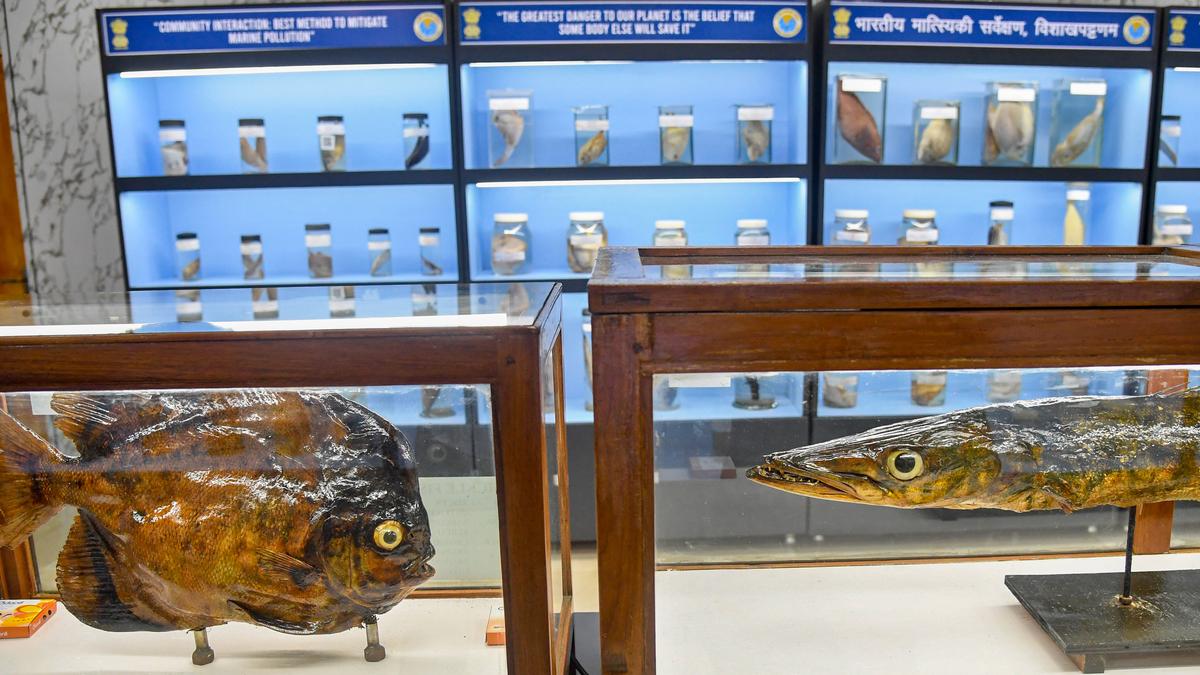
The renovated marine museum at the Fisheries Survey of India, Visakhapatnam Zonal base, here, is a boon to students, researchers and general public, interested in knowing more about marine life. The FSI has taken painstaking efforts in developing a QR code for many of the exhibits on display.
A couple of years ago, students and fishery enthusiasts used to go around the exhibits on display at the marine exhibition, which used to be conducted as part of the annual Open House, organised by the FSI, Visakhapatnam, every year.
The students had to carry pen and paper to jot down the little details available on the exhibits and those given by the staff regarding the specimens on display. That was a thing of the past. All that the visitors, wishing to know about the species on display, have to carry is their smartphone.
“QR coding is being done for all the specimens in the renovated museum for the benefit of students and visitors. On scanning the code on their mobile phones, visitors can get complete history of the specimen,” says D. Bhami Reddy, Head of FSI, Vizag.
The renovated museum has around 250 specimens, preserved and displayed neatly in a solution of formalin and water in glass jars. The QR codes have been given to over 100 exhibits on display and the remaining are expected to be completed soon.
There are a few large varieties like the 2-metre-long sea cow, 1-m-long commercial fish baraciuda and an equally long sickle fish, which are stuffed with cotton and stored in glass jars.
The rare and exotic species include molluscs, gurnads, caught in the waters off Andaman and Nicobar Islands, spider crab, caught in the same area, a crocodile shark, which is found in the deep sea, a ‘white sea horse’, a ‘horse shoe crab’, found in the Odisha coast, and a lobster from Andaman Islands have also been preserved in the museum.


Madras HC dismisses S.P. Velumani's petition challenging I-T assessment of ₹7 crore as unexplained election expenses from 2016.

The Lok Sabha passes a contentious Transgender Bill, sparking praise from the government and criticism from opposition parties.

Kamal Haasan announces support for DMK in 2026 elections, emphasizing the need for 'Dravidian Model 2.0' for Tamil Nadu's welfare.

Y.S. Sharmila critiques massive concessions for the AMNS steel plant while advocating for the Visakhapatnam Steel Plant and job creation.

Puducherry Assembly elections test the INDIA bloc's unity as parties file nominations amidst seat allocation uncertainty.

T.N. CM Stalin advocates for constitutional safeguards to maintain state representation in delimitation amid women’s reservation discussions.

Rohit Pawar files complaint in Bengaluru alleging conspiracy in Ajit Pawar's air crash; Maharashtra police had refused FIR.

Armed extremists attack Mongkot Chepu village again, firing on students and injuring civilians amid rising tensions in Manipur.

TGNPDCL bags ‘Governance Now’ award

Perundurai's industrial growth faces challenges of pollution, water scarcity, and healthcare, impacting residents ahead of the 2026 elections.

The Travancore Devaswom Board asserts that courts should respect community beliefs in its Supreme Court submission on Sabarimala's entry issue.

Karnataka cancels Deendayal Upadhyay event at KSOU due to protocol violations, citing inconsistency with university objectives.

Illegal pickle unit busted in Hyderabad, one arrested; unhygienic stock worth ₹3 lakh seized