No shortage of drugs, says Health Minister
The Hindu
DINDIGUL
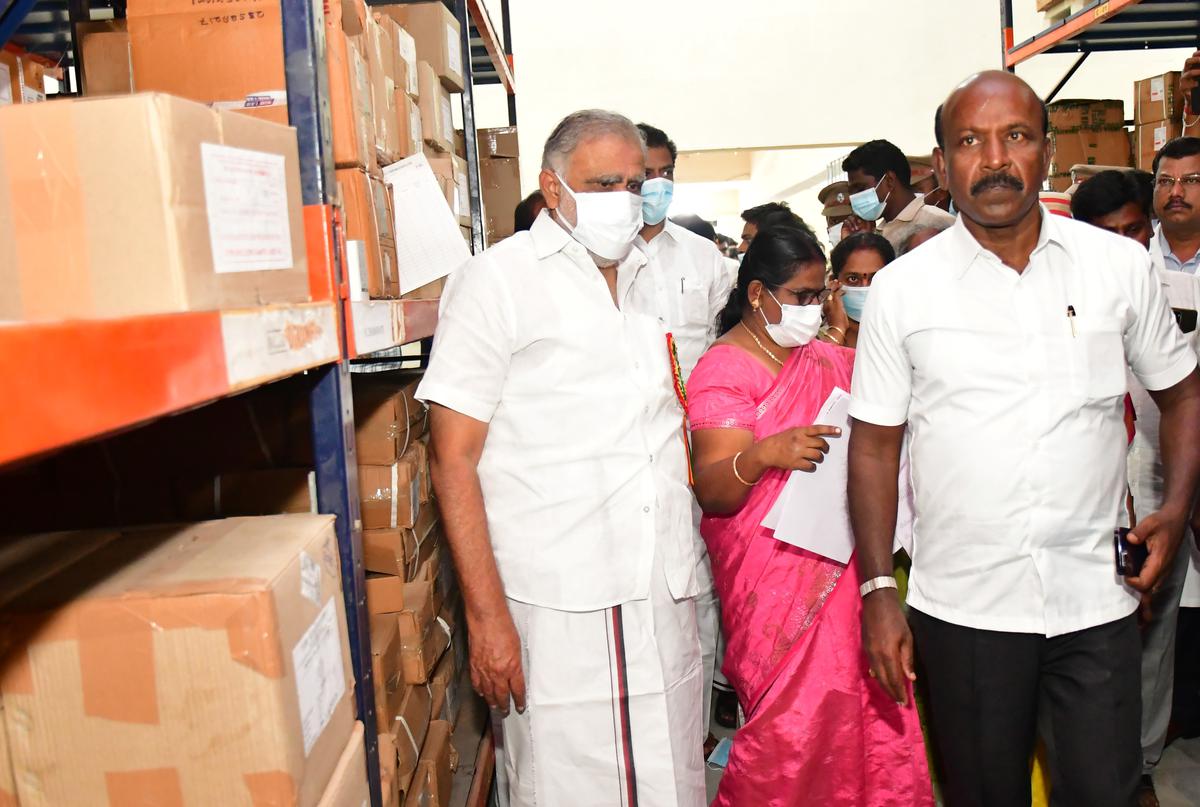
There is no shortage of drugs in the State as it is projected. Over 600 types of essential and speciality drugs are available in adequate quantities across the State, said Ma. Subramanian, Minister for Health and Family Welfare on Thursday.
He was addressing media persons after carrying out a surprise inspection at the district drug warehouse here.
“Out of many instances of drug shortage received on the Tamil Nadu health helpline 104, we have rectified 74 complaints,” he said. He said that anti rabies vaccines (ARV) and anti snake venom (ASV) are adequately available at the drug warehouse in Dindigul and elsewhere.
He said that notice boards outside 32 such drug warehouses in the State would bear the information on the drug stock within 10 days.
Five warehouses are coming up at a cost of ₹6 crore each at Chengalpattu, Tenkasi, Kallakurichi, Tirupattur and Mayiladuthurai districts, he added.
Earlier, he inaugurated the ‘Ashwagandha Crop Cultivation Project’ under the Tamil Nadu State Medicinal Plant Board on 200 acres at Vedasandur at the Vedasandur Tobacco Research Station. Minister for Cooperation I. Periyasamy, Minister for Food and Civil Supplies R. Sakkarapani were present.
He stated that the manufacturers of “lehiyam” and tonics who depend on the other states for herbs, especially Andhra Pradesh, Gujarat and Madhya Pradesh where Ashwagandha is largely cultivated will now be self-reliant once the cultivation begins. He added that the project aims to bring Dindigul as the leading producer of the crop at the national level.


Residents of Chettichavadi express concerns over deteriorating groundwater quality due to long-standing garbage dumping issues in Salem West.

Community Health Officers in Vijayawada protest for reduced workload and continued incentives amid growing dissatisfaction over salary changes.

Telangana faces 13,929 healthcare vacancies, primarily in doctors and nurses, as recruitment efforts aim to address the shortage.

For most patients with TB who are severely underweight, nutritional support is an essential and not optional part of treatment

Family of custodial death victims demands harsh punishment for nine convicted policemen to prevent future abuses of power.

Rajinikanth refutes TVK leader's claims about DMK threats preventing his political entry, expressing gratitude to supportive political figures.

CM announces Cabinet Sub-Committee on Musi rejuvenation; rehabilitation for all displaced

Ramanathapuram identifies 145 polling stations as sensitive, ensuring security with paramilitary forces ahead of assembly elections, says DEO.

BJP Puducherry president V. P Ramalingam files nomination for Raj Bhavan, joined by Union Minister Mandaviya and Khushbu Sundar.

History-sheeter 'Thoppai' Ganesh shot dead by police in Chennai after attacking officers during attempted escape.

The government plans to amend the FCRA, introducing new regulations for NGO asset management and accountability for key functionaries.

The draft policy for “Responsible Digital Use Among Students”, released on Monday by the Department of Health and Family Welfare, has recommended that parents set structured routines with clear screen-time rules and prioritise privacy, safety, and open conversation with children on digital well-being.

Police Observer Sushant Kumar Saxena conducts surprise inspection at Shencottai police station, reviewing warrants and security arrangements ahead of elections.