NIT-K rolls out electric vehicles to make campus carbon neutral
The Hindu
This effort is thanks to donations by alumni and donors
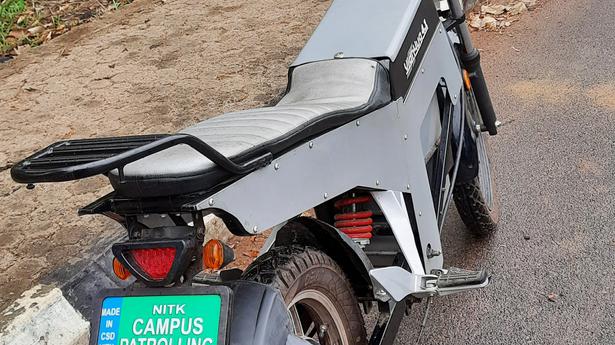
In its initiative to make the sprawling campus spread over about 300 acres carbon neutral, the National Institute of Technology – Karnataka (NIT-K) at Surathkal has now designed and developed 11 electric vehicles on its own for use by its students, faculty and staff members.
The institute has also built a solar powered charging station to feed the e-vehicles. Thanks to major financial support for its E-Mobility Projects at the Centre for System Design (CSD) by its alumni and donors.
Of the e-vehicles included three scooters, a foldable scooter, two bikes and five cycles.
Pruthviraj U., Head, E-Mobility Projects told The Hindu that of the two bikes one is being used by the institute’s security personnel for campus surveillance. Another bike has been given to the Forest Department for the surveillance in the Kudremukh National Park area. The other vehicles are in use in the campus and are geo fenced.
“The initiative began when the COVID-19 lock down began. The team comprising students, research scholars and faculty from different disciplines of science and technology did not relax. It made best use of the past two lock downs and other days to make the projects a reality in phases,” Mr. Pruthviraj, who is also the Assistant Professor at the Department of Water Resources and Ocean Engineering at the institute said.
The alumni of 1970, 1972 and 1981 have contributed major share for the projects. The setting up of the charging station having five charging units, research and development, design, materials and the rolling out of 11 vehicles has cost about ₹ 50 lakhs.
In addition, Mr. Pruthviraj said that the institute will roll out 20 more e-cycles, an automatic e-trolley and an e-bike for the use of National Cadet Corps (NCC) unit at an estimated cost of ₹15 lakhs, borne by the 1972 alumni batch, in the coming days.


Discover the Minor Planet Centre, the key hub for tracking and verifying observations of small solar system bodies.

In this week's Science for All newsletter, XX explains

Test your knowledge with the quiz on Science films at the Oscars through history

Set between the Siwalik hills and the plains, Butwal offers travellers a mix of regional cuisine, pilgrimage trails to Lumbini and the comfort of Hyatt’s new hospitality landmark

Explore 2026's wallpaper trends in India, highlighting botanicals and handmade designs that enhance modern homes with nature-inspired aesthetics.

Mercedes-Benz CLA 250+ with EQ Technology review: design, performance, range and features explained. Discover how the new electric CLA combines advanced AI, long range, fast charging and futuristic styling for the next generation of luxury EVs.

AI tool for sparrow conservation

BTS’s comeback with ‘Arirang’ marks a major global music event. When does the album release, and where can you watch their concert live stream? We have all the details

The 2026 U.S. cholesterol guidelines urge starting screening and treatment at 30 to prevent cardiovascular disease effectively.

Olam Festival 2026 in Thiruvananthapuram returns March 27-29 with 120+ vendors, music, art, and cultural zones.

A few storytellers in Thiruvananthapuram share their journeys, challenges, and evolving methods on World Storytelling Day, inspiring young minds.

76-year-old Kurian Jacob from Kerala triumphs with seven medals, including five golds, at the Open Masters Games in Abu Dhabi.

Explore the nature of the human mind as an emergent property of brain activity and complex neural interactions.