New Steve Prefontaine biography reveals man behind mythic distance runner
CBC
The late American distance runner Steve Prefontaine never won an Olympic medal, a world championship, or even held a world record. Yet, half a century after his untimely death in a car wreck at the age of 24, "Pre," as he came to be known, remains an iconic, almost saint-like figure, of track and field.
Many would argue that Prefontaine is regarded as the most charismatic runner of all-time, often credited with igniting the worldwide running boom of the 1970's, not to mention being the first face of the multi-billion dollar Nike brand of athletic gear.
In a new biography, "The Front Runner - The Life of Steve Prefontaine," author Brendan O'Meara re-examines his legacy on the cusp of the 50th anniversary of the international athletics gathering that bears his name. This year's "Pre Classic" at Hayward Field in Eugene, Ore., will feature more than 20 Olympic gold medallists and countless world champions. It is one of, if not the most, star-studded fields in the history of professional track and field outside an Olympic Games.
O'Meara suggests that, in many ways, the annual pilgrimage of these outstanding, runners, jumpers, and throwers from every corner of the world, to a small, university city in the Pacific Northwest of the United States, is one of Prefontaine's greatest contributions to the sport.
A local hero from the coastal logging town of Coos Bay, Prefontaine once held every American record from 2,000 to 10,000 metres. And he set many of those records and won most of his important races at the University of Oregon's fabled track at Hayward Field.
He was idolized as a child prodigy from a rough and tumble background who was outspoken and had the audacity to take on the best in the world while defying them to race flat out instead of languishing in the rear and concocting last-minute, or contrived, victories.
He was, as O'Meara explains, the quintessential front runner from an athletic perspective.
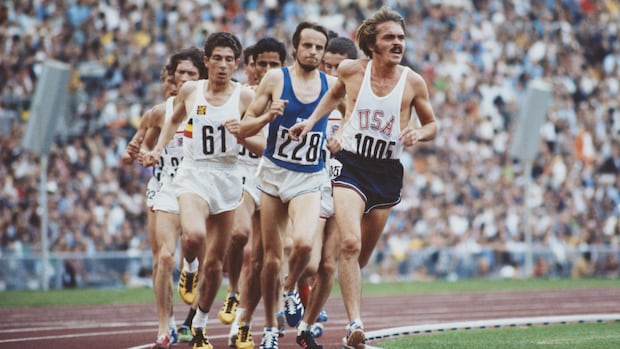
In the biggest race Prefontaine ever took on, the Olympic 5,000m final at the 1972 Munich Games, he was by far the smallest and youngest contestant in the field. And yet, the confident and brash American was undaunted, leading into the final lap while duelling magnificently with the likes of the statuesque Finn, Lasse Viren, who eventually won the gold medal, and 1968 Olympic champion Mohammed Gammoudi of Tunisia who claimed silver.
Prefontaine, totally spent, ran out of gas over the last few metres and was narrowly beaten for the bronze medal by Great Britain's hard charging Ian Stewart. Distraught, Prefontaine bowed his head, removed his spikes, and walked barefoot off the track in front of the astonished fans in the jam-packed stadium.
For many people of a certain generation, it was a vivid and lasting first recollection of the crucible of Olympic competition.
Prefontaine was the upstart kid with the flowing blond hair who came so close to knocking off the Goliaths from afar. He presented the teasing promise of the thrill of victory which gave way to the reality of a fourth-place finish and the agony of defeat.
O'Meara chronicles Prefontaine's life based on more than 150 interviews with teammates, friends, and rivals who knew the enigmatic high school and collegiate phenom. And while there is a certain mythology surrounding "Pre" and his faithful followers known as "Pre's People," O'Meara gives his subject a human quality which is more decipherable.
Referring to him as "Steve" throughout, the author discovers that behind the bravado was a sensitive young man who was most comfortable in familiar surroundings and often wrestled with self–doubt. Moreover, Prefontaine is portrayed as less of a philosopher king and more likely driven by a simpler set of principles — he wanted to run hard and fast and compete against the best in the world on his own terms, not to mention his home turf.
There are also stories of Prefontaine being a practical joker, a wild and crazy driver of sports cars, and a prodigious guzzler of beer. The way O'Meara tells it, Prefontaine revelled in the attention of his fans, but he might have foregone future fame and fortune for a more modest life, which included owning and operating his dream bar called "The Sub Four," in reference to his achievement of running a sub four-minute mile.


Canadian Paralympic Committee CEO Karen O'Neill acknowledges the team’s showing at the Milano-Cortina Winter Games wasn't the same as past years.

Canadian Para alpine skier Kalle Eriksson and guide Sierra Smith capped their memorable Paralympic debut with bronze in the men's visually impaired slalom on Sunday at the Milano-Cortina Games.

Canadian skip Kerri Einarson looked up Saturday and saw real people, instead of cardboard cut-outs, in the stands at Calgary's WinSport Event Centre. She heard the roar of the crowd instead of the sound of flushing toilets piercing the silence.


Aaron Judge doubled and Pete Crow-Armstrong and Brice Turang each had two hits as the United States beat Canada 5-3 on Friday night in Houston to reach the World Baseball Classic semifinals.

Canada's Natalie Wilkie captured her second biathlon gold of the Milano-Cortina Paralympics on Friday, winning the women's standing sprint pursuit for her fourth medal in as many events.

Canada made wheelchair curling history on Thursday as the first team at any Paralympics to complete round-robin play without a loss.

The winningest men's ski cross racer in history added to his total on Thursday.

Canada's Mark Arendz collected his 14th career Paralympic medal while teammate Brittany Hudak earned her fourth in Wednesday's standing cross-country skiing races at Milano Cortina.

Alphonso Davies covered his face with his shirt as he left the field with an injury in Bayern Munich's game against Atalanta in the Champions League on Tuesday in Bergamo, Italy, raising questions about the Canadian star's availability for the World Cup.

Canadian Para nordic skiing star Natalie Wilkie has now won a medal of every colour at the Milano-Cortina Paralympics, adding bronze in the women's standing sprint classic on Tuesday in Val di Fiemme.

This is an excerpt from The Buzzer, CBC Sports' daily email newsletter. Get up to speed on what's happening in sports by subscribing here.

Canadian Para alpine skier Kalle Eriksson and guide Sierra Smith continued their impressive Paralympic debut on Monday by racing to bronze in the men's visually impaired super-G for their second medal.