New book throws light on different dimensions of poverty during colonial era
The Hindu
Retired SVU professor Devireddy Subramanyam Reddy sheds light on poverty in British India in his recent book.
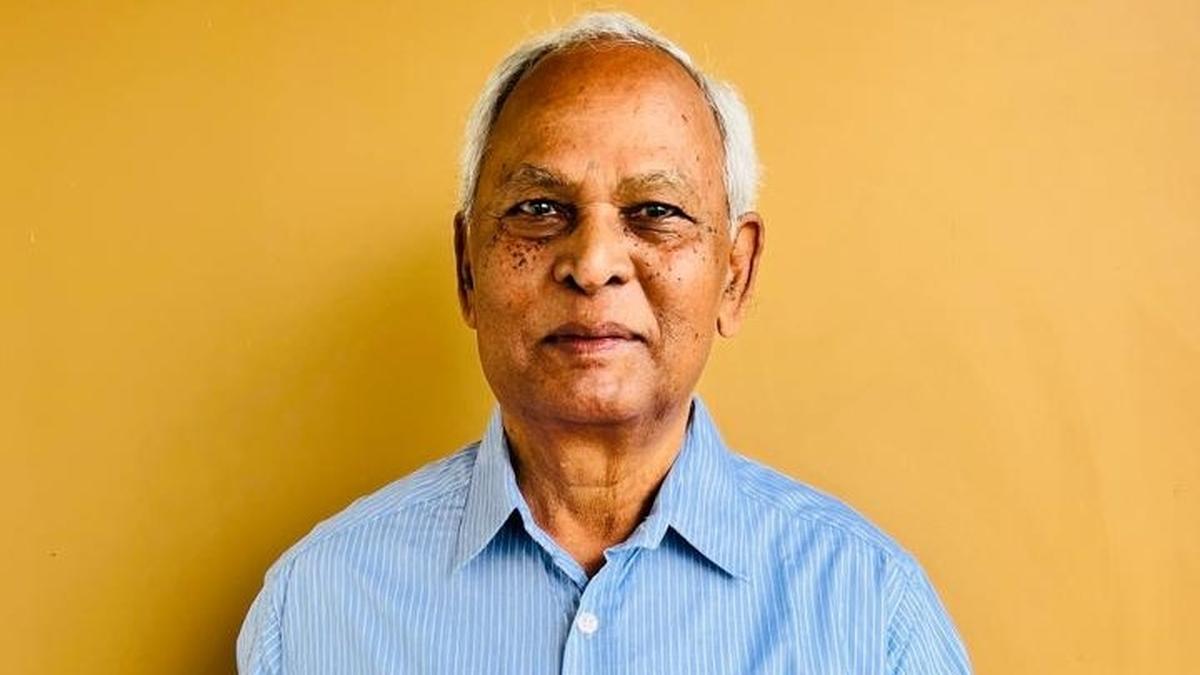
Retired professor of History at Sri Venkateswara University (SVU), Tirupati, Devireddy Subramanyam Reddy, recently released his book ‘Loss and Gain in British India’, throwing light on unexplored areas and different dimensions of poverty during the colonial era.
The book, published in October 2024 by Serials Publications, New Delhi, was formally released at the Hyderabad Press Club recently by senior journalist Vardhelli Murali in the presence of Adapa Satyanarayana, a retired professor of History at Osmania University and Dyavanapalli Satyanarayana, curator of tribal museums at the Tribal Cultural Research and Training Institute, Hyderabad.
Speaking to The Hindu about his book, the author said that the colonial rule was based on principles of extraction, leaving India with widespread poverty and starvation deaths. “Poverty is not just lack of purchasing power, it is an injury and pain. It is embarrassing and shameful, killer of dreams, destroyer of capabilities and waster of human potential,” he said.
Referring to ‘modernity’ such as railway network, roadways, telegraphic lines, irrigation works, establishment of uniform postal system, printing presses, print media, agricultural research centres, schools, universities, banks and insurance companies, modern legal system, fixation of legal boundaries to India among others, which are hailed as ‘virtues’ of the British rule, Prof. Reddy termed them as having been ‘unconsciously brought about’ during the colonial period. On the contrary, technical education and modern manufacturing industry had been systematically neglected and destroyed, he opined.
The author referred to the renowned economists Daron Acemoglu, Simon Johnson and James Robinson, recipients of the Nobel Memorial Prize in Economic Sciences, and hailed their thoughts in advancing the ‘understanding of differences in prosperity between nations’.
“While the Europeans colonised and settled in North America, which was ‘inclusive’ in nature, the inclement weather discouraged their settlement in South Asia (or India), where the policy turned out to be ‘extractive’. This is the prime attitudinal difference towards the two settlements,” Prof. Reddy explained.


Hyderabad bucks congestion trend as traffic speeds improve despite a surge in vehicles on its roads.

‘Love Mocktail 3’, the latest installment of the hit Kannada franchise from Darling Krishna-Milana Nagaraj, is winning hearts in Karnataka, weathering the challenge of the action-packed juggernaut ‘Dhurandhar: The Revenge’

VSU professor R. Madhumathi awarded by Venus International Foundation for her exceptional contributions to education and social service.

Utter darkness envelops busy road next to Tirunelveli counting centre during night

In this episode, Stanly Johny speaks to us about Trump’s tactical pause on Iran and whether it signals de-escalation or a shift in strategy.

To qualify for this year’s MADDYS, work must have been first released between 1st April 2025 and 31st March 2026.

Bengaluru police launch a special drive to curb reckless riding after doctors' alcohol-fueled road incident raises concerns.

Five queer activists discuss the repercussions of the Trans Amendment Bill 2026 on dignity and identity within the community.

Former Chief Minister Narayanasamy opts out of Puducherry Assembly elections to maintain alliance harmony amidst seat-sharing talks with DMK.

Dr Prarthana Venkatesh, the founder of nutraceutical brand Longevita, talks about the inspiration behind the brand, why the longevity discourse is now exploding and how modern medicine is tackling aging

Ponmudy seeks Madras High Court's intervention to dismiss BJP councillor's complaint over alleged derogatory speech against religious groups.

Congress leader K.C. Venugopal alleges corruption in Kerala's bar license renewals, accusing CPI(M) and BJP of unethical collusion ahead of 2026 polls.

Bengaluru police arrest three in a money-doubling fraud, recovering ₹40 lakh and uncovering additional victims.