Nestle and Keurig want you to make iced coffee at home instead of paying a barista. That’s harder than it looks
CNN
Iced coffee just isn’t the same when you make it at home. It quickly waters down, tastes bitter and simply doesn’t emulate what you pay a barista upwards of $8 for.
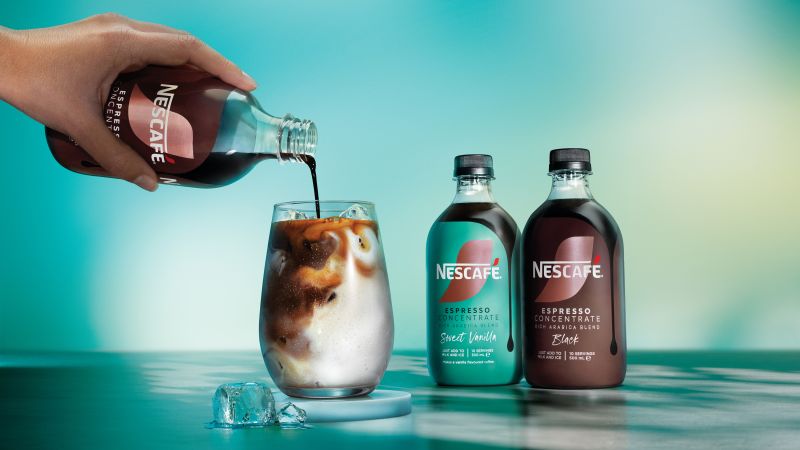
Iced coffee just isn’t the same when you make it at home. It quickly waters down, tastes bitter and simply doesn’t emulate what you pay a barista upwards of $8 for. But brands like Nestlé and Keurig, who make single-serve espresso machines ubiquitous in many households, are going all in on iced coffees, attempting to draw customers from trendy coffee shops back to their kitchens. This year, Keurig Dr Pepper launched a machine that is dedicated to iced coffee, advertising a drink “as cold as the coffee shops” in three minutes or less for $199. The company flashed new technology, promising flavorful cups that wouldn’t be watered down by melted ice by quick chilling the brewed coffee. Nestle, which owns Nespresso and Nescafé, said it’s developing “complete solutions” for customers that want to make cold coffees in their homes. In May, Nescafé launched in Australia and China an espresso concentrate, which is designed to pour over ice to make a latte or Americano. No “barista skills needed,” it advertised. Also this year, the caffeine conglomerate developed its first Starbucks blend dedicated to ice coffee, new creation modes on some Nespresso machines for iced drinks, a canned cold coffee and a Coffee mate cold foam. But there’s science behind why iced coffee is so much better at coffee shops, and current single-serve espresso machine innovations don’t meet that quality despite their marketing. “The fundamental problem with how these capsule machines brew coffee is that there’s actually less coffee in those pods than are used to brew cold brew and other drinks in cafes,” Christopher Hendon, associate professor of chemistry at the University of Oregon, said to CNN, adding that at-home iced coffees are roughly half the strength of what cafes produce.


The Iran war has driven oil prices to their highest levels in years. Now, a wave of attacks in the past 24 hours on energy production sites across the Middle East have turned the spotlight on another crucial fossil fuel: liquefied natural gas, or LNG.

Oil and natural gas prices spiked Thursday, as Iran ramped up strikes on energy infrastructure across the Middle East and attacked one of the world’s most important liquefied natural gas (LNG) facilities in Qatar.

In normal times, the Federal Reserve would more or less ignore an oil price shock like the one we’re in now.

Property brokerage Compass on Wednesday dropped its lawsuit against Zillow, ending a legal clash over how home listings can be marketed online.

Fed officials didn’t make any rate moves at their March meeting and released an updated forecast for the path of the American economy as the war in Iran stretches on.

Fed officials are set to announce their latest rate decision Wednesday afternoon, along with a new forecast for the path of the American economy as the war in Iran stretches on.

“The speed with which American democracy is currently dismantled is unprecedented in modern history,” one of the world’s top democracy researchers says in a new report.

Oil prices held steady Wednesday after Iraq clinched a deal to resume some crude exports via Turkey. It’s not a ton of oil, but it’s what amounts for good news these days as the Strait of Hormuz remains largely blocked.

The US-Israeli war with Iran, now stretching into its third week, is dashing hopes that the Federal Reserve will lower interest rates at all this year.

A federal judge says the Trump administration must let more than 1,000 sidelined Voice of America employees return to work by next week.

Former judges side with Anthropic and raise concerns about Pentagon’s use of supply chain risk label
Nearly 150 retired federal and state judges have filed an amicus brief on Tuesday supporting AI company Anthropic in its lawsuit against the Trump administration for designating it a “supply chain risk,” CNN has learned.

Attacks on commercial ships in the Middle East this month have all but closed the vital Strait of Hormuz to oil tankers. One of the few alternative routes for oil exports from the region goes through the Red Sea. But now even that lifeline is in danger.

When Mona Panjwani opened One40 Rooftop, a swanky restaurant in lower Manhattan last year, one of the biggest dilemmas besides the menu was choosing the reservation platform.