Neither flamenco nor salsa, it’s ‘naatu’
The Hindu
‘Naatu naatu’ is also a winner when it comes to choreography
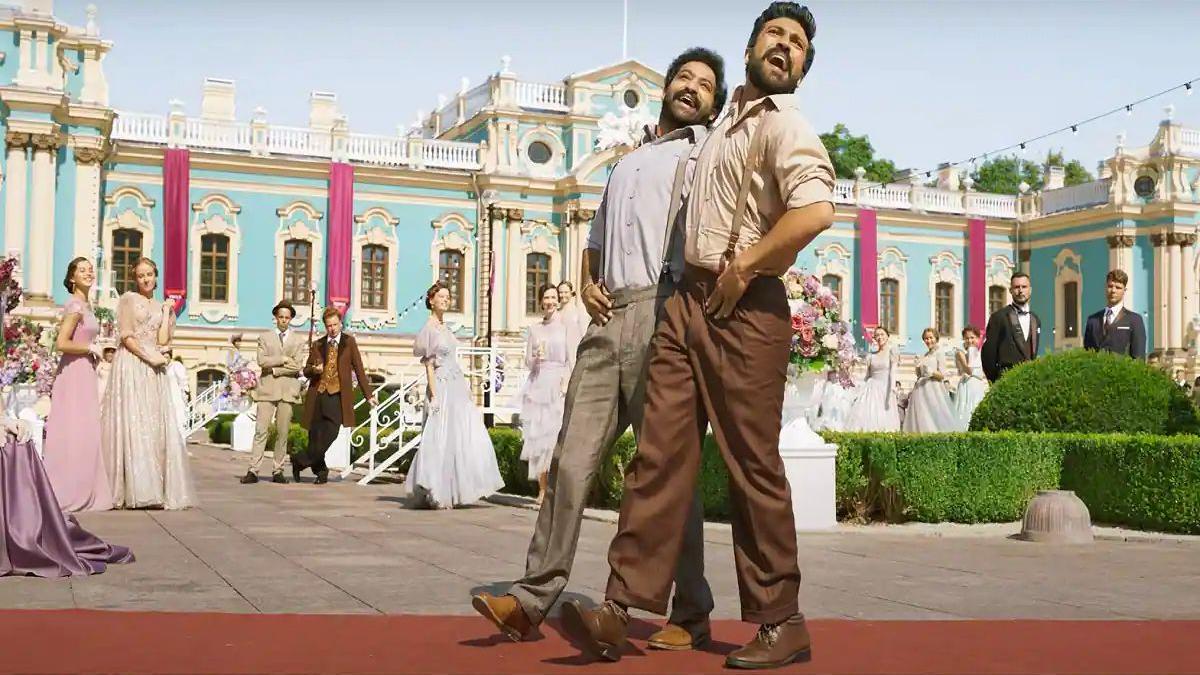
NTR Junior and Ram Charan in suspenders, matching steps in a crackerjack duet of a dance, caught the world’s attention like never before. Many wondered why and many others, why not, even as ‘Naatu naatu’ became a catchphrase.
While M. Keeravani and Chandrabose deserve their Oscar win for best song, there is something to be said about one of the most cleverly choreographed dance sequences seen on the big screen in recent times.
What would one call this ‘Feet of Fury’ that is neither flamenco nor salsa — dance forms offered as examples of taste and refinement by the British dandy in the scene?
Choreographed by Prem Rakshit, this is the dance of the masses, reminiscent of the Teen Maar, the ubiquitous drum dance often seen in the streets of Telengana, and also in movies from the South. A 6/8 beat, it is meant to impel the listener into a frenzy of spontaneous unrestricted movement all the while invoking the ‘village drummer’, the ‘local goddess’, the ‘green chilli’, the ‘bull’ — symbols of Indian rusticity. The ‘Naatu naatu’ thus carries the punch and pizazz of the Telugu heartland.
What follows is a repartee, amid a flourish of drums, in unapologetic vigour as if to say: ‘can you match this? ‘Naatu’ incidentally also means to plant a tree. The song therefore is about land, about nativity, and about owning that nativity with pride.
Dances in India have always been grounded, characterised by the wide stance of the feet, knees bent and pliant. The contact of the feet with the ground is a humble reminder of one’s intimate relationship with the earth. The percussive nature of movement seems to typify most ancient, forest cultures. We yield to the earth, while the white world seems to yearn to escape the pull of gravity.
No doubt, in terms of scope and canvas, the choreography of this dance number has whiffs of a Hollywood musical. Luminaries of cinema like Busby Berkeley ushered in an era of unlimited possibilities between camera and choreography back in the 1930’s. Dancers in hundreds in meticulous formations were captured from various angles: ‘By a waterfall’ in Footlight Parade, and ‘Lullaby of Broadway’ from Gold Diggers are just two examples of these luxuriant visual treats.


Sean Penn skips the Oscars to meet Ukraine's Zelenskyy, who praises him as a "true friend" amid the war.

The teaser of Tamil star Suriya’s much-awaited film with director Venky Atluri, titled Vishwanath and Sons, was unveiled by the makers on Monday

A 'Golden' moment for a K-pop track at the Oscars.

Parvathi Nayar’s new exhibition, The Primordial, in Mumbai, traces oceans, pepper and climate change
Opened on March 12, the exhibition marks the artist’s first solo show in Mumbai in nearly two decades. Known for her intricate graphite drawings and multidisciplinary practice spanning installation, photography, video, and climate change, her artistic journey has long engaged with the themes of ecology, climate change and the natural world. In this ongoing exhibition, these strands converge through a series of works centred on water, salt, and pepper — materials that carry natural and historic weight across centuries.

Explore the highlights and key winners of the 98th Academy Awards, featuring memorable moments and historic achievements from Oscars 2026.

Spring season celebrated at Ramakrishna Mission Institute, Kolkata, with ‘Evening of Basant’

The Spirit of the Land, a solo show by artist Shivakumar Sunagar, is a vista of Nature-inspired emotions

Tal Fry is all set for an exciting new performance season

Netflix is making a bold move by snagging InterPositive, the AI filmmaking company founded by Ben Affleck, in a deal that could hit $600 million

Watch the eerie trailer for 'Hokum,' where Adam Scott faces a witch haunting in a mysterious Irish inn.

Oscars 2026 security heightened amid FBI warnings of a potential Iranian drone threat ahead of the Hollywood ceremony.

Directed by Rahul Pandey, the series also stars Naila Grewal, Nidhi Bisht, Anant Joshi, Anjum Batra and Kusha Kapila

A tribute to the versatile actor and comedian V.K. Ramasamy in his birth centenary year.